Featured Orthopedic Implants & Surgical Instruments
Full-spectrum manufacturing capabilities covering cervical arthroplasty, spinal fixation, sports medicine, trauma plates, and custom OEM/ODM CNC solutions.
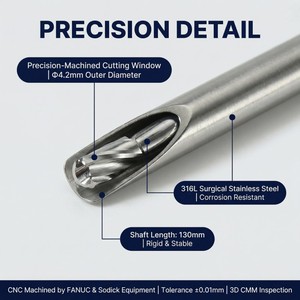
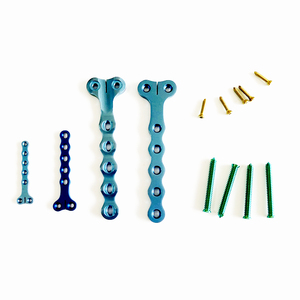
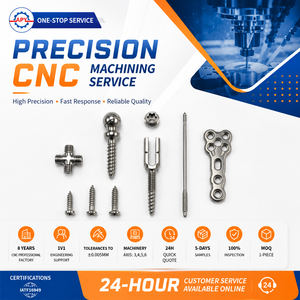
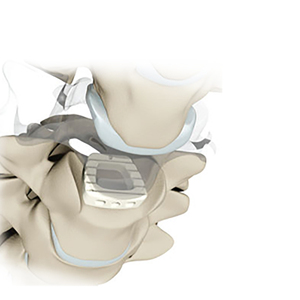
Executive Summary: The Paradigm Shift in Cervical Total Disc Replacement (TDR)
In modern spinal surgery, symptomatic cervical disc disease (SCDD) caused by cervical radiculopathy and myelopathy has historically been treated via Anterior Cervical Discectomy and Fusion (ACDF). While ACDF offers high initial fusion rates, gold-standard clinical research indicates that rigid vertebral fusion eliminates segmental motion, transferring compensatory mechanical stress to adjacent motion segments. This biomechanical anomaly frequently accelerates Adjacent Segment Degeneration (ASD), leading to secondary surgical interventions in up to 25% of fusion patients over a 10-year follow-up period.
Consequently, Artificial Cervical Disc Replacement (Cervical Arthroplasty) has emerged as the definitive motion-preserving alternative. By restoring physiological disc height, lordotic curvature, and multi-planar degrees of freedom (flexion-extension, lateral bending, axial rotation, and sagittal translation), modern artificial cervical discs significantly reduce intradiscal pressure at adjacent levels. For medical device brand owners, hospital procurement syndicates, and orthopedic distributors, sourcing high-performance cervical prostheses from China’s top ISO 13485-certified manufacturers represents an unprecedented opportunity to combine elite engineering precision with optimized bill-of-materials (BOM) cost efficiency.
Engineering Classifications of Cervical Total Disc Prostheses
Artificial cervical discs engineered by top Chinese OEMs are categorized according to their mechanical articulation interfaces, degrees of freedom, and restraint mechanics. Understanding these parametric differences is essential for clinical regulatory filing and product lineup positioning.
| Design Category | Bearing Interface Materials | Kinematic Motion Profile | Primary Clinical Benefit | Testing Standard Compliance |
|---|---|---|---|---|
| Metal-on-Polymer (Unconstrained) | Ti-6Al-4V / UHMWPE or PEEK Core | Variable Instantaneous Center of Rotation (ICR) | Physiological self-alignment; reduces facet joint shear stress | ISO 18192-1 / ASTM F2346 |
| Metal-on-Metal (Semi-Constrained) | CoCrMo (Cobalt-Chromium-Molybdenum) | Fixed Ball-and-Socket Rotation Radius | Ultra-low wear rate; high immediate primary stability | ASTM F1108 / ISO 5832-4 |
| Elastic Core / Viscoelastic | Porous Ti Endplates + Polyurethane Core | 6 Degrees of Freedom with Axial Damping | Shock absorption mimicking natural nucleus pulposus | ASTM F2346 Static & Dynamic Fatigue |
| 3D Trabecular Titanium | Direct Metal Laser Sintered (DMLS) Ti64 | Interlocking Mobile Core Alignment | Eliminates bone cement; promotes rapid osteointegration | ISO 13485 Cleanroom Class 7 |
Future Technological Trends in Artificial Cervical Disc Manufacturing
The artificial cervical disc sector is undergoing rapid technological evolution. Leading Chinese manufacturers are integrating advanced material science, additive manufacturing, and surface engineering to create next-generation spinal prostheses.
1. Additive Manufacturing & Trabecular Micro-Structures
Traditional cervical discs rely on plasma-sprayed titanium coating or plasma-sprayed hydroxyapatite (HA) for bone ingrowth. Modern manufacturing utilizes Direct Metal Laser Sintering (DMLS) to produce 3D trabecular titanium endplates with 60–70% controlled porosity and pore sizes of 300–500 μm. This porous matrix matches the elastic modulus of cancellous bone, dramatically mitigating stress shielding.
2. Advanced Tribology & Diamond-Like Carbon (DLC)
To virtually eliminate osteolysis triggered by ultra-high-molecular-weight polyethylene (UHMWPE) wear debris, Chinese research centers are applying Diamond-Like Carbon (DLC) coatings and Titanium-Nitride (TiN) physical vapor deposition (PVD). These nano-coatings lower friction coefficients to micro-levels, extending wear longevity past 20 million physiological motion cycles under ISO 18192 testing.
3. Motion-Preserving Zero-Profile Architecture
Post-operative dysphagia remains a key clinical concern in anterior cervical approaches. Next-generation cervical prostheses feature low-profile, keeled or screwless endplate fixations that fit completely within the intervertebral disc space. Integrated anatomical stop mechanisms prevent anterior migration while respecting anterior longitudinal ligament anatomy.
B2B Sourcing Analysis: Why Sourcing Cervical Discs from China is Scaling Globally
The global market for cervical total disc replacement is expanding at a CAGR of 11.4%. Traditionally dominated by tier-1 Western medical device multi-nationals, the market is experiencing a structural pivot toward qualified Chinese contract manufacturers and OEM/ODM producers. This shift is driven by three core strategic imperatives:
1. Complete Vertical Integration & Advanced CNC Machining Hubs
Top Chinese manufacturers located in precision manufacturing zones (such as Zhejiang and Jiangsu) feature fully integrated supply chains. Raw medical titanium bars (ASTM F136 Ti-6Al-4V ELI) and implant-grade PEEK Optima materials are processed in-house via Swiss-type 5-axis and 6-axis CNC multi-tasking lathes (Citizen, Star, DMG Mori). Machining tolerances are strictly held to micro-meter precision (±0.005 mm), ensuring absolute interchangeability between trial implants and final prostheses.
2. Uncompromising Quality Management Systems & Regulatory Turnkey Support
Navigating global medical device market approvals (FDA 510(k), European CE MDR 2017/745, NMPA, ANVISA) requires rigorous technical documentation. China’s leading artificial cervical disc manufacturers operate under certified ISO 13485 and ISO 9001 QMS framework. They provide turnkey registration dossiers, including:
- Mechanical Fatigue & Dynamic Wear Test Reports: ISO 18192-1 (wear under dynamic loading) and ASTM F2346 (static and dynamic shear & compression testing).
- Biocompatibility Testing: Cytotoxicity, systemic toxicity, sensitization, and pyrogenicity compliance per ISO 10993 standards.
- Cleanroom & Sterilisation Protocols: Class 10,000 (ISO Class 7) cleanroom cleaning and packaging with validated Co-60 Gamma Irradiation achieving Sterility Assurance Level (SAL) 10⁻⁶.
3. OEM / ODM Customisation Flexibility
Unlike rigid Western brand suppliers, Chinese medical manufacturers offer flexible contract manufacturing models. Whether clients require drawing-based machining (OEM), custom anatomical modifications (ODM), private-label laser marking, anodized color coding, or specialized surgical tray layout design, Chinese manufacturers provide rapid prototyping turnaround times (often under 3 weeks).
State-of-the-Art Production & Quality Assurance Infrastructure
As a leading Chinese orthopedic manufacturer, our facility represents the convergence of Swiss precision engineering, stringent quality controls, and dedicated clinical support.
5/6-Axis Swiss CNC Machining
Equipped with ultra-precision multi-axis machining centers capable of complex surface contours and complex sphere-articulating surfaces in single-pass operations.
CMM Optical Inspection
100% dimensional verification using Zeiss 3D Coordinate Measuring Machines (CMM) and non-contact laser profilometers for surface roughness (Ra < 0.05 μm).
Gamma Sterile Packaging
Double-peel pouch protective packaging in ISO Class 7 cleanrooms, delivered ready-for-OR use with complete batch traceability barcodes.
Frequently Asked Questions (FAQ) for B2B Sourcing
Answers to common technical, regulatory, and commercial inquiries raised by international medical device distributors and purchasing committees.
Partner with China's Premier Orthopedic OEM Manufacturer
Contact our engineering and commercial sales team today to request complete product catalogs, CAD models, mechanical test summaries, or factory audit schedules.