Spotlight Orthopedic & Surgical Hardware Showcase
Featured medical devices, trauma fixation implants, veterinary hardware, and arthroscopic instruments directly available for global wholesale export.
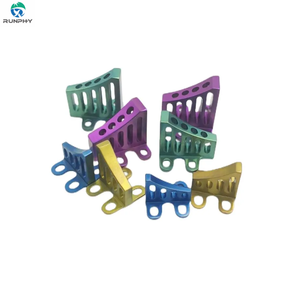
RUNPHY Titanium Gold Veterinary Orthopedic Implant TPLO TTA Rapid Dog Cat Small Animal Tibial Tuberosity Advancement Machined
Send an Inquiry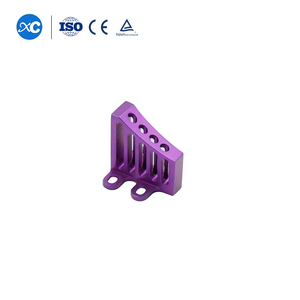
Premium Orthopedic Veterinary Trauma Implant Surgical Instrument - Titanium TTA Implant for Animal Orthopedic Trauma Surgery
Send an Inquiry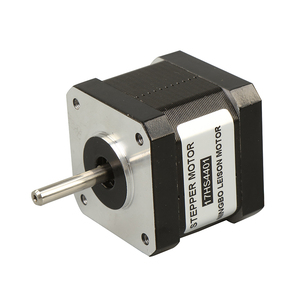
2 Phase 1.8 Degree Hybrid Bipolar Nema 17 Stepper Motor for 3d Printer and Engraving Machine
Send an Inquiry
P&T Horeca Straight Side White Bone China Breakfast Plate Hotel Restaurant Dinner Plate Fine China Tableware Wholesale
Send an Inquiry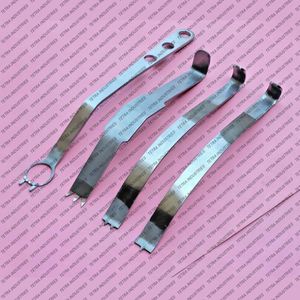
Stainless Steel Glenoid Access & Kolbel Shoulder Anterior Neck Retractor Arthroplasty Orthopedic Instruments Instrument Set
Send an Inquiry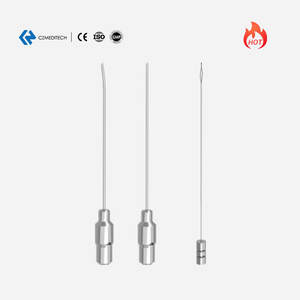
Arthroscopic Precision Repair System CZMEDITECH Meniscal Suture Instruments with Dual Straight/Curved Passers
Send an Inquiry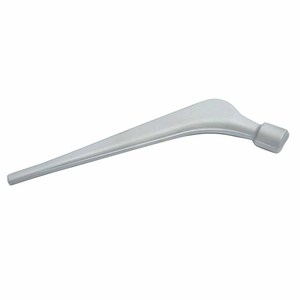
Long Service Life HKXN Brand Taich Stainless Steel Forged Customized Size Artificial Hip Prosthesis Hip Joint Made in China
Send an Inquiry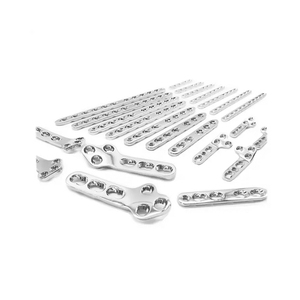
GooDoctor Professional Orthopedic Instrument Ankle Clavicle Hook 1.5mm Straight Locking Plate
Send an Inquiry1. Executive Summary & Global Orthopedic Procurement Ecosystem
The global market for orthopedic implants, trauma fixation systems, spinal interbody devices, and arthroscopic surgical instruments is undergoing a structural transformation. Driven by aging global demographics, increasing incidence of musculoskeletal disorders, and intensifying cost-containment pressures across public and private healthcare networks, medical procurement organizations are re-evaluating their tier-1 vendor partnerships. China has emerged as an indispensable hub for high-precision biomedical manufacturing, offering an unparalleled synthesis of advanced metallurgy, ISO 13485 quality management compliance, automated 5-axis CNC machining capacity, and competitive unit economics.
As a leading Chinese orthopedic implants wholesale supplier, manufacturer, and global exporter, our enterprise operates at the intersection of clinical engineering excellence and international regulatory compliance. From implantable raw titanium alloy billets (ASTM F136 / ASTM F67) to ultra-high-molecular-weight polyethylene (UHMWPE) and polyether ether ketone (PEEK ASTM F2026), our production lines adhere strictly to international bio-compatibility standards. This white paper serves as an exhaustive technical guide for medical device distributors, hospital purchasing groups, OEM brand owners, and clinical directors seeking to optimize their supply chain while maintaining uncompromising clinical safety and surgical efficacy.
2. Technical Metallurgy & Material Science Specifications
The biomechanical longevity of orthopedic implants depends entirely upon material purity, corrosion resistance, fatigue strength, and modulus of elasticity matching human cortical and cancellous bone. Our manufacturing facilities utilize certified implant-grade raw materials sourced under rigorous metallurgical traceability protocols.
Titanium Alloys (Ti-6Al-4V ELI)
Fabricated per ASTM F136 / ISO 5832-3, Extra Low Interstitial (ELI) titanium offers exceptional biocompatibility, high strength-to-weight ratio, and superior fatigue resistance. Essential for trauma plates, pedicle screws, intramedullary nails, and cementless hip stems.
PEEK (Polyether Ether Ketone)
Conforming to ASTM F2026, radiolucent PEEK provides an elastic modulus close to natural cortical bone (3.6 GPa), reducing stress shielding in spinal interbody fusion cages (ACIF/PLIF/TLIF) and sports medicine suture anchors.
CoCrMo & UHMWPE Resurfacing
Cobalt-Chromium-Molybdenum alloys per ASTM F75 paired with Highly Cross-Linked Polyethylene (HXLPE per ASTM F648) deliver ultra-low friction wear rates (<0.5 mm/year) for total joint replacement (hip & knee arthroplasty).
| Material Grade | Standard Compliance | Tensile Strength (MPa) | Yield Strength (MPa) | Modulus of Elasticity | Primary Clinical Applications |
|---|---|---|---|---|---|
| Pure Titanium (TA2 / TA3) | ASTM F67 / ISO 5832-2 | ≥ 400 – 500 MPa | ≥ 275 – 380 MPa | 105 GPa | Low-load maxillofacial & reconstructive plates |
| Ti-6Al-4V ELI (TC4) | ASTM F136 / ISO 5832-3 | ≥ 860 – 930 MPa | ≥ 790 – 860 MPa | 110 GPa | Trauma locking screws, intramedullary nails, pedicle screws |
| Medical Grade PEEK | ASTM F2026 | ≥ 90 – 100 MPa | ≥ 85 MPa | 3.6 GPa | Cervical & lumbar fusion cages, suture anchors |
| CoCrMo Cast Alloy | ASTM F75 / ISO 5832-4 | ≥ 665 MPa | ≥ 450 MPa | 210 GPa | Total knee femoral components, hip acetabular heads |
| UHMWPE / HXLPE | ASTM F648 / ISO 5834-2 | ≥ 40 MPa | ≥ 21 MPa | 0.8 GPa | Acetabular liners, tibial knee inserts |
3. Manufacturing Excellence, CNC Infrastructure & ISO Quality Systems
Our state-of-the-art production complex is engineered specifically to eliminate micro-defects, achieve ultra-tight dimensional tolerances (±0.005 mm), and maintain absolute batch-to-batch consistency. Adhering strictly to ISO 13485:2016 and ISO 9001 quality management frameworks, every production run follows a documented Device Master Record (DMR) protocol.
Machining & Surface Engineering Capabilities
- Swiss-Type Multi-Axis CNC Lathes: Precision turning of micro-cannulated screws, complex thread profiles, and variable pitch locking fasteners.
- 5-Axis DMG MORI Milling Centers: Anatomically pre-contoured clavicle, distal radius, proximal tibia, and pelvic locking compression plates.
- Surface Anodizing & Laser Marking: Type II & Type III color-coded anodization for instant OR instrument size identification and permanent UDI laser etching.
- Plasma Spray Hydroxyapatite (HA) Coating: Bioactive dual titanium-HA thermal spray on acetabular cups and cementless stems to promote rapid osteointegration.
Cleanroom Packaging & Sterilization Assurance
- Class 100,000 (ISO Class 8) Cleanrooms: Particle-controlled washing, ultrasonic degreasing, cleanroom assembly, and primary blister packaging.
- Co-60 Gamma Ray Sterilization: Industrial Cobalt-60 irradiation processes achieving a certified Sterility Assurance Level (SAL) of 10⁻⁶ per ISO 11137.
- Tyvek Rigid Blister Systems: Double-peel sterile packaging preventing particulate contamination, ensuring 5-year shelf-life stability.
- Comprehensive QC Testing: Optical coordinate measuring machines (CMM), dynamic axial fatigue testing, surface profilometry, and chemical residual verification.
4. Comprehensive Product Family Portfolio & Clinical Systems
As a full-spectrum orthopedic manufacturer, our catalog provides single-source procurement across major orthopedic specialties, drastically simplifying supply chain management for international distributors.
Trauma Fixation Systems
Complete anatomical locking plate systems (mini 1.5/2.0mm, small 3.5mm, large 4.5/5.0mm), cannulated screws (Ø2.5mm to Ø7.3mm), intramedullary tibia and femoral nails (PFNA/ETN), and titanium rib fracture fixation sets.
Spinal Implants & Instruments
Thoracolumbar pedicle screw systems (cannulated & fenestrated for cement augmentation), anterior cervical plates, PEEK cervical/lumbar interbody fusion cages (ACIF, PLIF, TLIF), and balloon kyphoplasty sets.
Joint Arthroplasty Systems
Primary and revision total hip replacement systems featuring press-fit cementless HA-coated titanium stems, ceramic/CoCr heads, HXLPE acetabular liners, and modular primary total knee joint components.
Sports Medicine & Arthroscopy
Pre-loaded PEEK and metallic suture anchors (Ø4.5/5.5/6.5mm) with ultra-high molecular weight polyethylene (UHMWPE) braided sutures, shaver blades, meniscal repair guides, and ACL/PCL reconstruction aimers.
Endoscopy & UBE Systems
Unilateral Biportal Endoscopy (UBE) instrument sets, transforaminal endoscopic discectomy tools, 4K HD camera systems, cold LED light sources, and high-frequency bipolar radiofrequency plasma ablation probes.
Cardiovascular & Urology Stents
Interventional devices including balloon-expandable bare metal coronary stents, high-pressure non-compliant (NC) balloon dilatation catheters, and Double J ureteral stent pigtail sets for endourology.
5. Future Procurement Trends in Orthopedic Implants (2025–2035)
Understanding strategic macro trends is crucial for medical device importers and hospital procurement committees aiming to maintain competitive advantage over the next decade.
Trend 1: Transition to Pre-Sterilized Ready-to-Use Single-Pack Implants
Hospitals are actively seeking to reduce operating theater preparation time, cross-contamination risks, and reprocessing costs associated with autoclave sterilization trays. Direct procurement of pre-sterilized, gamma-irradiated implants in individual Tyvek blisters (SAL 10⁻⁶) reduces hospital overhead by up to 28% and guarantees 100% material traceability from batch to patient record.
Trend 2: Additive Manufacturing & 3D Printed Porous Trabecular Titanium
The industry is rapidly evolving from smooth or sandblasted titanium surfaces toward 3D printed additive manufacturing (Direct Metal Laser Sintering - DMLS). Electron beam melted (EBM) porous titanium implants mimic natural cancellous bone micro-architecture (60–80% porosity, 300–500 μm pore size). This promotes direct vascularization and cellular osteointegration, virtually eliminating secondary implant loosening in complex spinal cages and revision joint replacements.
Trend 3: Value-Based Sourcing & Direct OEM Tier-1 Supplier Partnerships
Global healthcare systems are moving away from inflated Western brand premiums, opting instead for Tier-1 Chinese manufacturers capable of providing equivalent technical performance, comprehensive CE MDR technical documentation, and certified metallurgical quality at 40-60% lower acquisition cost. This empowers distributors to achieve substantially higher gross margins while offering aggressive pricing in national tender bids.
Trend 4: Bioresorbable Materials & Sensor-Integrated Smart Implants
Emerging research in bio-absorbable magnesium alloys (Mg-Zn-Ca) and advanced PLA/PGA polymers will allow temporary trauma hardware to gradually degrade in vivo after bone healing is completed, eliminating the need for secondary implant removal surgeries. Concurrently, sensor-integrated "smart" spinal rods and hip stems equipped with micro-telemetry are entering clinical trial phases to monitor dynamic load-bearing and early infection markers in real time.
6. Industry Development Trends & Surgical Workflow Innovation
Modern surgical techniques demand specialized instrumentation designed for smaller incisions, reduced soft tissue disruption, and faster postoperative recovery protocols.
Minimally Invasive Surgery (MIS) & UBE Expansion
Unilateral Biportal Endoscopy (UBE) and percutaneous pedicle screw fixation have redefined spinal surgery. By utilizing independent viewing and working portals, surgeons accomplish radical spinal decompression and interbody cage insertion with minimal muscle detachment. Our specialized UBE instrument trays provide micro-instruments with anti-glare matte finishes and ergonomic grips tailored for endoscopic visualization.
Regulatory Harmonization (CE MDR & UDI Compliance)
The transition from EU MDD to CE MDR 2017/745 has elevated the bar for clinical evaluation, post-market surveillance (PMS), and Unique Device Identification (UDI) tracking. Chinese top-tier manufacturers holding robust ISO 13485 certifications and complete technical dossiers offer seamless regulatory registration support, enabling fast-track approvals in Latin America, Southeast Asia, the Middle East, and Eastern Europe.
7. OEM/ODM Private Label Contract Manufacturing Blueprint
For medical brand owners, multinational distributors, and hospital networks seeking customized implant lines or private label contract manufacturing, we provide a streamlined, 6-stage execution roadmap.
CAD Design & FEA Analysis
Evaluation of 2D/3D technical drawings, stress-strain Finite Element Analysis (FEA) simulation under anatomical load cycles.
Rapid Prototyping
Precision CNC sample machining within 10–14 days, followed by full dimensional inspection and tactile surgeon feedback.
Tooling & IQ/OQ/PQ Validation
Installation, Operational, and Performance Qualification of CNC programs, fixtures, and automated surface finishing lines.
Mass Machining & QC
Batch production with 100% CMM measurement on critical tolerances, automated laser UDI marking, and surface passivation.
Cleanroom Packaging & Gamma
Class 100,000 double blister sealing, private label branding, and Co-60 gamma sterilization (SAL 10⁻⁶).
Dossier & Registration Support
Provision of material mill certificates, biocompatibility test reports, sterilization validation files, and CE/FDA technical documentation.
8. Purchasing & Sourcing FAQ: Key Buyer Guidance
Addressing technical, regulatory, procurement, and supply chain questions commonly raised by medical device buyers.
Q1: What international quality certifications do your orthopedic implants hold?
Q2: Can you provide OEM and ODM private-label contract manufacturing based on custom technical drawings?
Q3: What options are available for sterile versus non-sterile implant delivery?
Q4: How do you guarantee absolute material purity and prevent batch contamination?
Q5: What product families can a global distributor source under a single consolidated shipment?
Q6: What is the typical lead time for wholesale orders and OEM custom prototypes?
Q7: How do your prices compare to Western orthopedic manufacturers without sacrificing quality?
Q8: Do you assist regional distributors with local medical device registration and regulatory dossiers?
Q9: What testing procedures ensure the mechanical reliability of load-bearing implants?
Q10: What is your minimum order quantity (MOQ) policy for initial trial orders?
Partner with China's Premier Orthopedic Implants Supplier
Whether you are seeking wholesale distribution rights, hospital supply consolidation, or custom OEM contract manufacturing, our engineering team provides technical quotes within 24 hours.
Send an Inquiry