Featured Surgical Implants & Systems
Explore our ISO 13485 certified orthopedic trauma, spine, veterinary, and operating room solutions engineered for demanding clinical applications.
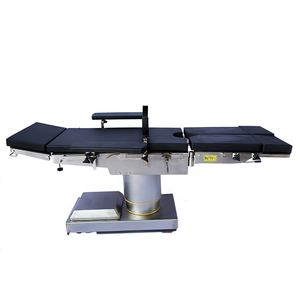
Orthopaedic C-arm Operating Theatre Table Vascular Surgery Bed
Get a Quote
MEDICA Stainless Steel CE Certified 1.5 mm Straight Plate (Thickening)
Get a Quote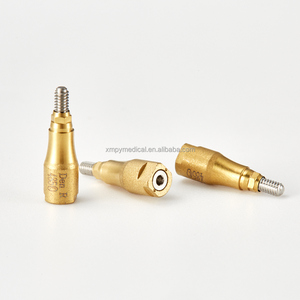
High Accuracy Implant Scan Body for Digital Workflow Restorations
Get a Quote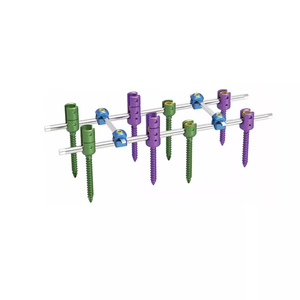
Factory Price Straight Pedicle Screw Spinal Fixation Implants
Get a Quote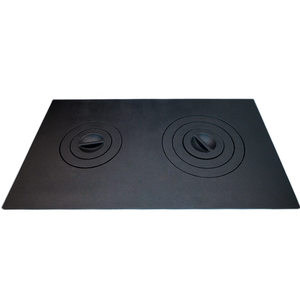
Cast Iron Stove Top Plate with Removable Rings Processing Auxiliary
Get a Quote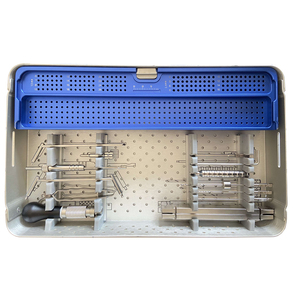
Surgical Small Animal Veterinary ALP S 2.4mm Locking Plate Kit System
Get a Quote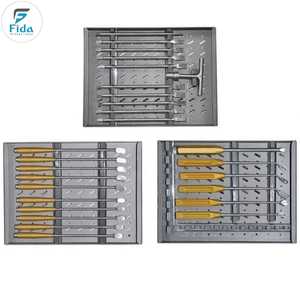
PLIF TLIF Cage Spine Instrument Set Reusable Orthopedic Sets
Get a Quote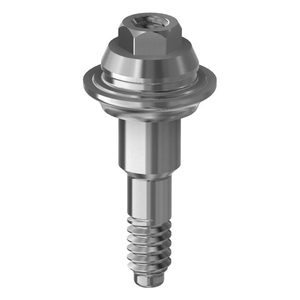
Titanium Internal Drive Connection Universal Spinal Fixation System
Get a Quote1. Executive Technical Overview: Biomechanical Superiority of Orthopedic Cable Systems
In modern reconstructive surgery and complex trauma management, the mechanical integrity of cerclage stabilization is paramount. Monofilament stainless steel wires, historically utilized for bone bandaging, suffer from high rates of construct loosening, sharp-edge stress concentration, and early fatigue failure under dynamic physiological loading. Modern surgical practice has consequently shifted toward advanced multi-filament braided orthopedic cable systems.
Engineered from titanium alloys (Ti-6Al-4V ELI conforming to ASTM F136) or Cobalt-Chromium-Molybdenum alloys (Co-28Cr-6Mo per ASTM F75 / ASTM F1537), orthopedic cerclage cables comprise precise 7x7 or 7x19 multi-strand braided wire architectures. This geometric micro-braiding provides exceptional flexural flexibility while delivering significantly higher tensile strength and resistance to fretting wear compared to solid wire constructs.
When deployed in periprosthetic femoral fractures, trochanteric reattachment osteotomies, or patellar tension-band wiring, orthopedic cable systems maintain uniform contact pressure around the bone cortex. By integrating calibrated tensioning instruments and deformational crimp sleeves, surgeons can achieve precise, reproducible compressive loads (typically calibrated between 100 N and 400 N) without inducing localized bone necrosis or wire notch sensitivity.
Material Science & Mechanical Engineering Benchmark
Selecting the proper metallurgical substrate is critical to prevent galvanic coupling and optimize load transfer in revision joint replacement and fracture care.
Titanium Alloy Cable (Ti-6Al-4V ELI)
Conforming to ASTM F136 specifications, Grade 23 Ti-6Al-4V ELI provides supreme biocompatibility, low modulus of elasticity (110 GPa) matching cortical bone, and zero galvanic corrosion potential when used alongside titanium locking compression plates (LCP).
Cobalt-Chromium (Co-Cr-Mo) Cable
Manufactured to ASTM F75 / F1537 standards, Co-Cr-Mo multi-strand cables deliver ultimate tensile strength exceeding 1200 MPa. Designed specifically for high-load trochanteric reattachment and revision total hip arthroplasty (THA) where maximum fatigue life is imperative.
Low-Profile Deformable Crimp Sleeves
Precision-machined sleeves engineered for predictable plastic deformation under crimping tool pressure. Delivers superior anti-backlash security, eliminating cable slippage while maintaining a smooth surface to mitigate soft-tissue irritation.
| Parameter / Specification | Titanium Cable System (Ti-6Al-4V ELI) | Cobalt-Chrome System (Co-28Cr-6Mo) | Stainless Steel System (316L) |
|---|---|---|---|
| Standard Specification | ASTM F136 / ISO 5832-3 | ASTM F75 / ASTM F1537 / ISO 5832-4 | ASTM F138 / ISO 5832-1 |
| Cable Diameters Available | Ø 1.0 mm, 1.8 mm, 2.0 mm, 2.4 mm | Ø 1.8 mm, 2.0 mm | Ø 1.2 mm, 1.5 mm, 2.0 mm |
| Strand Architecture | 7 x 7 Micro-Braided (49 strands) | 7 x 19 High-Flex Braided (133 strands) | 7 x 7 Standard Braided |
| Ultimate Tensile Load (2.0mm) | ≥ 1,850 N | ≥ 2,400 N | ≥ 1,600 N |
| Fatigue Limit (10⁶ Cycles) | High Flex fatigue threshold | Extreme wear & tensile endurance | Moderate fatigue threshold |
| Imaging Compatibility | Artifact-reduced MRI & CT | Radiopaque visualization | Radiopaque visualization |
2. Surgical Indications & Biomechanical Application Protocols
Orthopedic cable systems provided by top-tier Chinese manufacturers are designed to address challenging reconstruction scenarios where screw fixation alone is compromised due to intramedullary implants, osteoporotic bone, or bone loss.
A. Periprosthetic Femoral Fractures (Vancouver B1/B2)
When fractures occur surrounding an existing total hip arthroplasty stem, bicortical screw placement is restricted. Combining cerclage cables with bypass locking plates provides stable hybrid fixation, protecting stem stability while promoting secondary bone healing.
B. Greater Trochanteric Reattachment
In complex revision hip surgery involving extended trochanteric osteotomy (ETO), trochanteric grip plates integrated with high-tension CoCrMo cerclage cables deliver reliable reattachment against the pull of the abductor musculature.
C. Tension-Band Wiring for Fractures
Olecranon, patellar, and distal humerus fractures subjected to tensile muscle forces are converted into compressive forces at the fracture line using tension-band cabling, dramatically reducing non-union rates.
D. Sternal Closure & Reconstruction
High-tensile orthopedic cables provide robust median sternotomy closure in high-risk cardiac patients, avoiding sternal dehiscence and wire cut-through associated with traditional sternal wires.
Global Sourcing Trends & Procurement Drivers (2025–2030)
As global healthcare systems demand higher cost-efficiency without compromising patient outcomes, procurement managers are shifting sourcing strategies toward accredited OEM manufacturers in China.
1. Integrated Cable-Plate Systems
Future trauma systems favor pre-contoured locking plates featuring integrated cerclage cable eyelets and dual-purpose locking/cable holes. This reduces construct profile and surgical time during complex periprosthetic cases.
2. Single-Use Sterile Kits
Hospitals are transitioning away from non-sterile instrument trays toward gamma-sterilized (Co-60, SAL 10⁻⁶) individual implant packs. This eliminates hospital decontamination costs, reduces infection risk, and speeds OR turnover.
3. Direct OEM Cleanroom Contract Manufacturing
Global medical brands increasingly rely on Chinese contract manufacturers offering end-to-end capabilities: Swiss CNC turning, micro-braiding, laser etching, automated cleanroom pouch sealing, and regulatory filing support.
3. Why Partner with China's Premier Orthopedic Suppliers
As a global leader in orthopedic implant manufacturing, our enterprise—refining infrastructure over decades—integrates complete raw-material-to-sterile-product capabilities. Operating strictly under ISO 13485 and ISO 9001 quality management systems, our production center guarantees rigorous compliance for global distributors and OEM partners.
- Full Portfolio Source Consolidation: Access orthopedic trauma plates, intramedullary nails, pedicle screws, PEEK cages, sports medicine suture anchors, and high-tensile cerclage cable systems under a unified supply contract.
- Certified Raw Materials: 100% of titanium bars, wires, and cobalt-chrome alloys are sourced with full chemical and mechanical Material Test Certificates (MTC) matching ASTM F136, ASTM F67, and ASTM F75 standard specifications.
- Precision Manufacturing Infrastructure: Equipped with multi-axis CNC machine centers, automated wire-braiding systems, precision crimp deformation testing rigs, and laser etching machines for full lot traceability.
- Registration & Regulatory Technical Files: Complete technical documentation (STED), biocompatibility test reports (ISO 10993), clinical evaluation reports, and surgical technique manuals ready for national market approvals.
Frequently Asked Questions (FAQ)
Technical, regulatory, and commercial insights for medical device buyers, distributors, and hospital procurement departments.
What mechanical certifications and testing standards govern your orthopedic cable systems?
How do titanium cables compare to cobalt-chrome cables in revision total hip arthroplasty?
Do you offer customized OEM private label solutions and custom instrument trays?
What sterilization options are available for global export?
How does the cable tensioner system prevent over-tightening or bone cutting?
What is the minimum order quantity (MOQ) and lead time for B2B distributors?
Can cerclage cables be passed around femoral stems without extensive soft tissue stripping?
Partner with China's Leading Orthopedic Cable System Manufacturer
Contact our engineering and commercial team today to request product catalogs, technical documentation, material test reports, or OEM quotation details.
Get a Quote