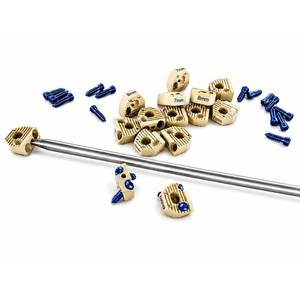
Locking 5mm Cervical Fusion Spine Cage Stainless Steel Material Set 17-Piece Surgical Training Orthopedic Instruments Veterinary
Send an Inquiry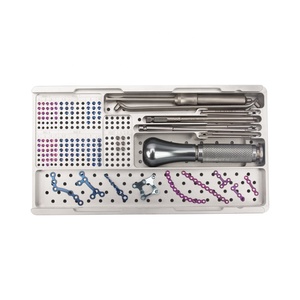
Orthopedic Implant Manufacturer's 1.5mm 2.0mm Mini Micro Plate System Maxillofacial Surgery Instrument Bone Surgical Instruments
Send an Inquiry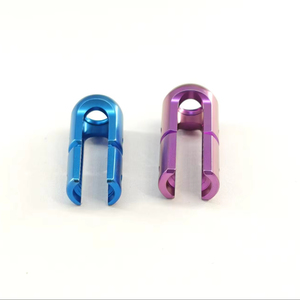
OEM Titanium Pedicle Screw Head U-Type Open Hook ISO 13485 Spinal Rod Seat Fixation Implant Custom Anodized CNC
Send an Inquiry
Inner Recessed French Dual Forms Nail Tips Artificial False Nails Gel Extension Easy to Peer off With Guide Lines
Send an Inquiry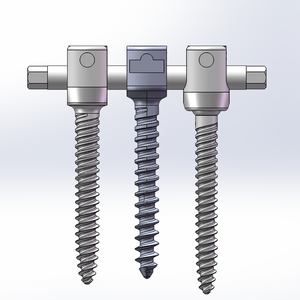
High Quality New Generation Titanium CoxII Orthopedic Surgery Implant Factory Direct Sales Spinal Nail Implants Interventional
Send an Inquiry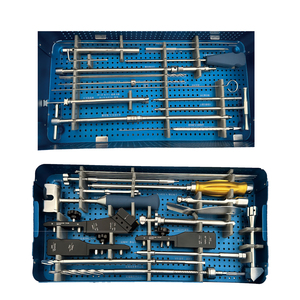
Standard Intramedullary Nail Orthopedic Implant Surgical Instrument Set for Femoral Reconstruction Interlocking Nail Inter-tan
Send an Inquiry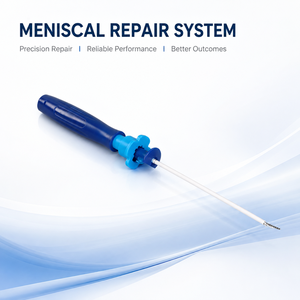
Meniscus Repair Needle Meniscal Repair System Surgical Suture All Inside Needle Repair Meniscus Total Inner Meniscal Stapler
Send an Inquiry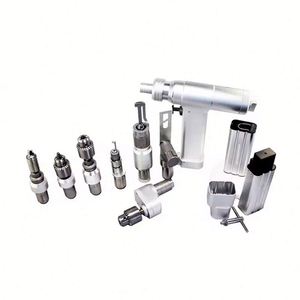
Veterinary Orthopedic Power Tool Set Multi-Function Neurosurgery Craniotomy Micro Drill Surgical Instruments Autoclavable
Send an InquiryExecutive Summary: The Evolution of Vertebral Augmentation & Percutaneous Kyphoplasty (PKP)
Vertebral Compression Fractures (VCFs), primarily induced by osteoporosis, spinal trauma, or osteolytic lesions, represent a significant burden on global healthcare infrastructure. Percutaneous Kyphoplasty (PKP) has emerged as the definitive minimally invasive surgical (MIS) gold standard for addressing VCFs. Unlike conventional vertebroplasty, PKP incorporates an inflatable bone tamp (balloon catheter) to restore lost vertebral body height, reduce localized kyphotic deformity angles, and create a controlled internal cavity for high-viscosity polymethylmethacrylate (PMMA) bone cement deposition.
As global healthcare procurement departments shift toward total cost optimization, compliance strictures, and risk mitigation, China has established itself as the world's primary manufacturing hub for advanced orthopedic spinal systems. Modern Chinese orthopedic original equipment manufacturers (OEMs) operate under rigorous ISO 13485 quality management systems, utilizing Swiss 9-axis CNC machining, micro-laser welding, and automated cleanroom assemblies that rival Western counterparts in structural integrity, dimensional tolerance, and biological safety.
Biomechanical Engineering of Modern Kyphoplasty Systems
A complete clinical-grade Percutaneous Kyphoplasty (PKP) kit comprises integrated access, inflation, and delivery subsystems engineered for sub-millimeter precision under fluoroscopic guidance. Evaluating China supply partners requires a granular understanding of key component specifications:
1. Access & Puncture System
Consisting of ergonomic diamond-tip or bevel-tip trocars, working cannulas (10G/11G), and drill tools. Crafted from medical-grade AISI 304 Stainless Steel or TC4 Titanium alloys, ensuring minimal tissue disruption and zero shaft deflection during transpedicular or extrapedicular entry.
2. Inflatable Bone Tamp (IBT)
High-pressure medical polyurethane/PET balloons featuring dual platinum-iridium radiopaque marker bands. Engineered to withstand inflation pressures up to 400 PSI (27.5 bar) with predictable, symmetrical volumetric expansion (10mm to 20mm lengths) to re-establish anatomical height.
3. Cement Injection Subsystem
Screw-driven directional cement pushers and hydraulic delivery devices. Designed with precise pitch threading to prevent sudden cement surges, mitigating the risk of posterior wall extravasation into the epidural space.
Technical Specification Comparison: Standard vs. Advanced PKP Systems
| Performance Parameter | Standard Vertebroplasty Kit | High-Tier Kyphoplasty System (China OEM Standard) |
|---|---|---|
| Height Restoration Capability | Minimal (Passive Fill Only) | Active Restoration (Up to 88% Original Height) |
| Max Balloon Inflation Pressure | N/A | 350 – 400 PSI (Safety Margin > 1.5x) |
| Radiopaque Marker Material | Basic Stainless Steel Collar | 90% Platinum / 10% Iridium Micro-Rings |
| Cement Viscosity Compatibility | Low-to-Medium Viscosity | Controlled High-Viscosity PMMA (Staggered Cure) |
| Sterilization Standard | EO Gas / Autoclave Trays | Co-60 Gamma Irradiation (SAL 10⁻⁶), Sterile Barrier Blister |
Future Procurement Trends & Technology Innovations (2025–2030)
The spine care landscape is experiencing dynamic technological shifts driven by robotic surgery adoption, material science breakthroughs, and value-based healthcare models. B2B importers, hospital procurement officers, and medical brand owners must evaluate suppliers based on their technical roadmap for next-generation systems:
1. Mechanical Expandable Spine Jacks vs. Polymer Balloons
While inflatable balloon tamps dominate volume, rigid mechanical expansion devices (made of titanium alloy lattices) offer targeted directional height restoration. Leading Chinese manufacturers are developing hybrid kits that combine expandable metallic scaffolds with PMMA delivery, allowing for permanent structural support prior to cement hardening.
2. Bioresorbable & Hydroxyapatite (HA) Composite Cements
Traditional PMMA displays non-physiological stiffness (Young’s modulus ~2-3 GPa) which can induce adjacent segment fractures (ASF). Future procurement focuses on bioactive bone cements infused with Strontium or Nano-Hydroxyapatite, encouraging osteoinduction, remodeling, and long-term biological integration.
3. Robot-Assisted Navigation & Low-Radiation Instruments
With the rapid deployment of surgical robots in Asian and European ORs, puncture needles are transitioning to optical marker-compatible designs. Puncture tools now integrate specialized geometry for seamless coupling with image-guided navigation software, reducing intraoperative fluoroscopy exposure by up to 60%.
4. Unit-Dose Pre-Filled Sterile Packaging Solution
Hospitals are increasingly rejecting multi-step manual tray assembly. Procurement contracts prioritize single-use, sterile-packaged kits where trocars, balloon catheters, cement mixers, and pushers come pre-arranged in single-strip blister packaging, eliminating hospital sterilizing overhead and cross-contamination risks.
Why Partner with China's Premier Orthopedic Exporters
Navigating international supply chains for Class IIb and Class III spinal devices requires complete transparency in manufacturing execution, raw material verification, and international regulatory backing. As a pioneer in medical technology manufacturing, our infrastructure is built to support worldwide OEM/ODM partnerships:
Metallurgical Excellence & Traceability
All raw titanium (ASTM F1472 / TC4 and ASTM F67 TA2/TA3) and PEEK materials are imported with full mill certificates. Every batch undergoes ultrasonic flaw detection, tensile strength verification (≥930 MPa for TC4), and chemical composition spectrographic analysis.
Cleanroom & Sterilization Controls
Our production ecosystem features Class 100,000 cleanroom assembly lines equipped with automated leak detection systems for balloon pressure testing. Sterile packaging option relies on Co-60 gamma irradiation delivering a Sterility Assurance Level (SAL) of 10⁻⁶.
Full Technical File Support for Registration
We empower global distributors by providing turnkey registration dossiers (CE technical files, STED formatting, biocompatibility test reports according to ISO 10993 series, dynamic fatigue testing reports, and surgical technique guides).
Frequently Asked Questions (B2B Procurement & Technical Guide)
Initiate Your Custom Kyphoplasty Sourcing Strategy Today
Connect directly with our engineering and international trade department for full catalog access, bulk pricing tiers, OEM technical consultation, and sample evaluation kits.