Biomechanical Foundations of Cancellous Bone Fixation Screws
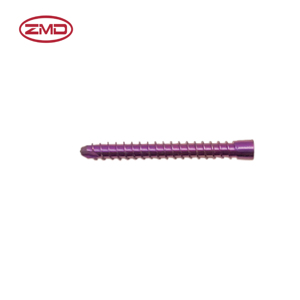
Cancellous screws represent a vital category of orthopedic trauma hardware specifically engineered to secure anchorage within metaphyseal and epiphyseal bone structures. Unlike compact, high-density cortical bone (which exhibits low porosity and high compressive modulus), cancellous bone is characterized by an open, porous trabecular meshwork with significantly lower bone mineral density (BMD). Consequently, obtaining stable internal fixation requires fundamentally distinct screw geometries, thread profiles, and mechanical distribution mechanisms.
When selecting suppliers from major Chinese manufacturing hubs, medical device procurement officers must evaluate how well a supplier’s engineering department translates theoretical biomechanics into mass-produced titanium and stainless steel fasteners. The primary goal of a cancellous screw is to generate controlled interfragmentary compression (the "lag effect") without stripping the surrounding trabeculae during insertion.
Deep Thread Profile
Features a significantly larger thread-depth-to-core-diameter ratio ($h_t / d_c$). This expansive contact area anchors securely into low-density porous bone matrix, preventing shear pull-out.
Wide Pitch Distance
Constructed with a wide pitch (typically 1.75mm to 3.0mm) to capture substantial trabecular bone bridges between thread flanks, optimizing resistance against cyclic fatigue.
Self-Tapping Flutes
Equipped with reverse-cutting distal flutes that evacuate bone debris, reducing micro-fractures in surrounding cancellous architecture upon initial insertion.
Mathematical Pull-Out Force Dynamics
The total axial pull-out strength ($F_{\text{pullout}}$) of a cancellous screw installed in spongy bone is governed by the shear strength of the tissue ($\tau$) multiplied by the cylindrical shear area created by the outer thread diameter ($d_o$), length of thread engagement ($L$), and the thread shear area factor ($F_{\text{thread}}$):
Fpullout = τ · π · do · L · Fthread
Top-tier Chinese factories utilize 5-axis Swiss CNC turning machines (e.g., Citizen, Tornos, Tsugami) to ensure thread root radius concentricity remains within strict tolerances ($\pm 0.005\text{ mm}$), ensuring predictable holding power during patient mobilization.
Technical Specifications Matrix: Cancellous vs. Cortical Fixation Screws
Understanding these dimensional and mechanical parameters helps procurement managers establish rigorous incoming quality control (IQC) protocols when importing from accredited Chinese manufacturers.
| Specification Parameter | Cancellous Screw (Standard/Cannulated) | Cortical Screw (Standard/Locking) | Clinical Sourcing Significance |
|---|---|---|---|
| Primary Target Tissue | Metaphysis & Epiphysis (Spongy/Trabecular) | Diaphysis (Dense Cortical Shaft) | Dictates thread contact surface requirement |
| Thread Pitch Range | 1.75 mm – 3.00 mm (Coarse Pitch) | 1.00 mm – 1.75 mm (Fine Pitch) | Wider pitch captures larger trabecular volumes |
| Outer-to-Core Diameter Ratio | High Ratio (~ 1.6 to 2.1) | Low Ratio (~ 1.2 to 1.4) | Deep threads increase volumetric pull-out strength |
| Cannulation Option | Highly Common (Ø1.1mm to Ø3.2mm inner bore) | Uncommon (Mostly solid construction) | Enables percutaneous insertion over guide wire |
| Primary Raw Materials | Ti-6Al-4V ELI (ASTM F136) / 316L (ASTM F138) | Ti-6Al-4V (ASTM F1472) / Pure Titanium TA3 | Ensures biocompatibility and fatigue endurance |
| Thread Form Variations | Fully Threaded / Partially Threaded (Lag Screw) | Fully Threaded / Locking Pitch Threads | Partial thread creates interfragmentary compression |
Metallurgical Excellence & Surface Passivation Standards
Leading Chinese cancellous screw factories leverage certified medical-grade titanium alloy bars—most notably Ti-6Al-4V ELI (Extra Low Interstitial) per ASTM F136 and medical-grade implant stainless steel 316LVM per ASTM F138. The structural integrity of these implants relies heavily on precise heat treatment and surface passivation techniques to prevent metallic ion release in vivo.
Surface Treatment Protocols Executed by Premier Suppliers:
- Type II Anodization (Titanium Color Coding): Creates a controlled, non-cytotoxic titanium oxide layer ($TiO_2$) that increases surface fatigue resistance by up to 25% while providing color coding (e.g., Pink for Ø3.5mm, Gold for Ø4.0mm, Blue for Ø6.5mm) for seamless intraoperative identification.
- Electrochemical Polishing & Nitric/Citric Acid Passivation: Removes free iron particles from outer surfaces, eliminating micro-pitting risks per ASTM F86 guidelines.
- Surface Micro-Texturing (HA / Plasma Coating): Advanced factories offer Hydroxyapatite (HA) plasma spraying for prolonged permanent fixation cases, promoting osteoblast adhesion directly along screw threads.
Future Product Development Trends in Cancellous Screw Technology
As the global orthopedic device industry transitions toward minimally invasive surgery (MIS) and bio-integrative solutions, Chinese suppliers are investing heavily in R&D to meet modern surgical demands. Global OEM partners and medical distributors should align their procurement strategies with these major technological shifts:
1. Bioabsorbable Magnesium Alloys
Development of Mg-Zn-Ca bioabsorbable cancellous screws that gradually degrade in vivo after bone healing. Eliminates mandatory secondary hardware removal procedures in pediatric and trauma cases.
2. 3D-Printed Trabecular Architectures
Additive manufacturing via Electron Beam Melting (EBM) allows cancellous screws to feature porous core lattices that mimic natural human bone porosity, achieving rapid osseo-integration.
3. Antimicrobial Nano-Coatings
Silver-ion ($Ag^+$) and copper micro-dopants applied via PVD vacuum sputtering reduce biofilm formation and lower Surgical Site Infection (SSI) rates in complex open-fracture cases.
Global Sourcing & Supply Chain Trends for Importers
International buyers are moving away from piecemeal procurement and toward turnkey OEM/ODM supplier partnerships. Factories in China's specialized medical hubs (such as Zhejiang and Jiangsu provinces) now provide fully integrated services including:
- Gamma-Sterilized Ready-to-Use Blister Packaging: Implants are packaged in cleanroom environments (ISO Class 7 / Class 100,000) and sterilized using Cobalt-60 gamma irradiation ($SAL 10^{-6}$), allowing hospitals to bypass local autoclaving workflows.
- UDI (Unique Device Identification) Direct Part Marking: High-precision laser etching of 2D DataMatrix codes directly onto screw heads to fulfill FDA UDI regulations and EU MDR traceability mandates.
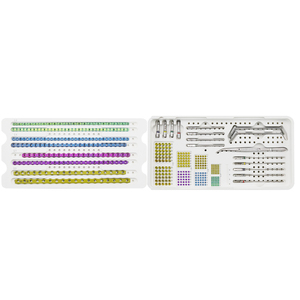
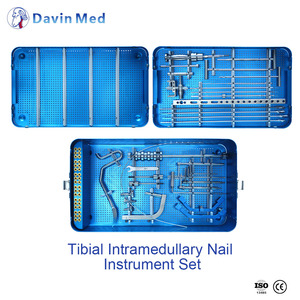
- Modular Surgical Instrument Tray Matching: Bundling cancellous screws with custom color-anodized aluminum trays, depth gauges, countersinks, and hex drivers for complete procedure kits.
Why Partner with Orthi Medical / China Benchmark Suppliers
Navigating the supplier landscape in China requires evaluating a manufacturer's compliance, technical capabilities, and quality control systems. Benchmark producers like Orthi Medical Co., Ltd. demonstrate key structural strengths:
Full In-House Manufacturing
From raw titanium bar stock to finished sterile-packed implant, all Swiss-lathe turning, thread milling, cannulation drilling, and cleaning occur under a strictly documented QMS.
Advanced Quality Testing
Equipped with optical CMM measuring machines, mechanical pull-out strength testers (ASTM F543 compliant), and torsional fatigue testing setups to verify structural stability.
Global Regulatory Documentation
Provides full technical documentation, material mill certificates, biocompatibility test data, and surgical technique manuals to accelerate distributor product registration.
Purchasing & Technical FAQ: Sourcing Cancellous Screws from China
Key technical questions addressed by OEM buyers, quality managers, and medical device distributors during supplier audits.
Ready to Streamline Your Orthopedic Implant Sourcing?
Partner with an ISO 13485 certified manufacturer offering precision CNC production, full regulatory support, and competitive lead times for global medical device distributors.