Featured Orthopedic Implant & Surgical Instrument Systems
Direct Factory Supply for Global Medical Device Distributors & Hospital Procurement
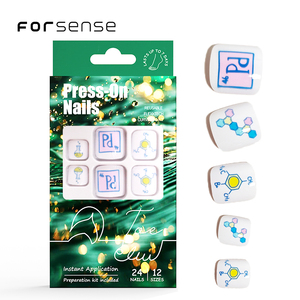
Premium False Nails with Design and Stickers. Custom Unique Patterns Toe Nails Supplies Press on White Color Glue on Nail Tips
Contact Us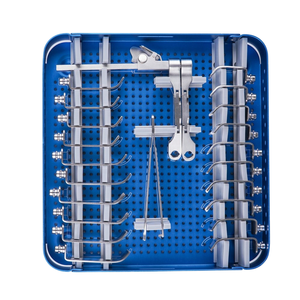
Stainless Steel Manual Spinal Distractor Instrument Set Medical Spine Retractor Surgical Instruments CE Certified Class I
Contact Us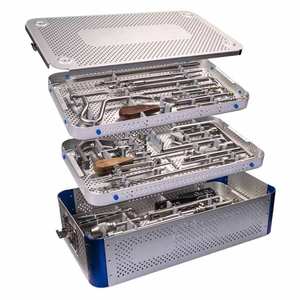
High Quality Manual PFNA Intramedullary Nail Orthopedic Surgical Instruments Veterinary Use Horse Dog Reusable Stainless Steel
Contact Us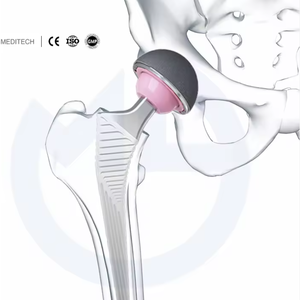
Full Set Femoral stem Acetabular Cup Joint Replace Knee Orthopedic Hip Prosthesis
Contact Us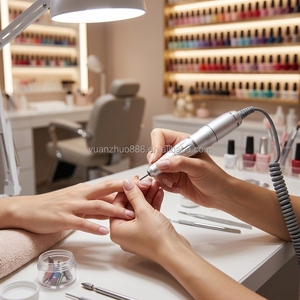
Manicure Machine Nail Polish Machine Customize Plastic Aluminium Frame Nail Drill 115B Tips Three Pin For Up200 machine
Contact Us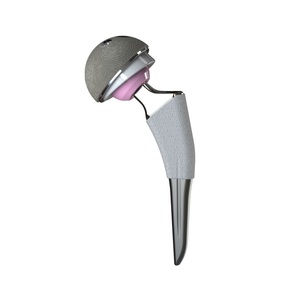
Manufacturer's Long Cementless Femoal Stem HA Coating Hip Prosthesis for Veterinary Hip Joint Surgery
Contact Us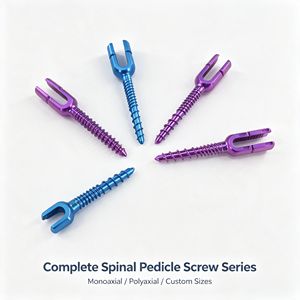
Custom OEM ODM Medical Grade Titanium Alloy Spine Fixation Pedicle Screws And Rods System Factory Direct Orthopedic Implants
Contact Us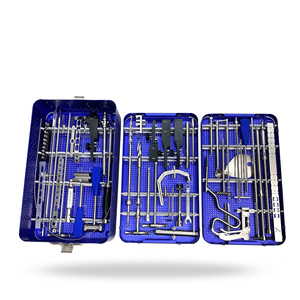
PFNA Interlocking Nail Instrument Set Proximal Femoral Anti-Rotation Surgical Orthopedic Kit Complete Manual Stainless Steel
Contact UsWhy Leading Global Orthopedic Brands Partner With Us
End-to-End Manufacturing Integrity, Rigorous Metallurgy, and Registration-Ready Compliance
Precision CNC Machining
Equipped with 5-axis Swiss-type longitudinal lathes and high-precision milling centers, ensuring anatomical contour tolerances within ±0.01mm for calcaneal lock plates and skeletal fixation screws.
Certified Raw Materials
We source exclusively high-grade Ti-6Al-4V ELI (ASTM F136) and pure titanium (ASTM F67) with full chemical analysis and mechanical tensile testing certifications per manufacturing lot.
ISO Class 7 Cleanroom Packing
Cleanroom washing, primary double-blister packaging, and Co-60 gamma ray sterilization guaranteeing a Sterility Assurance Level (SAL) of 10⁻⁶ for ready-to-use clinical deployment.
Technical Whitepaper: Advanced Biomechanics & Manufacturing Standards of Calcaneal Locking Plates
Fractures of the calcaneus represent approximately 60% of all tarsal injuries and 2% of all adult fractures. Given the bone's complex three-dimensional trabecular geometry, high proportion of cancellous core, and severe compressive load during weight-bearing, intra-articular calcaneal fractures (specifically Sanders Type II, III, and IV) present extraordinary clinical challenges. The primary objective of surgical intervention is the anatomic restoration of the subtalar joint facet, recovery of Böhler’s angle (20°–40°) and Gissane’s angle (120°–145°), and re-establishment of calcaneal height, width, and mechanical alignment.
As a leading China calcaneal locking plate factory and exporter, Orthi Medical Co., Ltd. has developed next-generation anatomical calcaneal locking compression plate (LCP) systems. By integrating biomechanical finite element analysis (FEA) with ultra-precision CNC manufacturing, our implant solutions minimize soft-tissue disruption while optimizing multi-planar angular stability under cyclical physiological forces.
Clinical Insight: The mechanical failure of traditional non-locking calcaneal plates often stems from screw pull-out in porous cancellous bone during early mobilization. Anatomical calcaneal locking plates construct a rigid fixed-angle construct that distributes shear and compressive stresses evenly across the lateral calcaneal cortex.
Anatomical & Structural Design Innovations
Our engineering matrix incorporates crucial design refinements tailored to surgical requirements during lateral extendable or minimally invasive sinus tarsi approaches:
1. Pre-contoured Low-Profile Geometry
The calcaneal lateral wall is notorious for thin skin flap coverage and high risk of wound dehiscence or hardware prominence. Orthi Medical's locking plates feature an anatomical pre-contoured profile ranging from 1.5mm to 2.0mm in plate thickness. Tapered plate edges drastically reduce soft tissue friction against the peroneal tendons and minimize postoperative hardware discomfort.
2. Multi-Directional & Variable-Angle Locking Technology
Fixation of the thalamic portion (subtalar articular surface) and the sustentaculum tali requires precise screw directionality. Our calcaneal locking plates feature thread-locked combi-holes accepting both Ø3.5mm cortex screws and Ø3.5mm/2.7mm locking screws. Variable-angle locking options allow surgeons to direct subchondral screws precisely into the sustentaculum tali—the densest bone stock of the calcaneus—without risking joint penetration.
3. Cuttable Mesh and Perimeter Architecture
Recognizing the wide variation in foot morphology across demographic populations, our perimeter calcaneal plates are designed with cuttable structural bridges. Surgeons can contour, trim, or adjust plate arms intraoperatively to match complex comminuted fracture patterns without compromising structural integrity or screw-lock thread engagement.
Material Science: Titanium Alloy (Ti-6Al-4V) vs. Stainless Steel (316LVM)
Material selection directly dictates clinical performance, fatigue strength, and artifact generation in postoperative diagnostic imaging (CT and MRI). Orthi Medical manufactures implants adhering strictly to international medical standards:
| Parameter / Feature | Titanium Alloy (Ti-6Al-4V ELI) | Medical Stainless Steel (316LVM) |
|---|---|---|
| Material Standard | ASTM F136 / ISO 5832-3 | ASTM F138 / ISO 5832-1 |
| Tensile Strength (MPa) | ≥ 860 MPa | ≥ 890 MPa |
| Modulus of Elasticity (GPa) | 110 GPa (Closer to cortical bone) | 210 GPa (Higher stiffness) |
| Biocompatibility & Corrosion | Superior passive oxide film (TiO₂) | High surgical grade resistance |
| MRI / CT Compatibility | Minimal scatter artifact; non-magnetic | Moderate imaging interference |
| Anodization Options | Type II / Color Electrochemical Anodizing | Electropolished finish |
Future Procurement Trends in the Global Orthopedic Implant Market (2025–2030)
The global demand for foot and ankle trauma products is undergoing structural shifts. Overseas importers, OEM brand owners, and hospital procurement groups must align their supply chain strategies with these four key emerging market trends:
1. Shift Towards Minimally Invasive Surgery (MIS) & Micro-Plating
Traditional open reduction and internal fixation (ORIF) via extensive lateral approaches carries a wound complication rate of up to 25%. Modern surgical techniques increasingly favor sinus tarsi MIS approaches. Consequently, procurement volume is shifting from large perimeter plates to low-profile, mini-calcaneal locking plates and cannulated compression screws. Importers must ensure their suppliers possess micro-machining capabilities for smaller, high-strength implant configurations.
2. Preference for Factory-Sterile Packaging (Gamma SAL 10⁻⁶)
Hospitals are actively reducing in-house central sterile supply department (CSSD) overheads. Sterile-packaged calcaneal plates—delivered in individual double-peel blisters with triple-tracking barcode stickers—are rapidly displacing non-sterile bulk shipments. Pre-sterilized implants eliminate re-sterilization cycles, mitigate cross-contamination risks, and ensure 100% implant traceability from factory floor to operating theater.
3. Stringent Regulatory Harmonization (EU MDR & FDA Audit Readiness)
Regulatory scrutiny under EU MDR 2017/745 and global authorities requires orthopedic manufacturers to maintain complete technical files, extensive ISO 14801 / ASTM F382 mechanical fatigue test data, and detailed clinical evaluation reports (CER). B2B buyers must partner exclusively with China factories that possess robust ISO 13485 Quality Management Systems and comprehensive regulatory file support for seamless local market registrations.
4. Supply Chain Consolidation & OEM Customization Demand
Distributors are moving away from fragmented vendors towards single-source original equipment manufacturers capable of delivering trauma, spine, sports medicine, and custom instrument kits under one roof. Customized branding, laser labeling, color-coded instrument trays, and flexible minimum order quantities (MOQs) are now non-negotiable requirements for global procurement leaders.
Quality Assurance, Metallurgy & Testing Protocols at Orthi Medical
To guarantee that every calcaneal locking plate withstands repetitive physiological stress during early partial weight-bearing phases, Orthi Medical executes strict quality verification steps across the manufacturing cycle:
- Raw Material Bar Inspection: Ultrasonic flaw detection and spectral chemical analysis per heat batch of raw titanium bars.
- Dimensional Precision Verification: Fully automated Optical Coordinate Measuring Machines (CMM) and video measuring systems audit hole pitch, thread profile, and plate contour.
- Dynamic Fatigue & Bending Testing: Mechanical bench testing subjecting plates to 5,000,000 cyclic loads without structural fracture or screw loosening.
- Surface Passivation & Anodization: Type II anodization to enhance fatigue life, prevent fretting corrosion, and enable instant intraoperative size identification via color coding.
Frequently Asked Procurement Questions (FAQ)
Key Commercial & Technical Answers for B2B Importers, OEMs, and Medical Distributors
Partner with China's Premier Orthopedic Implant Factory
Contact our medical engineering team today to request catalog pricing, OEM design consultation, or sample evaluations for your market.
Contact Us