Featured Orthopedic Implant & Surgical Instrument Portfolio
Explore precision-engineered trauma, spine, sports medicine, and endoscopic systems from leading Chinese medical manufacturers.

Executive Summary: Sourcing Orthopedic Devices & Implants from China
The global orthopedic implant sector is experiencing a paradigm shift driven by demographic aging, expanding healthcare infrastructure in emerging economies, and the urgent mandate for hospital cost-containment without compromising surgical efficacy. As hospitals and distributors navigate strict regulatory updates—most notably the transition to the European Union Medical Device Regulation (EU MDR 2017/745) and stringent FDA 510(k) clearances—evaluating China’s manufacturing ecosystem has evolved from a simple cost-reduction strategy into a core technological partnership.
China's top orthopedic implant manufacturers have matured beyond basic contract machining to become integrated research and manufacturing hubs. Leveraging ultra-precision multi-axis CNC Swiss machining, automated cleanroom operations, titanium anodization, and advanced surface science, top-tier Chinese exporters offer full-spectrum solutions across spinal instrumentation, trauma locking plates, total joint replacement (hip & knee), sports medicine arthroscopy devices, and minimally invasive Unilateral Biportal Endoscopy (UBE) platforms.
Information Gain Insight: Sourcing managers must evaluate orthopedic exporters not merely on piece-price unit costs, but on total system integration—comprising alloy chemical purity (ASTM F1472 / ASTM F67 compliance), fatigue-test data (ASTM F1717 / ASTM F543), regulatory Technical Documentation Files (TDF), and direct-to-OR sterile barrier packaging capabilities.
This technical whitepaper provides healthcare procurement executives, medical device distributors, and OEM brand owners with a comprehensive framework for selecting China’s best orthopedic implant suppliers, analyzing metallurgy trends, predicting procurement shifts, and overcoming regulatory hurdles.
Materials Science & Metallurgical Advances in Chinese Orthopedic Implants
The mechanical performance and biological safety of permanent and temporary surgical implants depend fundamentally on raw material purity and mechanical processing protocols. Leading Chinese orthopedic device factories maintain strict raw material control, utilizing certified titanium bars, medical-grade PEEK polymers, and high-nitrogen stainless steel compliant with global standards.
1. Titanium Alloy Innovations (Ti-6Al-4V ELI & Pure Titanium)
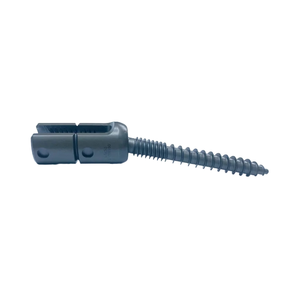
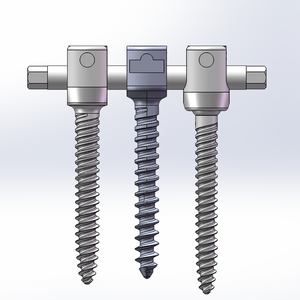
For spinal pedicle screws, intramedullary tibial/femoral nails, and trauma locking plates, Grade 5 Titanium Alloy (Ti-6Al-4V ELI / ASTM F1472) remains the gold standard. High-end Chinese manufacturers utilize Extra Low Interstitial (ELI) grades, which reduce oxygen, nitrogen, and iron content to deliver superior fracture toughness and high-cycle fatigue resistance. Pure Titanium (TA2/TA3 per ASTM F67) is selectively deployed in rib locking plates and micro-fixation devices requiring precise intraoperative cold bending.
2. PEEK & PEEK-Optima in Spinal & Sports Medicine Fixation
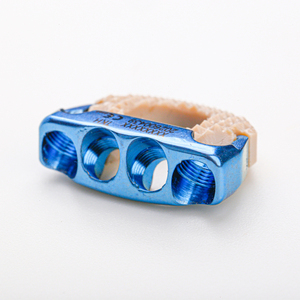
Polyetheretherketone (PEEK) has revolutionized interbody fusion cages and sports medicine suture anchors due to its radiolucency and elastic modulus (3.5–4.0 GPa) closely matching human cortical bone. This minimizes stress shielding at the endplate interface. Modern Chinese suppliers integrate radiopaque markers (tantalum or grade 5 titanium pins) into PEEK structures to allow accurate intraoperative X-ray and CT visualization.
| Material Classification | International Standard | Tensile Strength (MPa) | Biomechanical Application Target |
|---|---|---|---|
| Pure Titanium (TA2 / TA3) | ASTM F67 / ISO 5832-2 | ≥ 400 - 500 MPa | Cranio-maxillofacial, Rib Plates, Hand/Foot Trauma |
| Ti-6Al-4V ELI (TC4) | ASTM F1472 / ISO 5832-3 | ≥ 930 MPa | Pedicle Screws, Intramedullary Nails, Locking Plates |
| Medical Grade PEEK | ASTM F2026 | ≥ 95 - 110 MPa | Cervical/Lumbar Cages, Suture Anchors, MIS Devices |
| CoCrMo Alloy | ASTM F75 / ISO 5832-4 | ≥ 660 MPa | Total Joint Arthroplasty (Femoral Heads, Tibial Trays) |
3. Advanced Surface Treatments & Osseointegration Coatings
Modern Chinese implant exporters have invested heavily in high-vacuum Plasma Spraying (VPS) for Hydroxyapatite (HA) and Porous Titanium coatings on cementless total hip femoral stems and acetabular cups. Furthermore, Type II anodization of titanium surfaces produces an oxide layer that enhances surface hardness, decreases friction coefficients, and suppresses ion leaching in vivo.
Future Sourcing Trends for Global Orthopedic Implant Buyers (2025–2030)
As the medical device supply chain shifts toward higher efficiency and stricter compliance, international buyers must align with suppliers offering future-proof operational models. Key sourcing trends shaping Chinese orthopedic exports over the next decade include:
1. Transition to Direct-to-OR Sterile Packaging
Traditional non-sterile bulk shipping requires hospital central sterile supply departments (CSSD) to wash, wrap, and autoclave implants prior to surgery. The industry is rapidly shifting toward single-use, sterile-barrier blister packs sterilized via Cobalt-60 Gamma Irradiation achieving a Sterility Assurance Level (SAL) of 10-6. Leading Chinese exporters provide pre-packaged implants with 5-year shelf-life validation, reducing hospital infection risks and reprocessing expenses.
2. Integrated Regulatory Co-Development
Global importers no longer accept simple commercial invoices. Future-ready procurement requires suppliers to provide full technical master files, CE MDR Article 117 compliance documentation, biological evaluation reports (ISO 10993), and clinical evaluation reports (CER). Chinese top-tier manufacturers act as regulatory partners, supplying registration-ready technical dossiers for fast-track clearance in target markets across Latin America, Southeast Asia, the Middle East, and Europe.
3. Modular & Customized Instrument Trays
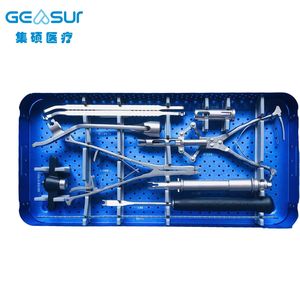
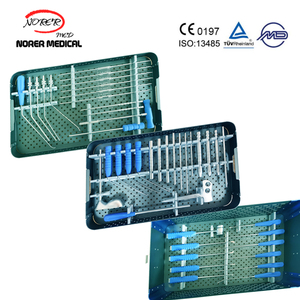
Implant adoption by orthopedic surgeons is directly linked to instrument ergonomicity. Procurement leaders are requesting customized CNC-machined stainless steel and aluminum instrument containers with clear color-coded anodizing. Custom OEM toolkits—such as specialized UBE SPINUSS sets or PCL reconstruction drill guides—allow distributors to differentiate their product lines from generic competitors.
4. Supply Chain Consolidation & Full-Line Sourcing
Managing multiple fragmented vendors for trauma screws, spinal rods, arthroscopy shavers, and interventional stents increases overhead and audit burdens. Procurement directors are favoring integrated Chinese manufacturers capable of offering multi-specialty portfolios under a unified ISO 13485 quality management audit.
Product Development & Surgical Innovation Trends
Innovation in surgical techniques continuously dictates implant design evolution. Chinese orthopedic manufacturers are actively partnering with clinical research hospitals to commercialize next-generation technologies:
1. Unilateral Biportal Endoscopy (UBE) & MIS Spine Decompression
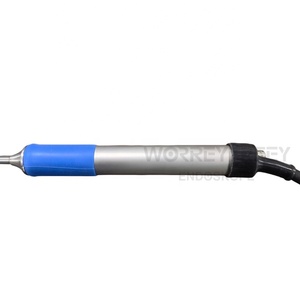
Minimally Invasive Spine (MIS) surgery is moving rapidly from open transforaminal approaches to UBE. The UBE system utilizes two independent portals—one for the high-definition endoscope and one for surgical instruments (power drills, radiofrequency probes, and cage inserters). Chinese manufacturers lead in producing specialized UBE toolkits and micro-shaver systems operating up to 70,000 r/min, enabling continuous burring under fluid irrigation with minimal soft-tissue disruption.
2. All-Suture & High-Strength UHMWPE Anchor Systems
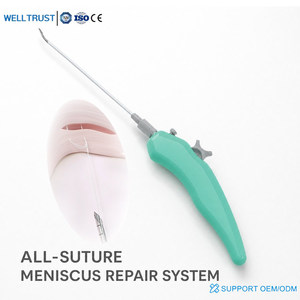
In sports medicine, shoulder rotator cuff repair and knee meniscal repair are moving away from bulky rigid anchors toward all-suture devices. These systems feature Ultra-High-Molecular-Weight Polyethylene (UHMWPE) braided sutures that collapse into a soft anchor mass behind the cortical bone wall. This drastically reduces bone loss during primary fixation and simplifies revision procedures.
3. Dynamic Pedicle Screw & Fenestrated Augmentation Solutions
With an aging patient demographic, treating osteoporotic bone presents severe screw pull-out risks. Advanced spinal pedicle screws now feature cannulated and fenestrated shafts, allowing surgeons to inject polymethylmethacrylate (PMMA) bone cement directly through the screw core into the vertebral body, dramatically improving fixation stability.
Why Partner with Top Chinese Orthopedic Manufacturers?
Leading Chinese medical device exporters stand at the intersection of precision engineering, strict quality assurance, and high-volume scalability. When evaluating manufacturing partners, buyers benefit from several key operational advantages:
Certified Cleanroom Facilities
State-of-the-art production environments featuring Class 100,000 (ISO Class 8) and Class 10,000 cleanrooms dedicated to final ultrasonic cleaning, assembly, and primary blister packaging to prevent particulate contamination.
End-to-End Quality Traceability
Every single implant carries a laser-etched lot number allowing 100% backward traceability to raw material melt certificates, CNC machine operator logs, passivation records, and gamma irradiation batch certificates.
In-House Mechanical Testing
Equipped with multi-axis mechanical testing rigs to conduct static axial compression, dynamic torsional fatigue, and pull-out strength tests in compliance with ASTM F1717, ASTM F543, and ISO 7206 protocols.
Comprehensive OEM/ODM Service
From custom 3D CAD modeling and rapid physical prototyping to full private labeling, laser engraving, color-anodized size identification, and custom box packaging designed for immediate retail distribution.
Procurement & Technical FAQ
Key questions addressed for hospital buyers, medical device importers, and OEM brand procurement officers.