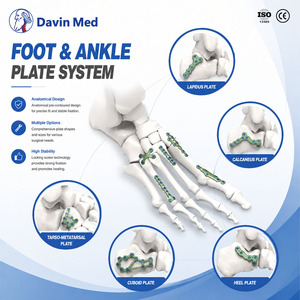
Featured Medical-Grade Orthopedic Implants & Systems
Explore our certified trauma, spinal, neurosurgical, and veterinary implant solutions engineered under strict ISO 13485 and CE quality frameworks using implant-grade Titanium (ASTM F1472 / ASTM F67) and PEEK polymers.
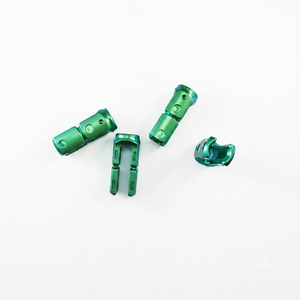
Custom Anodized Green Titanium Spinal Rod Connector U-Type Hook Open Sleeve Component Orthopedic Spinal Implants Fixation System
Get a Quote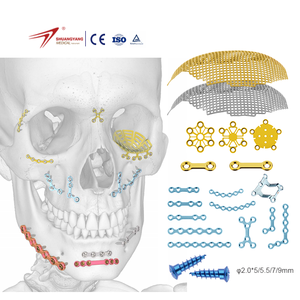
Shuangyang Medical Neurosurgery Maxillofacial System Cranial Implant Titanium Mesh Cranioplasty Skull Fixation Plating System
Get a Quote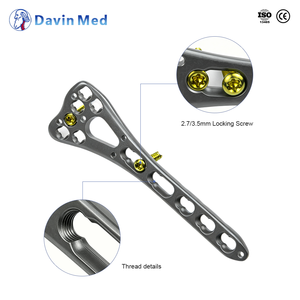
Distal Radius Volar Locking Plate Titanium Variable Angle Anatomical Precontoured Orthopedic Surgical Implant
Get a Quote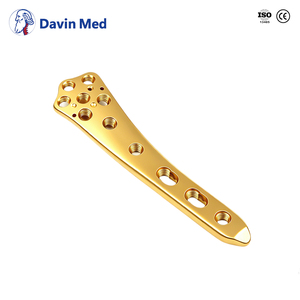
Davin Med Distal Humerus Lateral Locking Plate Titanium Orthopedic Bone Plate Trauma Implant CE ISO13485 OEM ODM Manufacturer
Get a Quote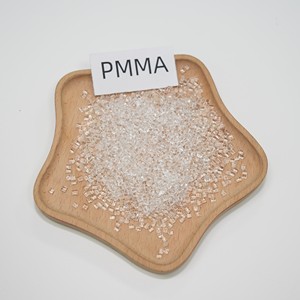
PMMA Polymer Material for Dental Prosthetics Orthopedic Bone Cement Surgical Instrument Components and Implantable Devices
Get a Quote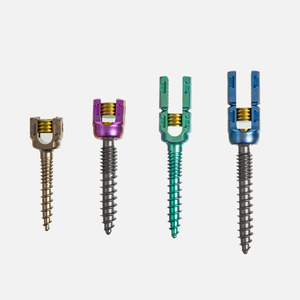
Medical Spine Titanium Orthopedic Implants Titanium Spinal Pedicle Screw Fixation System Spine Titanium Pedicle Screws
Get a Quote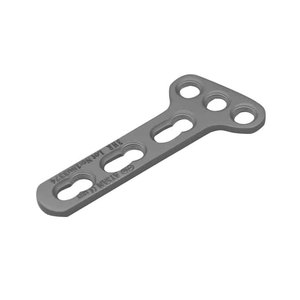
Ortopedicas Veterinaria Titanio Straight Compression Lc-Dcp Tplo Bone Plates Veterinary Orthopedic Implants
Get a QuoteISO 13485
Quality System Certified
230+
Patented Surgical Systems
SAL 10⁻⁶
Gamma Sterilization Standard
60+
Global Distributor Countries
Navigating the Global Orthopedic Supply Chain: Why Distributorship Strategy Starts in China
The global orthopedic devices market is undergoing a structural paradigm shift driven by demographic aging, healthcare expenditure rationalization, and rapid technological convergence in surgical subspecialties. For medical device distributors and hospital procurement managers, building a high-margin, regulatory-compliant distribution channel requires direct alignment with advanced contract manufacturing hubs in China.
Capital Efficiency & Margin Optimization
Traditional Western orthopedic brands often carry inflated overheads due to multi-tier sales structures. Direct partnership with Chinese OEM/ODM factories empowers distributors to secure tier-1 quality at 30% to 50% lower unit costs, protecting margins under national Value-Based Procurement (VBP) and capitation pricing models.
Manufacturing & Machining Precision
Leading Chinese factories utilize state-of-the-art 5-axis DMG MORI CNC milling machines, Citizen Swiss-type automatic lathes, and high-precision EDM line cutting. This guarantees geometric micro-tolerances (<0.005mm) across complex locking plates, polyaxial pedicle screws, and cranial meshes.
Full Regulatory Dossier Support
Commercializing implants requires seamless registration with regional regulatory authorities (EU MDR, US FDA 510k, COFEPRIS, ANVISA). Modern Chinese manufacturers maintain ISO 13485 QMS and provide full STED (Summary Technical Documentation) technical files, biocompatibility test reports, and clinical evaluations.
Biocompatible Metallurgy & Material Engineering Standards
In orthopedic trauma, spinal reconstruction, and joint replacement, structural integrity and mechanical biocompatibility are non-negotiable. Implants must withstand millions of dynamic loading cycles without mechanical fatigue, micro-motion stress corrosion, or adverse cellular responses.
| Material Specification | International Standard | Tensile Strength (MPa) | Primary Clinical Application | Biomechanical Advantage |
|---|---|---|---|---|
| Ti-6Al-4V (TC4 / Grade 5) | ASTM F1472 / ISO 5832-3 | ≥ 930 MPa | Pedicle Screws, Volar Locking Plates, Femoral Nails | High strength-to-weight ratio, superior fatigue endurance, radiolucency-compatible. |
| Pure Titanium (TA2 / TA3) | ASTM F67 / ISO 5832-2 | ≥ 400 - 500 MPa | Cranial Mesh, Maxillofacial Reconstruction, Rib Plates | Excellent ductility and malleability, allowing precise intraoperative anatomical contouring. |
| PEEK Optima (Polyetheretherketone) | ASTM F2026 | ≥ 95 - 120 MPa | Cervical & Lumbar Interbody Fusion Cages, Suture Anchors | Modulus of elasticity matching human cancellous bone; zero artifact on postoperative MRI/CT. |
| PMMA Polymer Material | ISO 5833 | ≥ 70 MPa (Compressive) | Vertebroplasty/Kyphoplasty, Arthroplasty Fixation Cement | Rapid acrylic polymerization, high compressive loading, radio-opaque contrast capability. |
Surface Engineering & Tribology Innovations:
Modern orthopedic implants produced by leading Chinese manufacturers utilize advanced surface modification techniques: Type II Anodization for friction coefficient reduction and anti-galling properties in titanium screw-plate interfaces; Vacuum Plasma Sprayed Hydroxyapatite (HA) for accelerated osseointegration; and Micro-arc Oxidation (MAO) for enhanced bio-inertness in permanent implants.
Future Procurement Trends in Orthopedic Distribution (2025–2030)
To capture market share and maintain competitive advantage, orthopedic distributors must adapt to changing surgical modalities, procurement structures, and packaging regulations.
1. Transition to Sterile Pre-Packaged Implants
Operating rooms worldwide are shifting away from hospital-side bulk autoclaving due to sterilization risks and tray management costs. Distributors are demanding single-use, double-blister Co-60 Gamma Sterilized packaging (SAL 10⁻⁶) with 5-year shelf-life stability, complete with 2D DataMatrix batch traceability barcodes.
2. Rise of Minimally Invasive Surgery (MIS) & UBE
Unilateral Biportal Endoscopy (UBE) and minimally invasive spinal surgery (MISS) are replacing traditional open surgery. Distributors need integrated supply chains providing both implantable devices (cannulated fenestrated pedicle screws) and specialized MIS instrument sets, endoscopes, and RF plasma ablation probes.
3. Private Labeling & Brand Equity Building
Rather than acting as simple regional brokers for international conglomerates, top-tier distributors are leveraging OEM/ODM factory partnerships to launch proprietary branded lines. Factories provide customized laser etching, color-coded anodization, customized surgical trays, and bespoke packaging.
Enterprise Core Competencies & Factory Infrastructure
Our manufacturing and technical architecture is specifically designed to eliminate distributor supply chain risk through rigorous Quality Management Systems (QMS), automated precision engineering, and comprehensive clinical education support.
Automated 5-Axis CNC Precision Production
Our cleanrooms and automated machining halls house high-precision multi-axis CNC systems capable of complex surface milling for anatomical calcaneal plates, distal humerus plates, and polyaxial screw heads. Every production batch undergoes 100% optical CMM profile scanning.
In-House Mechanical Testing Lab
Implants undergo mechanical verification matching international biomechanical protocols: ASTM F543 (Axial pullout and torque testing of metallic medical bone screws), ASTM F1717 (Static and dynamic fatigue testing for spinal implant assemblies), and ASTM F382 (Metallic bone plate bending fatigue test).
Cleanroom Packaging & Gamma Sterilization
Implants are cleaned using multi-stage automated ultrasonic solvent degreasing and purified water rinsing, followed by final assembly inside ISO Class 7 (Class 10,000) and ISO Class 8 cleanrooms. Gamma irradiation provides a Sterility Assurance Level (SAL) of 10⁻⁶.
Partner with China’s Leading Orthopedic Implant Factory
Request technical specification sheets, OEM/ODM catalog kits, and bulk factory quotes for your distribution territory.
Orthopedic Implant Sourcing & Distributorship FAQs
Answers to critical procurement, regulatory registration, quality assurance, and commercial distribution queries.
What regulatory certifications do your orthopedic implants hold for global distribution?
Our quality system operates strictly under ISO 13485 (Medical Devices QMS) and ISO 9001 standards. Applicable implant lines hold CE marking under European Council Directives and MDR compliance frameworks. Raw materials are certified under strict international metallurgical standards including ASTM F1472 for Ti-6Al-4V alloy, ASTM F67 for unalloyed pure titanium (TA2/TA3), ASTM F2026 for surgical PEEK, and ISO 5833 for PMMA polymer bone cement. Each shipment is accompanied by complete mill test certificates, biocompatibility test files (ISO 10993), and lot-specific certificate of analysis (CoA).
How do you support new distributors with product registration in local markets?
We provide a complete Regulatory Support Dossier formatted according to STED (Summary Technical Documentation) guidelines. This includes certified QMS certificates, free sale certificates (FSC), manufacturing process validation reports, material safety data sheets (MSDS), mechanical fatigue testing data (ASTM F1717 / ASTM F543), surgical technique guides, and multilingual clinical evaluation reports. Our dedicated regulatory affairs team works directly with your registration specialists to resolve local Ministry of Health technical inquiries.
What is the distinction between non-sterile and sterile pre-packaged implant options?
Non-sterile implants are delivered in protective washing trays ready for hospital steam sterilization (autoclaving). Sterile pre-packaged implants are processed in our ISO Class 7/8 cleanrooms, sealed in double-barrier Tyvek blister packs, and sterilized via Co-60 Gamma Irradiation to achieve a Sterility Assurance Level (SAL) of 10⁻⁶. Pre-packaged sterile products eliminate hospital reprocessing expenses, extend product shelf-life to 5 years, and feature protective 2D DataMatrix barcodes for rapid OR tracking and inventory control.
Can we request custom OEM/ODM manufacturing for proprietary surgical instrument kits or modified implants?
Yes. We specialize in turnkey OEM/ODM solutions. Based on your 2D/3D CAD drawings or physical samples, our R&D engineering team conducts Design for Manufacturability (DFM) reviews, generates rapid prototype samples, and prepares production tooling within 3 to 4 weeks. Custom options include proprietary color-anodized surface finishes, custom laser marking of your brand logo and part numbers, custom silicone-insert sterilization trays, and customized surgical instrument ergonomics.
What are the minimum order quantities (MOQ) and lead times for OEM procurement?
For standard catalog implants (e.g., standard locking plates, pedicle screws, cannulated compression screws), MOQs start as low as 10 to 50 units per specification to allow inventory building. Lead times for standard inventory range from 7 to 15 business days. For full OEM custom production runs or customized surgical instrument sets, standard lead times are 30 to 45 days, depending on batch complexity and raw material heat treatment cycles.
How do you ensure surgical success and distributor sales team education?
We provide comprehensive academic and technical enablement. This includes step-by-step surgical technique manuals, animated 3D surgical procedure videos, Sawbones bone model training kits, and remote or on-site clinical workshops led by experienced orthopedic consultants. Distributors receive direct technical backing to host regional surgeon symposia and cadaver labs with confidence.
Expand Your Orthopedic Distribution Portfolio Today
Connect with our global commercial export division to request official price lists, technical dossiers, and distributor agreement terms.