Featured Orthopedic & Sports Medicine Implants
Precision-engineered surgical tools, trauma implants, and arthroscopic instruments manufactured under rigorous ISO 13485 & CE compliance.
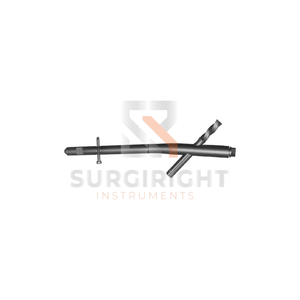
Short Intramedullary Nail APFNA Femur Anti-Rotation Proximal Femoral Nail
Send an Inquiry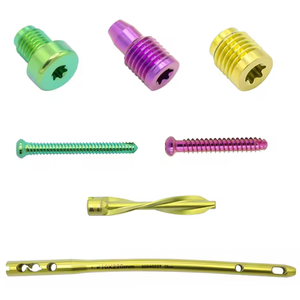
Orthopedic Trauma Screw System Full Set Titanium Surgical Implant Supplier
Send an Inquiry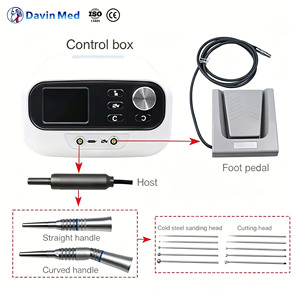

Portable Cordless Efile High Torque 35000 RPM Surgical Drill Unit Set
Send an Inquiry
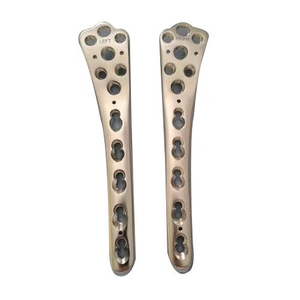
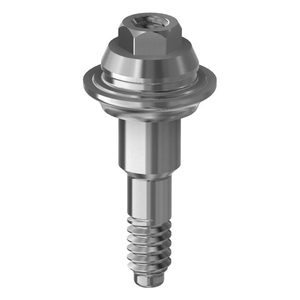
Orthopedic Pedicle Screw Titanium Internal Drive Spinal Fixation System
Send an Inquiry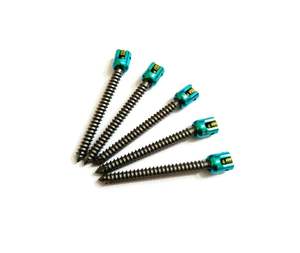
8.0mm X 80mm Polyaxial Screw Implants & Instrument Kit CE Approved
Send an InquiryIndustry Whitepaper: The Evolution & Sourcing Landscape of Arthroscopic Cannulas in China
A technical deep-dive into fluid dynamics, seal valve integrity, polymer biocompatibility, and manufacturing metrics for global orthopedic distributors and hospital procurement groups.
1. Fluid Dynamics & Hydrostatic Pressure Management in Articular Portals
In minimally invasive arthroscopic surgery, creating and maintaining a clear operative field depends heavily on joint cavity distension. High-definition visualization requires continuous saline irrigation under controlled hydrostatic pressures, typically generated by automated fluid management pumps running between 40 to 80 mmHg. The arthroscopic cannula functions as the primary conduit through which operative instruments (shavers, radiofrequency probes, suture passers, and graspers) pass into the joint space.
Substandard cannulas frequently exhibit internal fluid turbulence, pressure drops, and severe seal leakage. When a surgeon introduces or withdraws an instrument, poorly designed elastomeric valves lose seal memory, allowing pressurized fluid to spray out or infiltrate surrounding soft tissues. This phenomenon—known as fluid extravasation—can cause tissue edema, prolonged patient recovery, and in severe cases, acute compartment syndrome. Leading China manufacturers, such as Orthi Medical Co., Ltd., utilize computational fluid dynamics (CFD) modeling to design dual-curtain dynamic valves and quad-lobe silicone septa. These advanced geometries guarantee zero backflow during rapid instrument swapping while preserving steady laminar flow around the scope sheath.
2. Structural Engineering: Thread Geometry & Valve Mechanics
The mechanical interaction between an arthroscopic cannula and surrounding tissue structures dictates its operational stability. Cannula backing-out during shoulder arthroscopy (specifically subacromial or glenohumeral procedures) disrupts the surgical workflow, forces repeat portal dilation, and damages joint capsule boundaries. To counteract this, modern cannula design incorporates distinct external retention threads:
Flexible Threaded Profiles
Engineered with low-durometer translucent polymer rings that grip subcutaneous layers without tearing muscle fibers or joint capsules.
Distal Retention Flanges
Incorporate expandable or semi-rigid distal ridges that seat firmly against the inner surface of the joint capsule, preventing accidental portal displacement.
Dual-Dam Valve Systems
Combines an outer self-sealing iris valve with an inner duckbill membrane, effectively trapping fluid under variable flow rates and tool angles.
Future Procurement Trends for Arthroscopic Cannulas (2025–2035)
How evolving surgical techniques, regulatory mandates, and supply chain dynamics are reshaping global buying strategies.
As sports medicine procedures shift increasingly toward ambulatory surgical centers (ASCs) and outpatient clinics worldwide, purchasing organizations face changing operational parameters. Procurement managers must look beyond unit purchase prices and evaluate total cost of ownership (TCO), infection control efficiency, and supply chain resilience.
Trend 1: Dominance of Pre-Sterilized, Single-Use Procedure Kits
Hospitals are aggressively phasing out reusable stainless steel cannulas due to complex cleaning protocols, risk of cross-contamination, and valve degradation over repeated autoclave cycles. Single-use, sterile-packaged kits (including obturators, cannulas, and fluid tubing) reduce operating room setup times by up to 25%.
Trend 2: Integrated Outflow & Pressure Sensor Channels
Next-generation smart cannulas incorporate secondary lumen pathways that interface directly with smart irrigation consoles. These channels measure intra-articular pressure in real-time, automatically adjusting inflow to avoid cartilage barotrauma.
Trend 3: Anatomical & Procedure-Specific Sizing
Rather than relying on universal 7mm or 8mm tubes, surgical teams demand procedure-tailored sizes—such as 4.5mm low-profile cannulas for small joint wrist/ankle arthroscopy, and extended 90mm–110mm rigid-body portals for deep hip joint access.
Trend 4: Regulatory Stringency (CE MDR & FDA 510k Focus)
With the transition to EU MDR 2017/745, regulatory authorities require extensive clinical evidence, strict biocompatibility data (ISO 10993), and comprehensive risk management documentation (ISO 14971) even for Class IIa/IIb access instruments.
Key Development Trends & Technical Innovations in China
How Chinese manufacturing hubs have matured from contract molders into global R&D powerhouses for orthopedic medical devices.
China’s medical device ecosystem has underwent a dramatic transformation. Driven by high-precision multi-axis Swiss CNC machining centers, automated liquid silicone rubber (LSR) injection molding, and ISO Class 7/8 cleanroom infrastructure, leading factories in regions like Zhejiang and Jiangsu deliver world-class surgical tools at unmatched scale.
Advanced Polymer Science & Biocompatible Materials
Modern arthroscopic cannulas utilize specialized medical-grade polymers selected for optical transparency, mechanical toughness, and tissue inertness:
- Polyetheretherketone (PEEK): Offers exceptional tensile strength and radiolucency, making it ideal for reusable cannula bodies and high-stress obturator tips. Meets ASTM F2026 specifications.
- Polycarbonate (PC) & Polypropylene (PP): Medical-grade transparent thermoplastics that give surgeons unobstructed visual feedback on suture movement and knot positioning inside the cannula barrel.
- Liquid Silicone Rubber (LSR): Platinum-cured silicone with high tear strength and elastic resilience, maintaining leak-free performance even after 100+ passes of sharp instruments.
Technical Specification Comparison Matrix
| Specification Parameter | Flexible Threaded Cannula | Rigid Smooth Cannula | Pass-Through / High-Flow Portal |
|---|---|---|---|
| Primary Material | Translucent Polyolefin + Silicone Valve | Polycarbonate / Stainless Steel | Biocompatible PEEK / Polycarbonate |
| Inner Diameter (ID) Range | 5.5 mm – 8.5 mm | 4.0 mm – 7.0 mm | 6.0 mm – 10.0 mm |
| Working Lengths | 70 mm, 90 mm, 110 mm | 60 mm, 75 mm, 90 mm | 70 mm, 90 mm |
| Valve Configuration | Quad-slit elastomeric membrane | Duckbill single-dam valve | Dual-curtain dynamic cap valve |
| Infiltration Prevention | Superior (Flexible threads seal tissue) | Moderate (Requires smooth traction) | High (Distal locking ridge) |
| Sterilization Method | Co-60 Gamma (SAL 10-6) / EO Gas | Autoclave / EO Gas | Co-60 Gamma Irradiation |
Enterprise Capabilities: Why Partner with Orthi Medical
Comprehensive OEM/ODM solution provider with end-to-end quality control from raw material verification to sterile package release.
Certified Quality Management
Operates strictly under ISO 13485 and ISO 9001 quality systems. Full compliance with European CE marking and international regulatory standards.
Full Material Integrity
Strict material batch testing for implants and surgical devices: Pure Titanium TA2/TA3 (ASTM F67), Titanium Alloy Ti-6Al-4V TC4 (ASTM F1472), PEEK, CoCrMo, and UHMWPE.
Sterile Packaging & Gamma Irradiation
Equipped with Class 100,000 cleanroom assembly lines. Offers ready-to-use sterile packs irradiated by Co-60 gamma rays reaching SAL 10-6.
Complete Turnkey OEM/ODM
From custom CAD/CAM engineering drawings and 3D rapid prototyping to private labeling, laser etching, and customized surgical instrument tray design.
Frequently Asked Questions (Procurement FAQ)
Essential answers for medical device distributors, purchasing officers, and OEM brand owners.
1. What specific quality certifications do your arthroscopic cannulas and implants carry?
2. Can you supply arthroscopic cannulas and bone screws in pre-sterilized condition?
3. What OEM/ODM customization options are available for private label clients?
4. How do your silicone seal valves maintain leak tightness under varying instrument diameters?
5. What is the typical lead time for standard vs. custom OEM orders?
6. Do you provide technical registration dossiers for local MOH / FDA clearance?
Ready to Upgrade Your Sports Medicine Product Line?
Contact our engineering and procurement team today for factory-direct quotes, OEM CAD consultations, and sample evaluation kits.
Send an Inquiry