CE Certified Surgical Implants & Precision Instruments
Engineered from ISO 5832 and ASTM F1472 certified titanium alloys, PEEK-OPTIMA, and surgical steel. Rigorously validated for bio-compatibility, fatigue strength, and clinical safety.
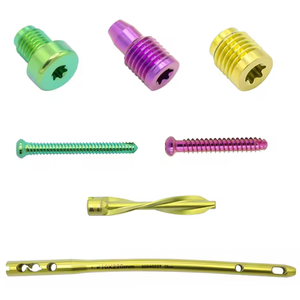
Orthopedic Trauma Screw System Full Set Titanium Surgical Implant
Comprehensive titanium alloy (Ti-6Al-4V ELI) cortex and cancellous screw system. Features self-tapping thread profiles, star-drive recesses, and low-profile head geometry to minimize soft tissue irritation.
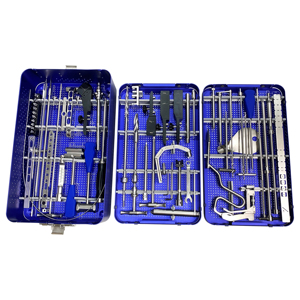
Femoral Interlocking Intramedullary Nail & Instrument Set
Anatomically pre-contoured femoral interlocking nail designed for diaphyseal and metaphyseal femoral fractures. Provides multi-planar proximal and distal locking options for optimal rotational stability.
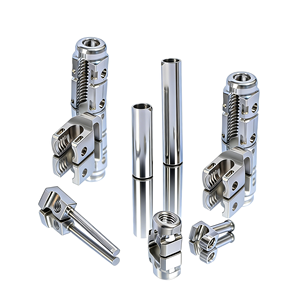
Titanium Spinal Pedicle Screw Rod System Fixation Implant
Polyaxial thoracolumbar pedicle screw system offering 52-degree angulation cone. Engineered with double-lead thread geometry for rapid insertion and superior pull-out strength in osteopenic bone.
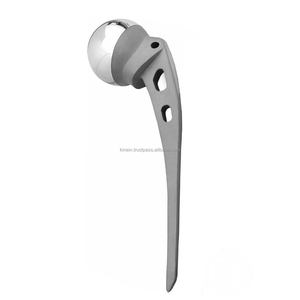
Austin Moore Cemented Femoral Stem Hemiarthroplasty Prosthesis
High-strength surgical steel/CoCrMo hemiarthroplasty femoral stem featuring fenestrated collar and self-locking head design for femoral neck fractures in elderly or low-demand patients.
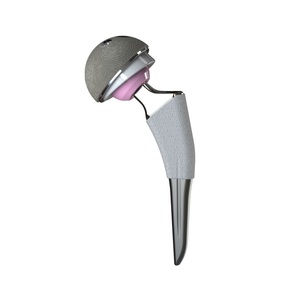
Long Cementless Femoral Stem HA Coating Hip Prosthesis
Plasma-sprayed Hydroxyapatite (HA) coated titanium femoral stem promoting rapid osteointegration and biological fixation. Ideal for revision arthroplasty and complex hip reconstructions.
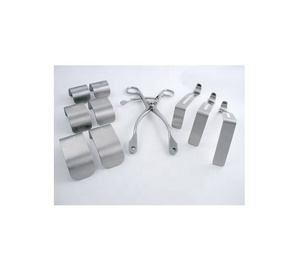
Manual Reusable Shoulder Arthroplasty Instruments Set
Ergonomic surgical instrumentation kit containing Kolbel soft tissue retractors, glenoid reamers, and humeral trial stems fabricated from corrosion-resistant 17-4PH stainless steel.
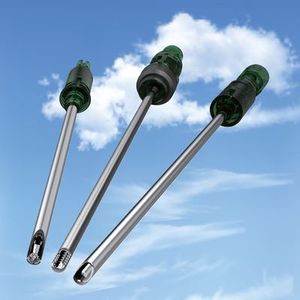
Arthroscopy Shaver Blades & Bone Cutters OEM Replacement
Precision-ground, heat-treated stainless steel shaver blades and burrs. Compatible with major motor drives, delivering clean tissue resection and efficient bone resection without thermal necrosis.
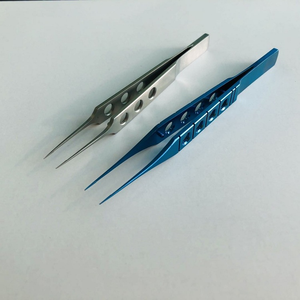
Medical Grade Titanium Alloy Toothed Forceps for Tissue Fixation
Ultra-lightweight titanium anatomical forceps featuring fine micro-toothed tips. Designed to minimize hand fatigue during prolonged orthopedic, ophthalmic, and micro-vascular tissue manipulation.
Standardizing Technical Excellence in Implant Manufacturing
As a leading CE-certified orthopedic implant manufacturer and factory, our production infrastructure bridges state-of-the-art material science with exacting clinical safety requirements.
Certified Raw Material Quality Standards
Implant longevity depends entirely on material purity and mechanical endurance. We strictly process medical-grade raw titanium conforming to ASTM F67 (Grades 2 & 3 Pure Titanium) and ASTM F1472 / ISO 5832-3 (Ti-6Al-4V Alloy). For spinal fusion cages and sports medicine anchors, we utilize implantable PEEK-OPTIMA polymers offering radiolucency and an elastic modulus matching native cortical bone (18 GPa).
Validated Gamma Sterilization & Packaging
To eliminate hospital reprocessing friction, our implants are available pre-sterilized via Cobalt-60 Gamma Irradiation (ISO 11137) achieving a minimum Sterility Assurance Level (SAL) of 10⁻⁶. Products are sealed inside medical-grade Tyvek double-blister packaging within an ISO Class 7 cleanroom environment, guaranteeing 5-year shelf life stability and full sterile barrier integrity.
| Material Category | International Specification | Tensile Strength (MPa) | Primary Clinical Application |
|---|---|---|---|
| Pure Titanium (Grade 2/3) | ASTM F67 / ISO 5832-2 | ≥ 400 - 550 MPa | Cranio-maxillofacial plates, osteotomy clips, soft tissue repair staples |
| Ti-6Al-4V ELI Alloy | ASTM F1472 / ISO 5832-3 | ≥ 930 MPa | Trauma locking screws, pedicle screws, intramedullary nails, joint stems |
| PEEK Polymer | ASTM F2026 | ≥ 95 - 110 MPa | Interbody cervical & lumbar cages, suture anchors, radiolucent implants |
| CoCrMo Alloy | ASTM F75 / ISO 5832-4 | ≥ 660 MPa | Total hip replacement heads, knee joint femoral components, heavy-load stems |
Quality Assurance & Regulatory Technical File Support
Navigating global market access requires absolute regulatory rigor. As your manufacturing partner, Orthi Medical provides full Technical Dossiers, biocompatibility test reports (ISO 10993), chemical characterization (ISO 10993-18), and dynamic biomechanical testing data (ASTM F543 for bone screws, ASTM F1717 for spinal constructs) to accelerate your local FDA, CE MDR, and MOH registration processes.
Future Procurement Trends in Orthopedic Device Sourcing
Analyzing structural shifts in healthcare supply chains, regulatory compliance costs, and hospital purchasing dynamics for global medical procurement directors.
1. Shift to Single-Packaged Pre-Sterilized Implants
Hospitals worldwide are phasing out bulk non-sterile implant caddies due to elevated autoclave sterilization costs, labor overhead, and cross-contamination risks. Procurement mandates increasingly require pre-packaged, barcoded, unit-dose sterile implants with UDI compliance, reducing operating room preparation time by up to 35%.
2. Total Cost of Ownership (TCO) Sourcing
Modern buyers evaluate suppliers beyond FOB unit pricing. Total Cost of Ownership models incorporate localized registration assistance, defect rates, instrument tray wear-and-tear replacement costs, and supply chain continuity guarantees. Partnering with certified OEMs offering turn-key regulatory files drastically lowers entry barriers into new geographic markets.
3. Hybrid Supply Chain & Dual-Sourcing Networks
Geopolitical disruptions and regional supply chain bottlenecks have forced brand owners to abandon single-source dependencies. Leading orthopedic brands are actively qualifying tier-1 OEM contract factories in Asia to build resilient dual-sourcing networks capable of mitigating raw material volatility and maintaining buffer inventory levels.
Next-Generation Technological Trends in Orthopedic Implants
How advanced additive manufacturing, surface functionalization, and minimally invasive instrumentation are reshaping the surgical landscape.
1. Additive Manufacturing & 3D Trabecular Titanium
3D Printing (Direct Metal Laser Sintering - DMLS and Electron Beam Melting - EBM) allows for the creation of open-pore trabecular titanium matrices that mimic natural cancellous bone architecture. Pore sizes optimized between 400 and 600 microns drastically accelerate vascularization and bone ingrowth while customizing modulus to prevent stress shielding in interbody cages and joint acetabular cups.
2. Bioactive Surface Functionalization Technologies
Traditional mechanical smooth surfaces are being replaced by bio-functionalized surfaces. Plasma-sprayed Hydroxyapatite (HA) coatings, Micro-Arc Anodization (MAA), and nanoscale titanium dioxide (TiO₂) chemical etching significantly improve the bone-to-implant contact (BIC) ratio. Antimicrobial silver-ion nano-coatings are also entering advanced clinical trials to reduce postoperative surgical site infections.
3. Expansion of MIS & Unilateral Biportal Endoscopy (UBE)
Minimally Invasive Surgery (MIS) is accelerating rapid recovery protocols. In spine surgery, Unilateral Biportal Endoscopy (UBE) utilizes ultra-fine continuous irrigation instruments and specialized radiofrequency plasma probes to perform lumbar discectomies and decompression through sub-centimeter portals, driving demand for specialized endoscopic surgical handpieces.
4. Bioabsorbable Polymer & Composite Innovations
In sports medicine repair, third-generation suture anchors utilize bioabsorbable composites such as Poly-L-Lactic Acid mixed with Beta-Tricalcium Phosphate (PLLA-β-TCP). These implants provide robust mechanical strength during tissue healing phase and gradually absorb into indigenous bone tissue within 24 to 36 months, eliminating secondary removal surgeries.
Precision Turn-Key OEM/ODM Manufacturing Process
How Orthi Medical transforms engineering concepts into sterile, market-ready surgical implants through high-precision Swiss lathe CNC machining, automated inspection, and cleanroom packaging.
Phase 1: DFM Engineering & Tooling
Design for Manufacturability (DFM) analysis of customer 3D STEP/IGES models. Selection of optimal bar stock, micro-geometry tool pathing, and customized jig fixture development for complex multi-axis milling.
Phase 2: 5-Axis CNC & Swiss Lathe Machining
Ultra-precision machining utilizing DMG MORI 5-axis CNC centers and Citizen multi-axis Swiss automatic lathes capable of maintaining tight dimensional tolerances down to ±0.005 mm on thread pitch and drive recesses.
Phase 3: Automated CMM & Surface Finishing
100% optical sensor and Coordinate Measuring Machine (CMM) dimensional verification. Electrolytic color anodization (Type II/III), passivated glass bead blasting, laser engraving of lot numbers and GTIN barcodes.
Frequently Asked Questions (FAQ)
In-depth answers to common questions asked by medical device purchasing managers, OEM brand owners, and regulatory directors.
What certifications and regulatory documentation do Orthi Medical implants carry?
Our manufacturing facilities operate under a certified ISO 13485:2016 and ISO 9001 quality management system. Applicable product lines carry full CE Marking compliance under European directives/MDR regulations. Every raw material batch is backed by mill test certificates specifying chemical composition and mechanical properties conforming to ASTM F67 (pure titanium), ASTM F1472 (Ti-6Al-4V), and ASTM F2026 (PEEK).
Can Orthi Medical provide custom OEM/ODM implant manufacturing and private label packaging?
Yes. We provide complete OEM/ODM solutions starting from technical drawing review (STEP/IGES files), rapid prototype machining, customized instrument tray layout engineering, color anodizing, and laser marking of customer logos. We also provide full private-label packaging options inside validated ISO Class 7 cleanrooms with sterile Tyvek blister packing.
What sterilization standards are applied to pre-packaged orthopedic implants?
Our pre-sterilized bone screws, locking plates, intramedullary nails, and spinal implants are sterilized using Cobalt-60 Gamma Ray Irradiation in compliance with ISO 11137-1 and ISO 11137-2 standards, validated to achieve a minimum Sterility Assurance Level (SAL) of 10⁻⁶. Detailed bioburden, bacterial endotoxin (LAL), and package integrity validation test reports are provided for regulatory submission.
What are the typical lead times for sample evaluation and mass production production orders?
Standard prototype sample evaluation typically requires 15 to 25 business days depending on geometric complexity and custom tooling requirements. Standard OEM mass production lead times range between 30 to 45 days. For long-term distribution partners, we establish rolling forecast buffer stock programs to ensure immediate shipment capabilities.
Do you support global distributors with clinical evidence and surgical technique training?
Yes. We support our global network of medical device distributors with comprehensive step-by-step surgical technique guides, biomechanical laboratory test summaries, cadaver workshop support materials, and high-resolution clinical case documentation to assist surgical teams during product onboarding.
Partner with a Certified Orthopedic Implant Manufacturer
Contact our engineering and sales department today to request full technical product catalogs, raw material certificates, OEM customization quotes, or factory audit documentation.