Product Catalog
Featured Orthopedic & Surgical Implant Systems
Explore our precision-engineered implant portfolios designed for sports medicine, trauma, spinal reconstruction, and joint replacement.
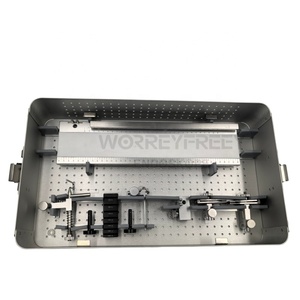
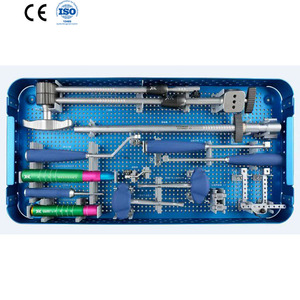
Orthopedic Surgical Instrument Manufacturer ACL PCL Reconstruction Instrument Set WFACL Model
Send an Inquiry
Inner Recessed French Dual Forms Nail Tips Artificial False Nails Gel Extension Easy to Peel off
Send an Inquiry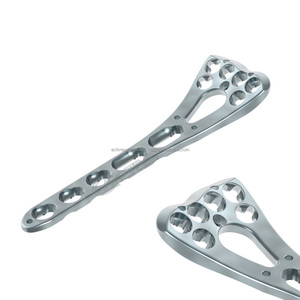
Variable Angle Two Column Volar Distal Radius Plate Locking 2.00 mm Titanium Surgical Instruments CE
Send an Inquiry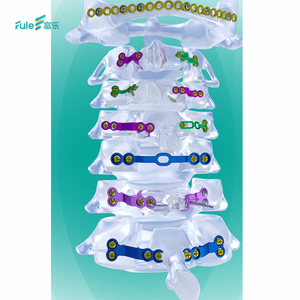
Titanium Spine Surgery Systems Posterior Cervical Laminoplasty Orthopedic Surgery Implant Class III CE
Send an Inquiry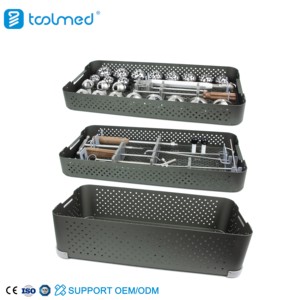
THR Replacement Artificial Hip Joint Implant System Prosthesis Total Arthroplasty Instruments Set
Send an Inquiry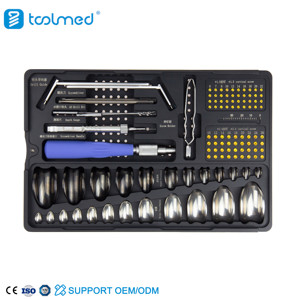
High Quality PGR Bone Cement Mixing Kit Veterinary & Human Orthopedic Implant Instrument Set
Send an Inquiry
Anodized Aluminum Precision Hydro Foil Base Top Plate Hydrofoil Accessories Machining Solution
Send an Inquiry> 1,100 N
Ultimate Tensile Load Strength
100,000+
Fatigue Cycles (Dynamic Testing)
SAL 10⁻⁶
Co-60 Gamma Sterilization Assurance
65+ Countries
Global Export Distribution
The Biomechanical Evolution of Suture Button Fixation in Reconstructive Orthopedics
Cortical suspensory fixation systems, commonly designated as suture button constructs, represent a monumental paradigm shift in sports medicine, ligamentous reconstruction, and joint stabilization. By transitioning from traditional rigid metallic transfixation (such as rigid syndesmotic screws) to dynamic high-strength suture-loop button assemblies, orthopedic surgeons achieve superior anatomical motion restoration, lower risk of hardware breakage, and eliminated needs for secondary implant removal procedures.
As a primary ISO 13485 certified manufacturer and global exporter of medical-grade surgical implants, Orthi Medical engineered its suture button series to resolve classic clinical challenges: loop elongation under dynamic load, soft-tissue abrasion, cortical bone pull-through, and micro-slippage. Utilizing advanced Finite Element Analysis (FEA) and fatigue testing regimes per ISO 14242 and ASTM F2503 standards, our cortical button implants establish unmatched mechanical security across knee, ankle, and shoulder reconstructive interventions.
1. Cortical Fixation Dynamics: Fixed Loop vs. Adjustable Loop Engineering
In Anterior Cruciate Ligament (ACL) and Posterior Cruciate Ligament (PCL) femoral tunnel fixation, the choice between fixed-loop constructs and self-locking adjustable-loop constructs dictates both operative efficiency and initial fixation strength:
Adjustable Loop Mechanisms
Designed with an continuous loop braid incorporating a internal friction-locking weave. Allows complete graft filling of the femoral socket without precise pre-operative loop length measurement, maximizing graft-to-bone contact area.
Fixed Continuous Loop Systems
Pre-measured loop lengths (15mm to 50mm) constructed from ultra-high-molecular-weight polyethylene (UHMWPE). Eliminates dynamic displacement risk, boasting maximum ultimate tensile strength (>1,100 N) under immediate aggressive rehab protocols.
Low-Profile Cortical Plates
Manufactured from Ti-6Al-4V ELI (ASTM F136). Features chamfered rounded edges to prevent suture fraying and a low profile (1.5mm thickness) to minimize soft-tissue irritation over the lateral femoral cortex.
2. Ankle Syndesmotic Repair: Dynamic Stabilization vs. Rigid Transfixation Screws
Distal tibiofibular syndesmosis injuries (high ankle sprains accompanying Weber B and C fibular fractures) historically required 3.5mm or 4.5mm metallic quadricortical screws. However, clinical studies highlight significant drawbacks: screw breakage upon weight-bearing, restriction of physiological fibular external rotation and axial movement, and mandatory secondary surgery for screw removal prior to full rehabilitation.
Our CE Certified Dynamic Suture Button Syndesmosis System utilizes dual cortical titanium buttons joined by a high-strength UHMWPE suture bridge. This construct provides physiological micro-motion (allowing up to 1.5mm of lateral displacement and natural fibular rotation during gait) while securely preserving syndesmotic reduction. Biomechanical comparative metrics are summarized below:
| Performance Parameter | Dynamic Suture Button Construct | Traditional Rigid Metallic Screw (3.5mm) | Clinical Significance / Procurement Advantage |
|---|---|---|---|
| Physiological Micro-motion | Permits 1.0 - 1.8mm anatomical movement | 0mm (Completely Rigid Transfixation) | Prevents joint stiffness & restores normal ankle kinematics |
| Fatigue / Implant Failure Rate | < 0.1% (No rigid metal breakage) | 12.4% - 28.5% (Screw shear fracture) | Eliminates catastrophic hardware failure in vivo |
| Secondary Operation Requirement | 0% (Permanent bio-compatible implant) | 80% - 95% (Mandatory hardware removal) | Significantly reduces healthcare cost and surgical risks |
| Ultimate Tensile Yield Load | 850 N - 1,200 N (Dual-Button Setup) | 550 N - 750 N (Single Tricortical Screw) | Allows immediate weight-bearing in accelerated rehab |
| Tissue Irritation / Prominence | Ultra-low profile (1.2mm chamfered button) | High profile (Hex head screw cap) | Enhanced patient comfort & lower wound dehiscence |
Biomechanically Superior Materials & Precision Manufacturing
Medical implant reliability originates at the atomic level. Orthi Medical enforces rigid raw material verification, utilizing certified biocompatible alloys and polymer formulations strictly compliant with international surgical standards.
Ti-6Al-4V ELI (ASTM F136 / ISO 5832-3)
Extra Low Interstitial Titanium grade providing exceptional fatigue strength (>860 MPa yield), superior corrosion resistance, and total bio-inertness. CNC-machined on 5-axis Swiss lathes with tolerance bands held within ±0.005mm.
UHMWPE & PEEK Composite Braids
Ultra-High-Molecular-Weight Polyethylene sutures woven into high-density strands. Delivers near-zero creep, high abrasion resistance against bone edges, and radiolucent characteristics under X-Ray fluoroscopy.
Type II Anodization & Laser Marking
Electrochemical surface treatment enhances oxide layer thickness, minimizing ion release while providing color-coded sizing (Gold, Blue, Green) and UDI (Unique Device Identification) direct laser marking.
Future Procurement Trends in Sports Medicine & Suture Button Technology (2025–2030)
Procurement officers, regional distributors, and hospital purchasing directors must align their supply chains with shifting surgical preferences and tighter global regulatory framework mandates.
1. Accelerating Transition from Rigid Screws to Flexible Dynamic Fixation
Global clinical registries in Western Europe and North America show an annual 14.2% displacement of traditional rigid syndesmotic screws in favor of suture button dynamic implants. Hospital networks prioritize dynamic fixation due to documented reduction in total cost of care—eliminating secondary elective hardware removal procedures saves an average of $2,400 to $4,100 per surgical episode.
2. Stringent Regulatory Mandates: EU MDR 2017/745 & Global Traceability
With the full implementation of EU MDR regulations, uncertified low-tier manufacturers are being excluded from international markets. Implants require extensive clinical evaluation reports (CER), post-market clinical follow-up (PMCF), and verified ISO 11607 sterile packaging integrity. Orthi Medical’s robust CE certification and Technical Files (STED format) streamline regulatory approval processes for our global distribution partners in Europe, Latin America, Southeast Asia, and the Middle East.
3. Growth of Pre-Assembled Sterile Packaged Surgical Kits
Modern Operating Rooms (OR) demand single-use, pre-sterilized, pass-through disposable packaging. Our pre-loaded suture button sets are supplied inside dual Tyvek® blister trays sterilized via Co-60 Gamma Irradiation (SAL 10⁻⁶), completely eliminating hospital sterilization bottlenecks and lowering infection risks.
Why Partner with Orthi Medical: World-Class OEM/ODM Manufacturing
Orthi Medical Co., Ltd. is a vertically integrated manufacturer specializing in trauma plates, spinal systems, joint arthroplasty, and sports medicine fixation. Our state-of-the-art facility combines German precision machining with rigorous quality governance.
5-Axis Precision Manufacturing
Utilizing high-end DMG MORI 5-axis CNC machining centers and Citizen Swiss-type lathes capable of executing complex implant geometries with ultra-fine tolerances.
Class 100,000 Cleanroom Facility
Implant washing, ultrasonic decontamination, assembly, and primary pouch sealing are conducted within ISO Class 8 / Class 100,000 cleanroom environments under controlled microbiological monitoring.
Complete OEM/ODM Private Labeling
From initial CAD rendering and finite element prototyping to custom laser logo marking, customized instrument tray configuration, and full STED dossier technical support.
Procurement FAQ
Frequently Asked Questions for B2B Buyers & Distributors
Addressing critical technical, regulatory, and supply chain questions for hospital procurement specialists and medical device importers.
Q1: What international certifications do your Suture Button Implants hold?
Our suture button products and sports medicine line operate under an ISO 13485:2016 certified Quality Management System and carry full CE marking under European Medical Device Regulation (EU MDR 2017/745). Raw materials conform strictly to ASTM F136 (Ti-6Al-4V ELI) and ISO 5832-3 standards with full heat-lot traceability.
Q2: What is the ultimate tensile strength and dynamic loop displacement of your adjustable suture buttons?
Our self-locking adjustable suture button constructs demonstrate ultimate tensile load capacity exceeding 1,100 N during pull-to-failure testing. Dynamic fatigue testing under 100,000 continuous cyclic loads at 200 N exhibits post-test loop lengthening of less than 0.4mm, ensuring robust intra-operative and post-operative fixation stability.
Q3: Can you supply pre-assembled sterile packaged sets for direct hospital delivery?
Yes. We offer fully sterile packaged implants enclosed in double Tyvek® peel pouches inside rigid blister trays. Sterilization is executed via Cobalt-60 Gamma Irradiation achieving a Sterility Assurance Level (SAL) of 10⁻⁶ per ISO 11137 standards, with a validated 5-year shelf life.
Q4: Do you offer customized OEM / Private Label manufacturing for regional brands?
Absolutely. We provide comprehensive OEM/ODM services including customized button geometries, custom suture color braids (e.g., White/Blue, White/Green cobraid), private label laser marking, customized packaging box design, and tailored surgical instrument sets.
Q5: What support do you offer for local product registration in overseas markets?
We provide complete regulatory documentation support, including STED (Summary Technical Documentation), ISO 13485 certificates, CE certificates of conformity, Certificate of Free Sale (CFS), biocompatibility testing reports (ISO 10993), raw material mill certificates, and surgical technique manuals.
Q6: What is your typical production lead time and Minimum Order Quantity (MOQ)?
For standard catalog products, we maintain safety stock allowing shipment within 7–10 working days. For custom OEM orders or private label sterile packaging runs, typical lead times range from 30 to 45 days. Flexible MOQ structures are available to support initial registration and pilot market launches.
Partner with a Premier CE Certified Suture Button Manufacturer
Expand your orthopedic portfolio with high-margin, clinically proven cortical fixation implants. Contact our international engineering & export sales team today for OEM pricing, technical dossiers, and evaluation samples.
Send an Inquiry