Specialized Trauma & Orthopedic Surgical Products
Engineered for exacting clinical precision, mechanical integrity, and compliance with international regulatory standards.
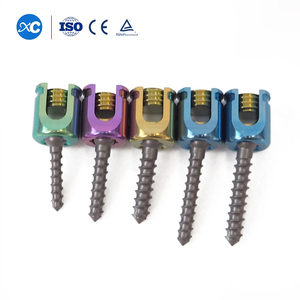
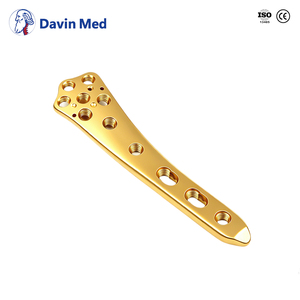
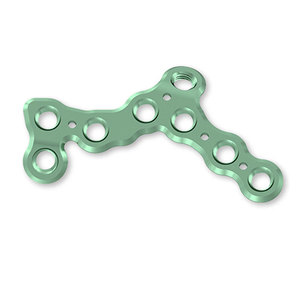
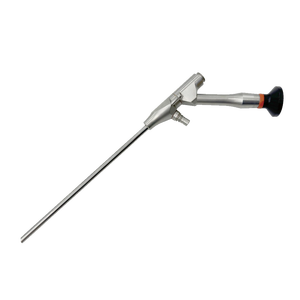
Proximal Humerus Locking Plate System Architecture & Biomechanical Engineering
A definitive guide for orthopedic procurement directors, hospital supply chain executives, and OEM partners evaluating CE-certified anatomical internal fixation systems.
1. Clinical Rationale & Fracture Morphology in Proximal Humerus Reconstruction
Proximal humerus fractures account for approximately 5% to 6% of all adult fractures, representing the third most frequent fracture type in patients over 65 years old. Management of complex two-part, three-part, and four-part fractures (according to the Neer classification) presents significant surgical challenges, particularly in osteoporotic bone where screw pull-out, loss of reduction, and secondary varus collapse frequently lead to clinical failure.
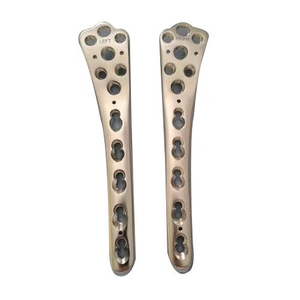
The development of the CE Certified Proximal Humerus Locking Compression Plate (LCP) represents a paradigm shift in shoulder traumatology. By combining fixed-angle screw stability with anatomically contoured titanium plate architecture, our proximal humerus plates create a rigid angle-stable construct. This acts as an internal fixator, substantially reducing periosteal stripping while providing exceptional resistance to multidirectional shear and torsional loads.
Calcar Support Screw Trajectory
Inferolateral screw placement targeting the dense medial calcar region is crucial for preventing postoperative varus collapse. Our plate geometry incorporates converging inferomedial screw holes precisely angled to achieve optimal subchondral bone purchase in the humeral head.
Rotator Cuff Suture Attachment Eyelets
Peripheral suture holes positioned along the proximal plate margin facilitate direct neutralization of tendon pull. Tuberosity fragments (supraspinatus, infraspinatus, subscapularis) can be anchored securely using high-strength suture materials directly to the titanium construct.
2. Metallurgical Standards & Mechanical Property Specifications
Orthopedic implants designed for load-bearing skeletal applications require uncompromised raw material purity. Our proximal humerus locking plates are forged exclusively from high-strength Medical Grade Titanium Alloy (Ti-6Al-4V ELI / TC4 conforming to ASTM F1472 / ISO 5832-3) and Commercially Pure Titanium (TA2/TA3 conforming to ASTM F67).
Titanium alloy provides a modulus of elasticity (~110 GPa) significantly closer to human cortical bone compared to stainless steel (~200 GPa). This minimize stress shielding phenomena, accelerating fracture callus formation and secondary bone healing while reducing the risk of fatigue hardware failure under dynamic shoulder joint forces.
| Mechanical / Metallurgical Parameter | Ti-6Al-4V ELI (ASTM F1472) | Pure Titanium TA3 (ASTM F67) | Clinical Significance |
|---|---|---|---|
| Tensile Strength (Ultimate, Rm) | ≥ 930 MPa | ≥ 500 MPa | Resists plate deformation under extreme muscle contraction loads. |
| Yield Strength (Rp0.2) | ≥ 860 MPa | ≥ 380 MPa | Prevents permanent bending during operative contouring & load bearing. |
| Elongation at Break (A5) | ≥ 10 % | ≥ 18 % | Ensures ductility for precise intraoperative anatomical alignment. |
| Fatigue Resistance (Cycles) | > 10,000,000 Cycles | > 5,000,000 Cycles | High-cycle dynamic endurance matching physiological healing timelines. |
| Biocompatibility Profile | ISO 10993 Cytotoxicity Cleared | ISO 10993 Cytotoxicity Cleared | Osseointegration compatible, low allergenicity, MRI artifact reduced. |
Key Technological & Design Trends in Proximal Humerus Plates
Analyzing the evolution of trauma implants from basic fixed-angle plates to smart, polyaxial, and radiolucent fixation systems.
Polyaxial (Variable-Angle) Locking Mechanics
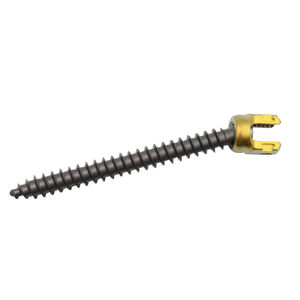
First-generation monoaxial locking systems restricted screw placement to predetermined vectors. Modern proximal humerus constructs utilize polyaxial locking technology, enabling surgeons to angle locking screws within a 30° cone (±15° off-axis). This allows personalized screw trajectories to target uncompromised subchondral bone pockets and avoid intra-articular joint penetration.
Radiolucent Carbon-PEEK Composite Matrix
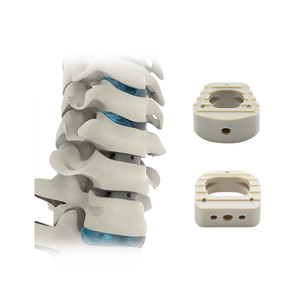
While titanium remains the gold standard, advanced trauma research is driving adoption of Carbon-Fiber Reinforced PEEK (CFR-PEEK) composite implants. CFR-PEEK offers radiolucency under fluoroscopy and X-ray, providing surgeons with unobstructed 360° visualization of fracture reduction, joint surface alignment, and bone callus progression.
Low-Profile impingement-Free Geometry
Subacromial impingement represents a common postoperative complication associated with proximal humerus plates. Next-generation factory designs feature tapered proximal borders, smooth rounded contours, and recessed screw holes positioned 10mm to 15mm distal to the top of the greater tuberosity, safeguarding the axillary nerve and rotator cuff musculature.
MIS / MIPO Technique Compatibility
Minimally Invasive Plate Osteosynthesis (MIPO) minimizes soft tissue disruption, preserves humeral head vascularity, and speeds recovery. Advanced proximal humerus plate sets integrate specialized anatomical carbon-fiber aiming guides and percutaneous instrumentation, supporting less invasive subdeltoid surgical approaches.
Surface Topography & Anodization Treatments
Type II electrochemical anodization alters the titanium surface oxide layer, increasing fatigue strength by up to 20% and reducing soft tissue adhesion. Additionally, color-coded anodization (e.g., green for 3.5mm locking, blue for 4.0mm distal) optimizes surgical workflow and minimizes intraoperative handling errors in the operating room.
Global Procurement Trends in Orthopedic Trauma Implants
Key market dynamics shaping B2B purchasing decisions for medical device importers, distributors, and hospital networks.
1. Shift Toward Ready-to-Use Gamma Sterile Packaging
Hospitals worldwide are actively moving away from non-sterile implant trays requiring repetitive hospital-based autoclave cycles. Hospital reprocessing incurs significant labor costs, risks chemical residue accumulation, and increases hospital-acquired infection (HAI) vectors.
Leading international distributors are increasingly contracting manufacturers capable of delivering individual, gamma-irradiated (Co-60, Sterility Assurance Level SAL 10-6) sterile pouch packaging. Sterile packaging ensures 100% implant traceability, extends shelf life up to 5 years, and streamlines hospital inventory handling.
2. Stringent Regulatory Gatekeeping (EU MDR & Technical Documentation)
The transition from the European Medical Device Directive (MDD 93/42/EEC) to the strict Medical Device Regulation (EU MDR 2017/745) has reshaped the supplier landscape. Procurement managers must partner exclusively with manufacturers whose CE certificates are backed by comprehensive STED (Summary Technical Documentation), rigorous Clinical Evaluation Reports (CER), and PMCF (Post-Market Clinical Follow-up) protocols.
Importers require factory partners who can seamlessly supply technical files for rapid localized national health authority registrations (such as US FDA 510(k), Brazilian ANVISA, NMPA, and Saudi SFDA).
Why Partner with Orthi Medical for Orthopedic Implants?
End-to-end medical device manufacturing infrastructure delivering precision, regulatory confidence, and resilient supply chains.
Precision Swiss 5-Axis CNC Machining
Our state-of-the-art production facility operates high-precision Swiss-type 5-axis CNC multi-tasking centers. We maintain micrometric machining tolerances (within ±0.005mm) for critical screw-to-plate locking threads, ensuring smooth intraoperative engagement without cross-threading.
Full Traceability Quality Control
Operated under accredited ISO 13485 and ISO 9001 Quality Management Systems, every single proximal humerus plate undergoes 100% optical Coordinate Measuring Machine (CMM) inspection, chemical material certification verification, and batch laser etching for complete surgical lot traceability.
Custom B2B OEM & ODM Services
We provide full-scope OEM and ODM collaboration for global medical brands. From drawing-based prototype machining (7 to 14 days) to customized anodized color schemes, private label sterile packaging, and bespoke surgical tray design, we turn your engineering specifications into market-ready devices.
Frequently Asked Questions for Global Implant Buyers
Technical, regulatory, and commercial details addressing key purchasing requirements for OEM and distribution partners.
What specific CE certifications and quality standards cover your proximal humerus locking plates?
Can proximal humerus locking plates be supplied in pre-sterilized packaging?
What are the available size specifications and screw hole configurations for your humerus plates?
What is your standard production lead time and Minimum Order Quantity (MOQ) for OEM/ODM orders?
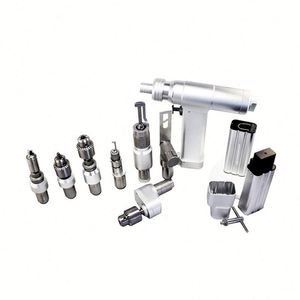
Do you supply matching surgical instrument sets and technique guides?
How do you support regional product registration with local Health Authorities?
Partner with a Trusted CE Certified Orthopedic Factory
Empower your hospital supply contracts and distribution portfolio with high-precision, factory-direct proximal humerus locking plate systems. Contact our engineering team for technical catalogs, OEM quotes, and sample evaluation sets.