Featured Sports Medicine & Orthopedic Hardware
Explore our CE-certified, precision-engineered implant systems and specialized arthroscopic instrumentation for rotator cuff, labral, and trauma surgeries.
1.6mm Titanium Locking Orthopedic Bone Plate Reusable Manual Power Source
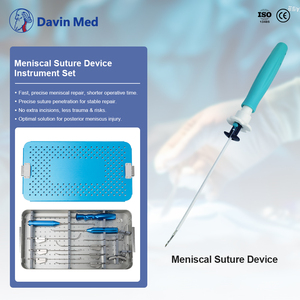
Davin Med Meniscal Repair System Instrument Set Arthroscopic Meniscus Suture Passer
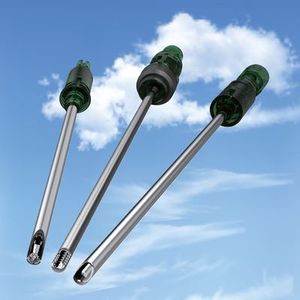
Factory Direct Supply Manual Shaver Blades Bone Cutter for Arthroscopy Surgical Blades
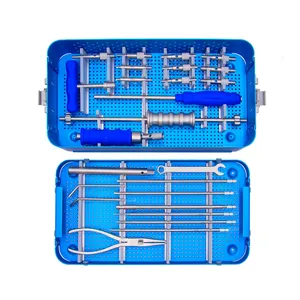
Surgical Internal Fixation Implant Intramedullary Nail Removal Instruments Set
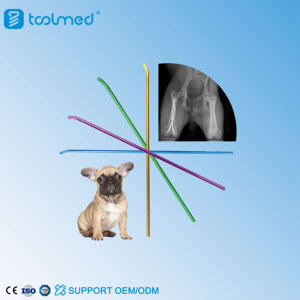
Orthopedic Implant Medical Elastic Titanium Intramedullary Nail for Veterinary Surgery
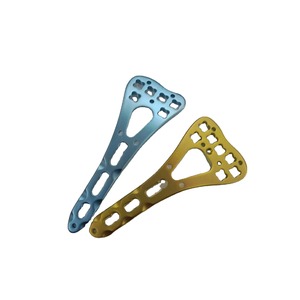
Titanium Alloy VA Distal Radius Locking Plate Implant Orthopedic LCP Variable Angle
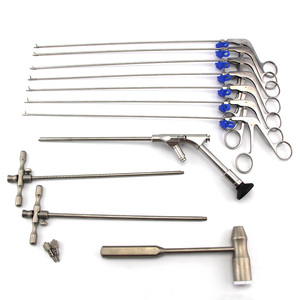
Disc System Endoscopic Discectomy Microendoscopic Suction Tube Instrument Set

Custom Fit Cervical Thoracic Brace with Occipital Fine Tuning & Jaw Adjustment
Biomechanical Engineering & Clinical Supremacy of PEEK Suture Anchors
In modern sports medicine and soft-tissue reconstruction, the mechanical failure of rotator cuff, Glenoid labrum, and Achilles tendon repairs is directly correlated to the fixation strength, stress distribution, and radiolucency of the implant. As an industry-leading CE Certified PEEK suture anchor supplier and exporter, our technical architecture solves the historical limitations of metallic hardware and first-generation bioabsorbable polymers.
Polyetheretherketone (PEEK) is an advanced semi-crystalline thermoplastic exhibiting an exceptional combination of mechanical strength, chemical resistance, and biocompatibility. Crucially, PEEK possesses an elastic modulus of approximately 3.6 GPa to 4.0 GPa, closely matching that of human cortical bone (12 GPa to 18 GPa) compared to Titanium alloys (110 GPa). This biological stiffness matching prevents localized stress shielding, avoids osteolysis around the implant site, and ensures long-term fixation stability under cyclic anatomical loading.
Artifact-Free Radiolucency
PEEK implants produce zero artifacts under Magnetic Resonance Imaging (MRI) and Computed Tomography (CT) scans, permitting crystal-clear post-operative tendon-to-bone interface assessment.
High Pull-Out Retention
Engineered dual-thread geometries combined with aggressive distal cutting flutes maximize immediate mechanical interlock within both cancellous osteoporotic bone and dense cortical rims.
UHMWPE Suture Integration
Pre-loaded with Ultra-High Molecular Weight Polyethylene braided sutures and high-tenacity suture tapes, offering superior ultimate tensile strength exceeding 280 N without suture fraying.
Biomaterial Comparison Matrix: PEEK vs. Legacy Implants
| Performance Parameter | PEEK Suture Anchor | Titanium Alloy (Ti-6Al-4V) | Bioabsorbable (PLGA / PLLA) |
|---|---|---|---|
| Elastic Modulus (GPa) | 3.6 - 4.2 GPa (Bone-matched) | 110 GPa (Extremely Rigid) | 2.5 - 3.2 GPa (Flexible) |
| Imaging Artifacts | Zero Artifacts (Radiolucent) | Severe Distortion on MRI/CT | Zero Artifacts |
| Bio-Degradation Risk | None (Chemically Inert) | None | Inflammation / Synovitis / Cystic Cavities |
| Pull-Out Strength Retention | Permanent Structural Integrity | Permanent | Rapid Degradation & Strength Loss |
| Revision Surgery Ease | Drillable In-Situ | Difficult Extraction Required | Variable Bone Void Formation |
Technological & Engineering Trends in Arthroscopic Anchoring Systems
The global sports medicine industry is undergoing a paradigm shift toward minimally invasive procedural efficiency, knotless fixation security, and bioactive osteoconduction. Enterprise buyers and hospital procurement directors must monitor several key technological directions when sourcing non-absorbable fixation devices:
1. Transition to Knotless & Suture Tape Architecture
Traditional knotted arthroscopic repairs are subject to knot slippage, bulky profile irritation, and surgeon-dependent technical variability. Modern PEEK suture anchor designs incorporate internal eyelets and lateral-row press-fit pushlock mechanisms. By replacing conventional round sutures with 2.0mm to 2.8mm high-density UHMWPE suture tapes, surgeons distribute load across a broader tendon surface area, reducing localized tissue cutting ("cheese-cutter effect") and accelerating anatomical re-establishment of the footprint.
2. Bioactive Composite PEEK (HA-PEEK & Carbon-Fiber PEEK)
While virgin medical-grade PEEK (ASTM F2026) is chemically inert, next-generation research focuses on bioactive filling. Incorporating Micro-Hydroxyapatite (HA) directly into the PEEK resin matrix provides osteoconductive signaling at the bone-anchor interface, encouraging direct bone apposition without sacrificing the mechanical rigidity of the structural core.
3. Dual-Thread Pitch & Dynamic Expandable Geometry
Advanced CNC Swiss-machining allows manufacturers to engineer multi-pitch thread profiles. Proximal fine threads lock securely into hard cortical bone, while aggressive distal coarse threads engage softer trabecular cancellous bone. Furthermore, cannulated vented PEEK anchors facilitate marrow element migration into the repair site, aiding micro-fracture healing biology.
Future Global Procurement Trends for Hospital Systems & Distributors
Procurement teams navigating international orthopedic markets face tightening regulatory frameworks, shifting tariff landscapes, and demanding quality compliance standards. To maintain market share and clinical trust, supply chain executives must align with exporters who deliver strict regulatory documentation and production scalability.
Regulatory Stringency (EU MDR & FDA)
Compliance with EU MDR 2017/745 requires comprehensive clinical evaluation reports (CER), stringent supply chain auditability, and validated ISO 10993 biological testing. Suppliers lacking CE MDR documentation risk sudden market displacement.
Ready-to-Use Gamma Sterile Packaging
Hospitals are migrating away from in-house autoclave reprocessing. Pre-packaged, individual blister-sealed sterile anchors validated to Co-60 Gamma Sterilization (SAL 10⁻⁶) lower hospital overhead, eliminate infection risk, and guarantee lot traceability.
Consolidated OEM/ODM Sourcing
Distributors increasingly prefer consolidated single-source partners capable of delivering matched systems: PEEK anchors, disposable shaver blades, meniscal passers, titanium locking plates, and specialized surgical trays under unified private labeling.
Enterprise Infrastructure & OEM Engineering Strengths
As a global pioneer in orthopedic and sports medicine device manufacturing, Orthi Medical Co., Ltd. operates under strict ISO 13485 and ISO 9001 quality management systems. Our state-of-the-art facility bridges bio-engineering research with high-volume precision manufacturing.
Manufacturing & Quality Control Standards
- Raw Material Integrity: Medical-grade PEEK resin sourced exclusively under ASTM F2026 certification with full mill test certificates and lot traceability.
- Precision CNC Swiss Machining: Ultra-precise multi-axis CNC turning and milling capable of maintaining tolerances within ±0.005mm for complex thread profiles and internal eyelets.
- Class 100,000 Cleanroom Operations: Washing, initial assembly, ultrasonic cleaning, and primary blister packaging performed in certified cleanroom environments to maintain strict bio-burden control.
- Mechanical Verification Testing: Every production batch undergoes rigorous axial pull-out testing (ASTM F543), insertion torque failure analysis, and suture eyelet wear testing.
- Comprehensive OEM Support: Full turnkey private label production including custom laser marking, color anodized aluminum trays, custom sterile box design, and technical dossier compilation for local health authority registrations.
Frequently Asked Questions for Sourcing & Procurement Teams
Partner with a World-Class CE Certified PEEK Anchor Manufacturer
Empower your hospital network or distribution portfolio with high-performance, cost-effective sports medicine implants. Request comprehensive technical dossiers, physical samples, or custom OEM quotations today.