Featured Surgical Instrumentation & Implants
Explore our certified orthopedic systems, engineered for surgical accuracy, anatomical fit, and long-term mechanical reliability.
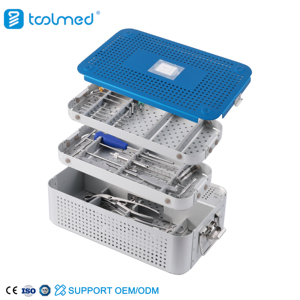
Orthopedic Instrument Orthopedic Surgical Instruments Set Small Fragment/Upper Limbs Instrument Set For Trauma Surgery
Inquire Now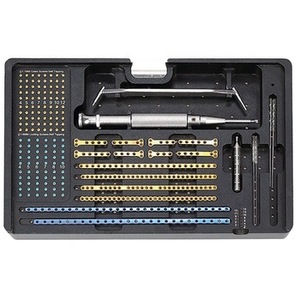
1.6mm Locking Plate Instrument Kit Small Animals Orthopedic Veterinary Surgical Instruments Drill Guide Implants Bone Plate
Inquire Now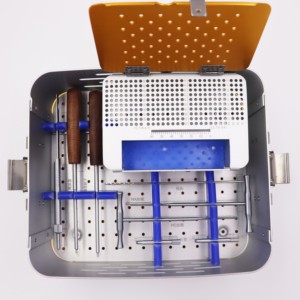
Factory Hot Sale Surgical Orthopedic Instruments Mini Locking Plate Instrument Kit
Inquire Now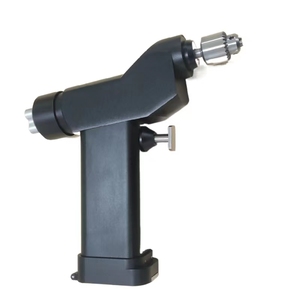
Competitive Price Orthopedic Surgery Electric Cannulated Drill Power Tool With Premium Surgical Instrument Properties
Inquire Now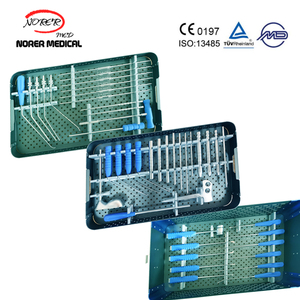
Chinese NORER Medical Manufacturer Orthopedic Spinal UBE SPINUSS Tool Kit Single-Side Double-Door Endoscopic Instrument Set
Inquire Now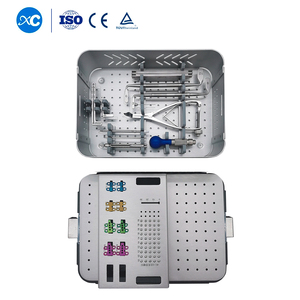
Factory Wholesale Orthopedic Vet Surgery Veterinary Orthodontic Surgical TTA Instrument Set
Inquire Now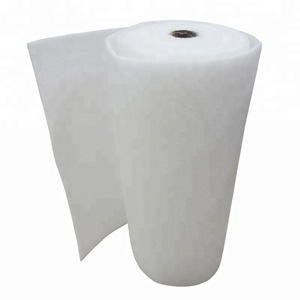
Thermal Boned Polyester Fiber Padding Roll Staple Virgin Grade for Concrete Spinning Filling Material Hollow Style
Inquire Now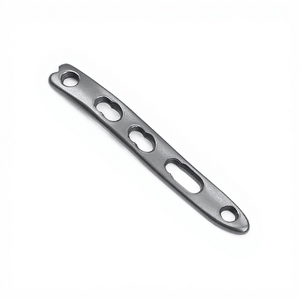
High Quality Hengchee Brand Internal Fixation Device Distal Posterior Radius Locking Plate II Orthopedic Implants Model 1208
Inquire NowExecutive Summary & Industry Whitepaper: Enterprise Manufacturing Supremacy
In contemporary clinical orthopedics, the demand for precision, biocompatibility, and biomechanical stability has reshaped the global medical device manufacturing landscape. As an ISO 13485 and ISO 9001 certified orthopedic surgical instruments manufacturer, factory, and direct supplier, our enterprise operates at the intersection of metallurgical excellence and advanced robotic machining. Providing end-to-end solutions spanning orthopedic trauma implants, spinal fixation hardware, sports medicine anchors, and minimally invasive Unilateral Biportal Endoscopy (UBE) tools, we offer global distributors and hospital procurement teams unmatched technical reliability and cost efficiency.
Core Manufacturing Paradigm: Every implant and surgical instrument produced within our facility undergoes strict quality verification protocol, utilizing ASTM F67 (Pure Titanium TA2/TA3) and ASTM F1472 (Ti-6Al-4V TC4) medical alloys, ensuring ultimate tensile strength exceeding 930 MPa and verified fatigue performance across millions of loading cycles.
The transition toward stringent global regulations—most notably the European Union Medical Device Regulation (EU MDR 2017/745) and US FDA 21 CFR Part 820 requirements—demands that medical device suppliers deliver more than basic hardware. Our engineering ecosystem integrates cleanroom packaging (Class 100,000 / ISO Class 8), automated passivating treatments per ASTM F86 standards, and Co-60 gamma-ray sterilization delivering a validated Sterility Assurance Level (SAL) of 10⁻⁶. By bridging OEM/ODM contract manufacturing with comprehensive regulatory technical file (STED) support, we empower our global partners to navigate regulatory hurdles with confidence.
Metallurgical Standards & Material Science in Surgical Instrumentation
The biomechanical success of internal fixation systems relies heavily on material selection. Lower-grade alloys introduce risks of fretting corrosion, stress shielding, and intraoperative micro-fractures. Our metallurgical lab enforces stringent raw material receiving protocols for all titanium, stainless steel, and PEEK formulations.
Medical Titanium (Ti-6Al-4V ELI)
Compliant with ASTM F1472 / F136. Offers low elastic modulus matching human cortical bone (~110 GPa), eliminating stress shielding while providing superior fatigue limits for trauma locking plates and pedicle screws.
Surgical Stainless Steel (316L / 420)
Ultra-clean vacuum melt steel (ASTM F138). Vacuum heat-treated to achieve Rockwell hardness (HRC 48-54) essential for sharp bone drills, osteotomes, bone reamers, and drill guides.
Implantable PEEK (Optima Grade)
Polyetheretherketone engineered for interbody fusion cages and suture anchors. Fully radiolucent for artifact-free post-operative MRI and CT imaging, with elasticity closely mimicking cancellous structures.
| Material Standard | Composition / Grade | Tensile Strength (MPa) | Yield Strength (MPa) | Primary Clinical Application |
|---|---|---|---|---|
| ASTM F67 | Pure Titanium (TA2 / TA3) | ≥ 400 - 500 | ≥ 275 - 380 | Cranial plates, rib locking plates, soft tissue clips |
| ASTM F1472 | Ti-6Al-4V Alloy (TC4) | ≥ 930 | ≥ 860 | Trauma locking plates, intramedullary nails, cannulated screws |
| ASTM F136 | Ti-6Al-4V ELI (Extra Low Interstitial) | ≥ 860 | ≥ 790 | Spinal pedicle screws, arthroplasty stems, sports medicine anchors |
| ASTM F138 / F139 | 316L Stainless Steel (Vacuum Melt) | ≥ 860 | ≥ 690 | External fixators, bone drills, osteotomes, surgical trial instruments |
| ASTM F2026 | Polyetheretherketone (PEEK) | ≥ 90 - 100 | ≥ 110 (Flexural) | Cervical/lumbar fusion cages, radiolucent suture anchors |
Future Technological Development Trends in Orthopedic Instrumentation
The next decade of orthopedic care is defined by a shift toward minimally invasive techniques, smart dynamic power instrumentation, and specialized veterinary orthopedics. As an advanced manufacturing partner, our R&D roadmap focuses on four key technical vectors:
1. Minimally Invasive Surgery (MIS) & Unilateral Biportal Endoscopy (UBE)
Traditional open spine surgery is rapidly yielding to UBE and transforaminal endoscopic procedures. UBE single-side double-door endoscopic kits (such as our SPINUSS Tool Kit) allow spine surgeons to execute complex decompression and discectomy through two micro-portals (8mm and 10mm). This reduces paraspinal muscle denervation and hospital stays. Future instrumentation focuses on ergonomic diamond burrs, radiofrequency plasma ablation probes, and customized retractors optimized for 4K ultra-high-definition visualization systems.
2. Smart Surgical Power Tools & Modular Battery Systems
Precision surgical power tools are advancing beyond traditional pneumatic systems. Modern electric cannulated drills incorporate brushless DC motors (BLDC) capable of stepless speed control (0–1200 RPM) and high torque reaming outputs (> 4.5 Nm) with minimal thermal output. Preventing thermal necrosis of bone tissue during drilling is critical; hence, integrated irrigation channels and automatic torque-limiting clutches represent the new gold standard for intraoperative safety.
3. Additive Manufacturing & Porous Osseointegrative Coatings
The integration of 3D printing (Direct Metal Laser Sintering - DMLS) allows for the production of porous titanium surfaces with controlled pore sizes (300–500 µm) mimicking natural trabecular bone structure. These coatings accelerate bony ingrowth in total joint arthroplasty (acetabular cups and femoral stems) and eliminate the need for PMMA bone cement in younger, active patient demographics.
4. Rapid Expansion of Specialized Veterinary Orthopedics
Veterinary medicine is seeing unprecedented sophistication. The adoption of human-grade micro-locking plate systems (1.6mm, 2.0mm, and 2.4mm series) and Tibial Tuberosity Advancement (TTA) / Tibial Plateau Leveling Osteotomy (TPLO) kits for canine cruciate ligament repair represents one of the fastest-growing market segments. Our factory produces micro-implant sets adhering to identical metallurgical and dimensional tolerances used in human pediatric trauma devices.
Global Procurement Trends & Strategic Supply Chain Management
Medical device procurement officers and healthcare distributors face unprecedented challenges: volatile raw material costs, tightening regulatory scrutiny, and supply chain disruptions. Forward-thinking buyers are transitioning from fragmented vendor networks to consolidated contract manufacturing partners capable of delivering turnkey solutions.
OEM & Private Label Packaging
Complete customized laser marking, anodized color-coding by instrument size, custom sterilizable aluminum tray layout, and branded sterile blister packaging ready for direct hospital delivery.
Turnkey Regulatory Documentation
Every product line is accompanied by comprehensive Technical Files (STED format), biocompatibility testing (ISO 10993), packaging validation (ISO 11607), and clinical evaluation reports (CER) to streamline national registration.
Total Cost of Ownership (TCO)
Direct factory purchasing cuts intermediary markups by 35-50%, while structured inventory buffers ensure standard small fragment and pedicle screw kits ship within 14 business days.
Partner with a Verified Factory Direct Manufacturer: Streamline your orthopedic supply chain with CE and ISO 13485 certified products. Request OEM Quotation
Comprehensive Procurement FAQ (Frequently Asked Questions)
Technical guidance for regulatory managers, procurement agents, and clinical distributors evaluating our surgical manufacturing platform.
Initiate Your Orthopedic Procurement Partnership
Connect with our senior engineering and regulatory team to discuss OEM manufacturing, distribution agreements, or factory-direct pricing for CE certified surgical instruments.
Inquire Now