Flagship Certified Orthopedic Systems & Surgical Instruments
Engineered for global medical device distributors, OEM brands, and surgical centers requiring validated technical file compliance.
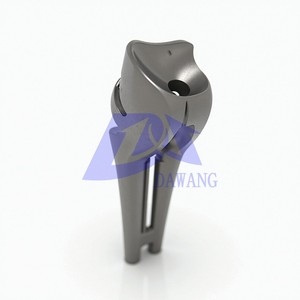
Custom Knee Implants CNC Machined For Orthopedic Surgery With High Biocompatibility And Precision Engineering Medical Parts
Send an Inquiry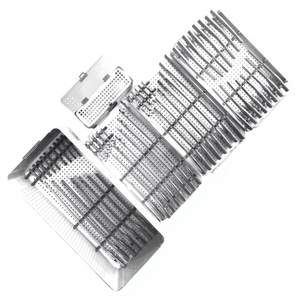
Femoral Fracture Surgery Instrument Kit Proximal Femoral Nail Anti-Rotation (PFNA) / Femoral Nailing System Manual Steel
Send an Inquiry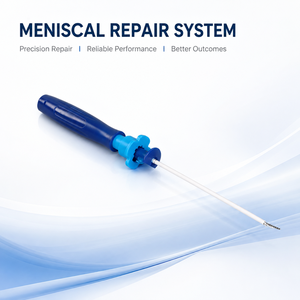
Meniscus Repair Needle Meniscal Repair System Surgical Suture All Inside Needle Repair Meniscus Total Inner Meniscal Stapler
Send an Inquiry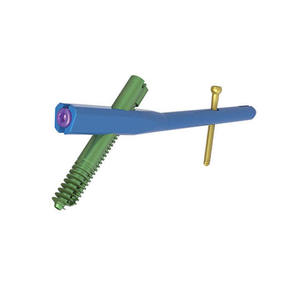
Factory Direct Orthopedic Implants PFNA Interlocking Nail Class III Standard CE ISO MDD
Send an Inquiry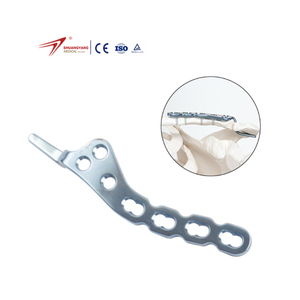
Orthopedic Surgery Trauma Implant Clavicle Claw Plate Instrument Set Clavicle Hook Plate and Claw Plate
Send an Inquiry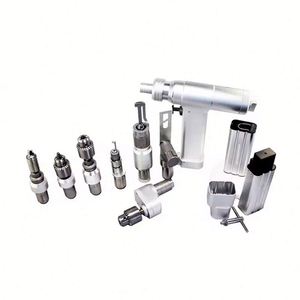
Veterinary Orthopedic Power Tool Set Multi-Function Neurosurgery Craniotomy Micro Drill Surgical Instruments Autoclavable
Send an Inquiry
2 Phase 1.8 Degree Hybrid Bipolar Nema 17 Stepper Motor for 3d Printer and Engraving Machine
Send an Inquiry
Hot Sale Top Quality Orthopedic Surgical Instruments Customization Arthroscopic Shaver Blade Price by Zuol
Send an Inquiry1. Anatomy of a CE Certified Orthopedic Implant Technical File (EU MDR 2017/745)
Navigating the transition from the legacy Medical Device Directive (MDD 93/42/EEC) to the stringent European Medical Device Regulation (EU MDR 2017/745) represents the single greatest strategic challenge for orthopedic implant manufacturers, OEM distributors, and brand owners worldwide. A CE-certified orthopedic implant is not merely defined by its mechanical geometry or raw material composition; it is inextricably bound to its Technical Documentation File (Technical Dossier) as required under Annex II and Annex III of the EU MDR.
A compliant Technical File compiled by Orthi Medical Co., Ltd. incorporates six core pillars of engineering and regulatory documentation:
- Device Identification & Technical Specifications: Detailed CAD geometry, exploded assembly blueprints, material grade compliance certificates (e.g., ASTM F1472 for Ti-6Al-4V, ASTM F67 for Unalloyed Pure Titanium TA2/TA3, ASTM F2026 for PEEK), and comprehensive surface finish metrics (Ra roughness values, hydroxyapatite plasma-spray density).
- ISO 14971 Risk Management Dossier: Complete failure mode and effects analysis (FMEA) evaluating implant insertion torque, fatigue limits, cross-threading risks, micro-motion at the bone-implant interface, and wear-particle osteolysis risks.
- Verification & Validation (V&V) Testing Reports: Dynamic axial fatigue testing according to ASTM F2077 (for interbody fusion devices) and ASTM F1264 / ASTM F382 (for intramedullary nails and bone plates). Reports demonstrate survival past 5,000,000 cycles under anatomical load profiles.
- Biocompatibility Dossier (ISO 10993 Series): Complete toxicological evaluation, including cytotoxicity (ISO 10993-5), systemic toxicity (ISO 10993-11), genotoxicity (ISO 10993-3), and chemical characterization (ISO 10993-18) verifying zero harmful extractables or leachables.
- Sterilization Validation & Shelf-Life Studies: Co-60 Gamma Irradiation dose mapping and bioburden validation compliant with ISO 11137-1/2, establishing a validated Sterility Assurance Level (SAL) of 10-6 alongside real-time 5-year packaging barrier integrity data (ISO 11607).
- Clinical Evaluation Report (CER): Methodical appraisal of clinical data compiled in accordance with MEDDEV 2.7/1 Rev 4 and MDR Article 61, proving clinical safety, functional equivalency, and state-of-the-art diagnostic alignment.
2. Technical Comparison Matrix: Medical-Grade Implantation Alloys & Polymers
Selecting the precise biomaterial for orthopedic applications dictates bone remodeling outcomes, stress-shielding reduction, and implant longevity. Below is an authoritative technical comparison of raw materials utilized across our CE-certified manufacturing lines:
| Material Standard | Material Type | Tensile Strength (MPa) | Yield Strength (MPa) | Elastic Modulus (GPa) | Primary Orthopedic Application |
|---|---|---|---|---|---|
| ASTM F1472 / TC4 | Ti-6Al-4V Alloy | ≥ 930 MPa | ≥ 860 MPa | 110 GPa | PFNA Intramedullary Nails, Locking Plates, Pedicle Screws |
| ASTM F136 | Ti-6Al-4V ELI (Extra Low Interstitial) | ≥ 860 MPa | ≥ 790 MPa | 110 GPa | High-Fatigue Trauma Screws, Arthroplasty Stems, Custom Knee Joints |
| ASTM F67 Grade 2 | Unalloyed Titanium (TA2) | ≥ 400 MPa | ≥ 275 MPa | 105 GPa | Cervical Plates, Rib Fixation Clips, Cranial Reconstruction Plates |
| ASTM F67 Grade 3 | Unalloyed Titanium (TA3) | ≥ 500 MPa | ≥ 380 MPa | 105 GPa | Low-load Clavicle Claw Plates, Maxillofacial Fixation Mesh |
| ASTM F2026 | PEEK Polymer (Polyetheretherketone) | ≥ 95 MPa | ≥ 90 MPa | 3.6 GPa | Spinal Interbody Fusion Cages, Suture Anchors (Radio-translucent) |
| ASTM F75 / F1537 | Co-Cr-Mo Alloy (Cobalt-Chrome) | ≥ 897 MPa | ≥ 517 MPa | 210 GPa | Total Knee Femoral Components, Modular Hip Heads |
3. Future B2B Procurement Trends in Global Orthopedic Manufacturing (2025–2030)
The global market for trauma, spine, joint replacement, and sports medicine devices is undergoing structural shifts. Procurement directors, hospital purchasing consortiums, and OEM brand holders must adapt to four macro trends driving vendor selection:
A. Shift to Pre-Sterilized Single-Use Procedure Kits
Traditional non-sterile implant trays require expensive hospital central sterile supply departments (CSSD) to decontaminate, sort, and autoclave surgical tools prior to surgery. The industry is moving rapidly toward factory-packaged, single-use gamma-sterilized kits. Pre-sterilized packaging backed by ISO 11607 validation eliminates hospital cross-contamination risks, simplifies inventory audits, and reduces surgery cancellation rates caused by missing tray components.
B. Demand for Turnkey Regulatory Technical Files
Rising regulatory barriers mean distributors can no longer afford white-label suppliers who offer only basic certificates of analysis. Buyers now require complete, auditable technical documentation—including raw material traceability (3.1 mill certificates), CNC machine validation, cleanroom environmental monitoring reports, and verified shelf-life testing data—to support local health authority registrations (e.g., US FDA 510(k), Brazil ANVISA, Saudi SFDA, and European CE mark).
C. Custom Patient-Specific CNC Machining (PSI)
Advancements in 3D medical imaging (DICOM CT scan conversion) and high-precision multi-axis CNC Swiss lathe turning enable the cost-effective fabrication of custom patient-specific implants. From complex revision total knee arthroplasty to pediatric oncological reconstructions, manufacturers with in-house CAD/CAM engineering capabilities offer significant competitive differentiation.
D. Value-Based Healthcare & Consolidation of Procurement Supply Chains
Healthcare providers are streamlining their supplier matrices to control procurement expenditure without compromising patient safety. Partnering with a multi-specialty manufacturer—capable of producing trauma locking plates, spinal pedicle systems, sports medicine suture anchors, arthroscopic shaver blades, and interventional stents under one ISO 13485 QMS umbrella—allows buyers to lower shipping logistics costs, consolidate audit budgets, and gain volume-based pricing advantages.
4. Technological Frontiers in Precision Orthopedic Manufacturing
Achieving micron-level dimensional tolerances in medical-grade titanium and cobalt-chrome alloys demands investment in advanced machining infrastructure and sub-micron inspection technology:
5-Axis CNC Precision Milling
High-speed simultaneous 5-axis milling centers cut complex anatomical curves on total knee femoral components and anatomical claw plates without requiring multiple re-clamping steps, eliminating positional tolerance stack-up.
Sub-Micron Coordinate Measurement (CMM)
Optical and contact CMM inspection systems verify complex implant pitch, thread geometry, and taper lock angles down to ±0.002 mm tolerance, guaranteeing 100% inter-changeability of surgical instrument sets.
Electrochemical Surface Modification
Type II anodization, micro-arc oxidation, and hydroxyapatite (HA) plasma spraying create porous bioactive topographies that accelerate early osteointegration and bone-to-implant contact (BIC).
End-to-End OEM/ODM Contract Manufacturing Pipeline
From conceptual CAD design refinement to sterile barrier packaging, our facility operates strictly within ISO 13485 and Class 10,000 (ISO Class 7) cleanroom standards.
1. Design for Manufacturing (DFM)
Our biomedical engineering team reviews customer technical drawings, optimizing radius transitions, thread pitch, and tool clearance to enhance structural fatigue strength while lowering production costs.
2. Material Verification & Machine Set-Up
Every raw titanium or PEEK bar undergoes spectral chemical analysis and mechanical tensile verification. Multi-spindle Swiss lathes execute automated precision turning under high-pressure coolant.
3. Ultrasonic Cleaning & Passivation
Multi-stage automated ultrasonic washing cycles remove all residual cutting fluids. Citric or nitric acid passivation builds a resilient titanium oxide passive film (TiO₂) for maximal biological safety.
4. Cleanroom Blister Packaging
Primary double-blister sealing utilizing medical-grade Tyvek® substrate takes place inside Class 10,000 cleanrooms, establishing validated microbial barriers resistant to transit shocks.
5. Gamma Sterilization Validation
Cobalt-60 gamma ray exposure is conducted under strict bioburden control, reaching an audited SAL of 10-6 in full compliance with ISO 11137 standards.
6. Technical File Registration Support
We supply complete Annex II/III regulatory technical dossiers, standardized test data, laser marking customization, and localized user instruction guides to expedite your health authority approval.
Frequently Asked Questions for Medical Device Procurement
Crucial answers regarding regulatory technical files, OEM order minimums, material traceability, and cleanroom manufacturing standards.
What specific documentation is included in your CE Technical Files for orthopedic implants?
How do you ensure material batch traceability from raw bar stock to finished implant?
Can you support OEM/ODM custom orthopedic implant development from engineering drawings?
What sterility assurance level (SAL) do your sterile-packaged implants provide?
What are the standard lead times for custom OEM orders and regulatory submissions?
Request Your CE Technical File & OEM Manufacturing Quotation
Connect directly with our senior regulatory specialists and biomedical engineers to review your product specifications, raw material requirements, and registration dossiers.
Send an Inquiry