CANWELL Meniscal Repair System Arthroscopic Surgery Meniscus Sutura Device Tap Fast Fix All Inside Orthopedic CE
High-strength all-inside meniscal fixation device engineered for minimally invasive sports medicine procedures. Features pre-loaded UHMWPE suture and bio-compatible anchors.
Geasure Non Sterilized Sacral Reduction & Sacroiliac Bone Screw Implants & Interventional Materials
Titanium sacral reduction system and sacroiliac joint fixation screws. Engineered for rigid anatomical stabilization under complex biomechanical load distribution.
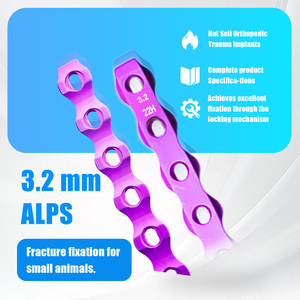
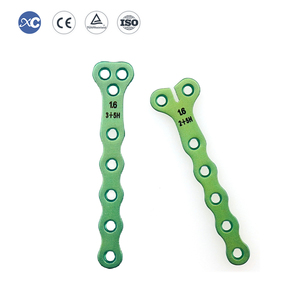
Medical Veterinary Orthopedic Trauma Implants Factory Direct 1.6mm T Type Locking Plate
Ultra-low profile 1.6mm T-type titanium locking plate manufactured to rigorous medical standards for micro-trauma stabilization and distal fragment reduction.
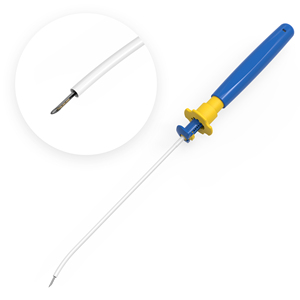
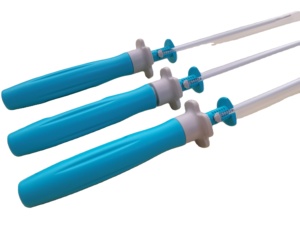
TOOLMED Sport Medicine Straight Form Curved up Kick Down Meniscal Repair Hook Device Class III Orthopedic Surgical Instruments
Ergonomic Class III arthroscopic meniscal repair instrument with specialized curved-up and kick-down configurations for tight joint space accessibility.
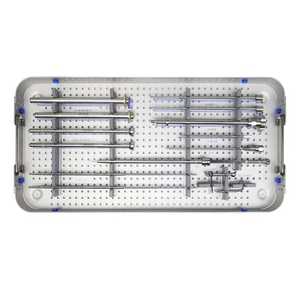
Medical Surgical Orthopedic Zero Profile Interbody Fusion Cage Stainless Steel Manual Instrument Medicab CE Certified Class I
CE-marked zero-profile cervical and lumbar interbody fusion system designed to eliminate anterior plate profile while maintaining supreme fusion rigidity.
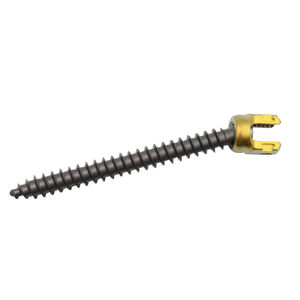
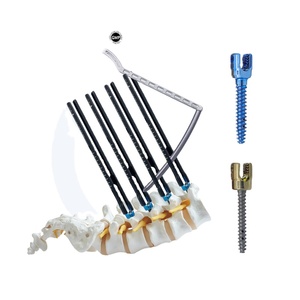
CZMEDITECH's Orthopedic Implant Regarding the MIS Spinal Pedicle Screw System
Minimally Invasive Surgery (MIS) cannulated polyaxial pedicle screw system enabling percutaneous rod insertion, reduced tissue trauma, and accelerated patient recovery.
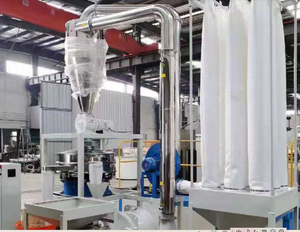
Crystal Double-screw 380V High Productivity Machine for Tile Compact Spinning System
Industrial-grade 380V double-screw high-productivity manufacturing unit engineered for advanced material extrusion and medical-grade synthetic fiber processing.
Enterprise Engineering Rigor: How Leading Minimally Invasive Spine System Factories Operate
Minimally Invasive Spine Surgery (MISS) has revolutionized modern spinal orthopedics by reducing muscular disruption, minimizing intraoperative blood loss, and significantly shortening postoperative recovery cycles. However, the efficacy of percutaneous pedicle screw placement, transforaminal lumbar interbody fusion (TLIF), and Unilateral Biportal Endoscopy (UBE) hinges directly upon the manufacturing tolerances and metallurgical integrity of the underlying implants and instrumentation.
When procurement directors and OEM brand partners evaluate a CE certified minimally invasive spine system factory, criteria extend far beyond simple price-per-unit metrics. A tier-one manufacturing facility operates within strict ISO 13485 and ISO 9001 quality management parameters, utilizing multi-axis CNC Swiss lathe centers, EDM wire cutting, and automated coordinate measuring machines (CMM) to guarantee sub-micron precision across complex geometry.
Information Gain Benchmark: Modern MIS pedicle screws feature dual-core, friction-reducing thread profiles and cannulated shanks designed to withstand over 5 million dynamic fatigue cycles under ASTM F1717 axial loading standards without mechanical failure.
Raw material traceability forms the backbone of medical device reliability. Leading factories source medical-grade Titanium Alloys (Ti-6Al-4V ELI conforming to ASTM F1472 and ASTM F136) and radiopaque Polyetheretherketone (PEEK OPTIMA per ASTM F2026). These bio-materials are subjected to spectrographic material verification, tensile testing (yielding tensiles ≥ 930 MPa for TC4), and ultrasonic micro-crack inspection prior to machining.
Complete technical documentation (STED), clinical evaluation reports (CER), and risk management protocols under ISO 14971 ready for European MDR registration.
Product Development & Technological Trends in Spinal MIS Systems
The global market for minimally invasive spine systems is undergoing a monumental shift driven by demographic aging, expanding insurance coverage for ambulatory surgical centers (ASCs), and rapid advances in computer-assisted intraoperative navigation. Factories that stay ahead of the technical curve are focusing heavily on four core innovation pillars:
1. 3D-Printed Porous Titanium Cages
Additive manufacturing via Direct Metal Laser Sintering (DMLS) allows factories to create stochastic porous titanium lattice structures mimicking trabecular bone structure (60-70% porosity), inducing rapid cellular osseointegration superior to smooth PEEK surfaces.
2. Expandable TLIF / PLIF Cages
To eliminate excessive nerve root retraction during MIS delivery, next-generation interbody spacers feature expandable titanium footprint mechanisms, allowing collapse during insertion and controlled post-expansion inside the disc space to restore sagittal lordosis.
3. Modular UBE & Endoscopic Integration
Unilateral Biportal Endoscopy (UBE) is taking market share from micro-discectomy. MIS spine system factories are bundling specialized radiolucent retractors, high-speed shaver burs, and radiofrequency plasma probes optimized for dual-portal visual access.
Furthermore, navigation-ready instrumentation is becoming mandatory. Pedicle screw extension sleeves, guidewires, and taps are now precision-machined with passive optical reflections or electromagnetic tracking geometries compatible with Medtronic StealthStation, Stryker NAV3i, and robotic spinal platforms.
B2B Procurement Trends: Sourcing Strategy for Hospital Networks & Importers
In response to rising healthcare delivery costs and global supply chain disruptions, hospital group purchasing organizations (GPOs) and regional medical distributors are rethinking their spinal implant procurement channels. Key global procurement shifts include:
Single-Source Turnkey Manufacturing: Importers are migrating away from fragmented multi-vendor procurement toward integrated factories capable of providing implants, surgical tools, custom tray fabrication, and sterile packaging under one roof.
Pre-Sterilization Shelf-Ready Delivery: Non-sterile implants require expensive autoclave processing inside hospital central sterile supply departments (CSSD). Demand for factory-sterilized (Gamma Co-60 SAL 10-6) individual packs has grown over 28% year-over-year to reduce hospital contamination liability.
MDR Regulatory Dossier Availability: With the European Union MDR implementation enforcing stringent clinical evidence, distributors prioritize OEM factories that maintain fully up-to-date CE technical files, biometric risk analyses, and PMS (Post-Market Surveillance) data systems.
Frequently Asked Questions (FAQ) for Minimally Invasive Spine System Sourcing
Answers to critical procurement, regulatory, and engineering questions asked by healthcare business executives and biomedical engineers.
What certification standards must a minimally invasive spine system factory meet for EU and global export?
+
A qualified spine factory must hold ISO 13485 certification for Medical Device Quality Management Systems. For European Union distribution, products must carry CE certification compliant with the Medical Device Regulation (EU 2017/745 MDR). Raw material suppliers must provide mill certificates matching ASTM F136 / ASTM F1472 for Titanium alloys and ASTM F2026 for implant-grade PEEK.
How do MIS pedicle screw systems prevent pull-out failure in osteoporotic bone?
+
Modern MIS pedicle screws utilize dual-thread or cortical-cancellous thread designs that increase bone-screw contact area. Additionally, fenestrated cannulated screws allow intraoperative bone cement injection (PMMA kyphoplasty augmentation) directly through the screw shank, creating a solidified anchor matrix within compromised trabecular bone.
Can your factory manufacture custom OEM/ODM spinal instrumentation sets with private labeling?
+
Yes. We offer complete OEM/ODM solutions starting from 2D/3D CAD engineering drawings or reverse engineering physical prototypes. Services include customized handle ergonomics, laser etching of brand logos and lot numbers, anodized color-coding by screw diameter, and custom aluminum/PPSU sterilizing trays designed to fit specific operating room configurations.
What is the typical lead time for high-volume spine implant orders and sample prototypes?
+
Prototype samples generated via 5-axis CNC machining are typically completed in 15 to 20 working days along with dimensional CMM inspection reports. Mass production orders for standard catalog pedicle screws, locking plates, or fusion cages average 30 to 45 days, inclusive of anodization, cleaning, passivating, and final packaging.
How is sterility guaranteed for pre-packaged orthopedic implants?
+
Implants are washed in automated ultrasonic multi-stage cleaning lines using reverse osmosis (RO) purified water, then sealed inside ISO Class 7 cleanrooms using Medical-grade Tyvek double pouch blisters. They undergo Cobalt-60 Gamma Radiation sterilization validated under ISO 11137 standards to achieve a Sterility Assurance Level (SAL) of 10-6.
Partner with a Certified Minimally Invasive Spine Manufacturing Leader
Get direct factory pricing, request free sample evaluations, or consult with our senior biomedical engineering team today.