Certified Medical Devices & Orthopedic Implants
Explore our CE & ISO 13485 accredited orthopedic trauma systems, spinal fixation hardware, and precision surgical instruments engineered for global distributors.
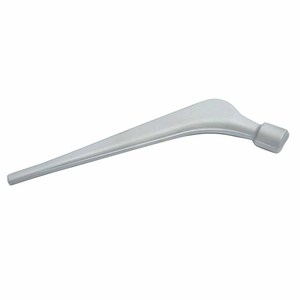
Long Service Life Stainless Steel Forged Customized Artificial Hip Joint Prosthesis
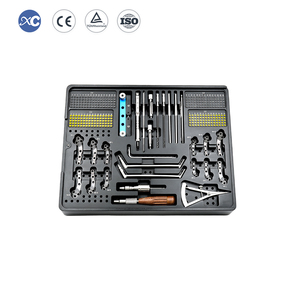
Factory Price Veterinary Orthopedic Implant 2.7/3.5mm Multi-axial Locking TPLO Bone Plate Set
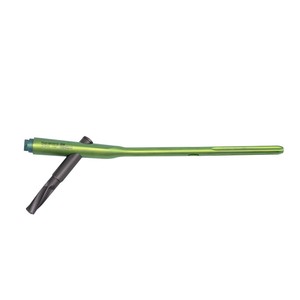
Trauma Bone Nail PFNA Anti-rotation Proximal Femoral Interlocking Titanium Nail System
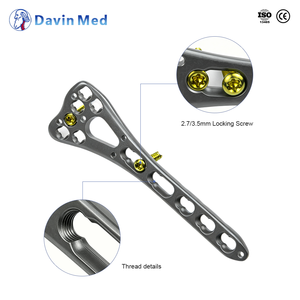
Distal Radius Volar Locking Plate Titanium Variable Angle Anatomical Precontoured Implant
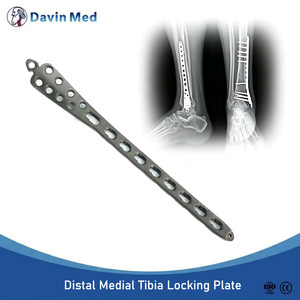
CE ISO Titanium Orthopedic Implants Distal Medial Tibial Locking Plate & Screws Fixation
Industrial Grade Rotating Reactor & Polymer/Rubber Processing Surgical Machinery Component
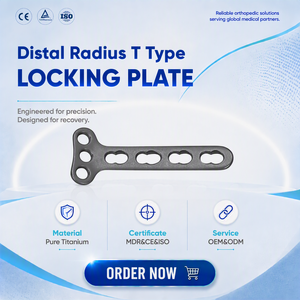
Orthopedic Distal Radius Variable Angle Locking Compression Titanium Plate Fixation
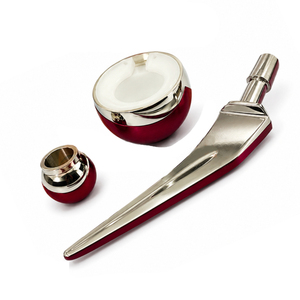
Orthopedic Hip Bipolar Prosthesis Implant for Femoral Neck Fracture Replacement
Biomechanical Superiority of CE Certified Lumbar Fusion Cages
Understanding the engineering dynamics, material science, and surgical efficacy of modern lumbar interbody fusion devices (LIFD) in degenerative spine care.
Lumbar interbody fusion (LIF) has become the gold standard surgical intervention for treating symptomatic degenerative disc disease (DDD), spondylolisthesis, spinal stenosis, and segmental instability. As a leading specialized CE certified lumbar fusion cage factory and OEM supplier, Orthi Medical integrates advanced biomechanical design with rigorous manufacturing controls to solve the persistent challenges of spinal arthrodesis: implant subsidence, pseudarthrosis, and delayed bony bridging.
1. Materials Science: Biomaterial Optimization for Spinal Fusion
The clinical success of an interbody cage relies fundamentally on its constituent biomaterial. Historically, metallic options like solid titanium alloys offered excellent strength but suffered from stress shielding due to high elastic modulus. Today’s state-of-the-art factories specialize in two primary biocompatible materials:
- Polyetheretherketone (PEEK-OPTIMA / ASTM F2026): PEEK possesses an elastic modulus of approximately 3.6 GPa, closely mimicking human cortical bone (12–18 GPa) and cancellous bone (1–4 GPa). This flexibility reduces stress concentration at the endplate-implant interface, drastically suppressing subsidence risk. Furthermore, PEEK is radiolucent, allowing surgeons to accurately monitor fusion progress on postoperative X-rays and CT scans using integrated tantalum radiopaque markers.
- 3D-Printed Porous Titanium Lattice (ASTM F136 / Ti-6Al-4V ELI): Selective Laser Melting (SLM) and Electron Beam Melting (EBM) technologies allow factories to construct complex 3D trabecular architectures. Featuring interconnecting pores sized between 400 μm and 700 μm with 65–80% porosity, 3D-printed titanium cages encourage direct bone ingrowth (osteoconduction and vascularization), achieving primary mechanical stability and early permanent fixation.
- Titanium-Coated PEEK Hybrids: Combining radiolucency and low modulus of a PEEK core with plasma-sprayed titanium surfaces to encourage cellular attachment without compromising imaging capabilities.
2. Surgical Approach Adaptability (PLIF, TLIF, ALIF, XLIF/LLIF, OLIF)
Surgical methodologies dictate interbody footprint geometries. Our production lines manufacture standardized and customizable cage architectures tailored for all anatomical entry vectors:
TLIF (Transforaminal)
Banana-shaped curvature designed for unilateral posterior approach. Reduces nerve root retraction while ensuring maximum endplate coverage and lordotic restoration (0° to 15° lordotic options).
PLIF (Posterior)
Dual bullet-nosed rectangular cages implanted bilaterally through a traditional laminectomy window. Offers high torsional stability and substantial graft chamber volume.
ALIF (Anterior)
Large footprints providing expansive graft surface area to support maximum axial load. Integrated screw-plate locking options eliminate the need for secondary posterior stabilization.
Lumbar Fusion Cage Engineering Specifications
Comprehensive dynamic testing data per ASTM F2077 and ASTM F2267 standards across implant modalities.
| Cage Feature | Medical PEEK (ASTM F2026) | 3D Porous Ti (Ti6Al4V ELI) | Ti-Plasma Coated PEEK |
|---|---|---|---|
| Elastic Modulus | 3.6 GPa (Near Cortical Bone) | 2.5 – 4.5 GPa (Lattice Structure) | 3.6 GPa (Core Structure) |
| Radiolucency | 100% Clear (Tantalum Markers) | Radiopaque / CT Artifact Minimal | Radiolucent Core / Thin Ti Layer |
| Static Axial Compression | > 25,000 N | > 30,000 N | > 25,000 N |
| Dynamic Fatigue Strength | 5 Million Cycles @ 4,000 N | 5 Million Cycles @ 5,500 N | 5 Million Cycles @ 4,000 N |
| Bone Ingrowth Potential | Line-of-Sight Contact | 3D Interconnecting Osteogenesis | Surface Microroughness Fixation |
| Available Lordotic Angles | 0°, 4°, 8°, 12°, 15° | 0°, 4°, 8°, 12°, 15° | 4°, 8°, 12° |
Future Procurement & Manufacturing Trends (2025–2030)
Strategic foresight for hospital procurement executives, medical device distributors, and private-label OEMs.
1. Shift Toward Additive Manufacturing (3D Printing)
Conventional CNC machining of PEEK is rapidly giving way to 3D-printed porous titanium. Additive production enables non-linear biomimetic lattice patterns that replicate trabecular bone internal structures. Hospitals prefer 3D-printed titanium due to higher initial fusion rates and reduced need for autologous bone grafting.
2. In-Situ Expandable & Articulating Cages
Minimally Invasive Surgery (MIS) demands smaller insertion channels. Modern procurement trends focus heavily on expandable interbody cages inserted at a compact height (e.g., 7mm) and expanded intraoperatively inside the disc space (up to 14mm), restoring disc height and lordosis without damaging endplates.
3. Stringent EU MDR 2017/745 Compliance Requirements
The transition from MDD to EU MDR has heightened regulatory thresholds for clinical evidence, post-market surveillance (PMS), and raw material traceability. Sourcing cages from CE certified suppliers with pre-validated technical documentation (STED) speeds up market entry for overseas brand owners.
State-of-the-Art Medical Manufacturing Infrastructure
As a leading orthopedic implant and surgical instrument manufacturer, Orthi Medical Co., Ltd. operates under strict ISO 13485 and ISO 9001 certified quality management systems. Our vertically integrated production facilities deliver unmatched consistency for global OEM/ODM contracts:
- High-Precision Machining: Equipped with multi-axis DMG MORI CNC milling machines, Citizen Swiss lathes, and EOS Metal 3D printers for micrometric accuracy.
- Class 10,000 Cleanrooms: Automated washing, assembling, and primary blister packaging conducted within ISO Class 7 cleanroom environments.
- Sterile Packaging Solutions: Pre-packaged sterile spinal implants subjected to Co-60 Gamma Irradiation achieving a Sterility Assurance Level (SAL) of 10⁻⁶ per ISO 11137.
- Full Traceability & QC: Every batch undergoes 100% optical coordinate measuring machine (CMM) inspection with complete material heat-number tracking from certified raw titanium bars and PEEK granules.

Frequently Asked Questions for Sourcing Lumbar Fusion Cages
Clear answers to vital technical, regulatory, and supply-chain queries for global medical device importers and procurement agents.