Featured Medical Implants & Surgical Tool Systems
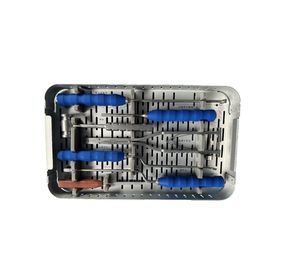
Direct OEM factory supplies engineered for trauma, spinal, joint arthroplasty, and surgical operating theatre operations.

ISO 13485:2016 & CE Quality Architecture
Selecting a compliant medical device manufacturer is the single most crucial risk-mitigation step for hospital procurement directors and regional distributors. Under the European Union Medical Device Regulation (EU MDR 2017/745) and US FDA 21 CFR Part 820 frameworks, orthopedic implants require complete end-to-end material traceability, validated biomechanical safety profiles, and rigid quality assurance protocols.
Our manufacturing facilities operate under an audited ISO 13485:2016 Quality Management System and hold certified CE Markings across key trauma, spine, and joint product lines. From raw titanium ingot receipt to final gamma-sterilized blister sealing, every step is governed by standardized testing SOPs.
Clinical Grade Assurance: All implant components undergo 100% optical coordinate inspection, surface roughness profilometry (Ra < 0.4 µm for articulating surfaces), and dynamic axial fatigue testing per ASTM F1717 and ASTM F543 standards.
Biocompatible Metallurgy & Material Standards
The long-term clinical survival of orthopedic implants depends on microstructural integrity, corrosion resistance, and modulus matching to human cortical bone. We utilize exclusively implant-grade raw materials sourced from certified metallurgical foundries with full heat-lot mill certifications.
| Material Type | Standard Specs | Tensile Strength | Primary Clinical Application |
|---|---|---|---|
| Ti-6Al-4V ELI | ASTM F136 / ISO 5832-3 | ≥ 860 MPa | Trauma Plates, Pedicle Screws, Joint Stems |
| Pure Titanium | ASTM F67 (Grades 2/3/4) | 483 – 680 MPa | Cervical Plates, Craniofacial Mesh, Rib Plates |
| PEEK-OPTIMA® | ASTM F2026 | ≥ 95 MPa | Interbody Spinal Cages, Suture Anchors |
| CoCrMo Alloy | ASTM F75 / ISO 5832-4 | ≥ 665 MPa | Total Knee Femoral Components, Articulating Heads |
Orthopedic System Portfolios & Surgical Applications
Detailed engineering breakdowns of our core OEM/ODM product families for global procurement specialists.
1. Trauma Internal Fixation Systems
Our trauma portfolio covers anatomic locking plates, intramedullary nails, and compression screw systems designed to preserve vascularization while providing stable fixation under mechanical loads:
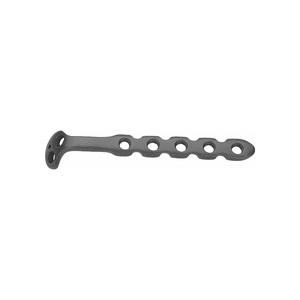
- Anatomic Locking Compression Plates (LCP): Pre-contoured designs for distal radius, proximal humerus, distal femur, and proximal tibia fractures. Features combi-holes allowing both dynamic compression and angular stable locking.
- Intramedullary Nails (PFN & Tibia Nails): Cannulated titanium alloy nails featuring multi-planar locking options and helical blade technology for optimal cut-out resistance in osteoporotic bone.
- Cannulated Screws (Ø2.5mm – Ø7.3mm): Self-drilling and self-tapping threads engineered for scaphoid, femoral neck, and ankle arthrodesis procedures with precise guidewire alignment.
2. Spinal Instrumentation & Fusion Devices
Designed for complex thoracolumbar reconstruction, cervical spine disorders, and degenerative disc diseases:
- Pedicle Screw Systems: Low-profile, top-loading friction-head screws with double-lead threads for fast insertion and high pull-out strength. Available in cannulated and fenestrated options for PMMA cement augmentation.
- PEEK Interbody Fusion Cages (PLIF, TLIF, ALIF): Radiolucent PEEK cages featuring radiopaque tantalum markers, teeth profiles to prevent migration, and large central hollow spaces for maximum bone graft volume.
- Anterior Cervical Plate (ACP): Ultra-thin 2.0mm profile with pre-assembled tactile locking mechanisms preventing screw back-out while preserving adjacent segment tissue.
3. Joint Arthroplasty (Hip & Knee Reconstruction)
Total and partial joint replacement prostheses optimized for biomechanical stability and low-wear tribology:
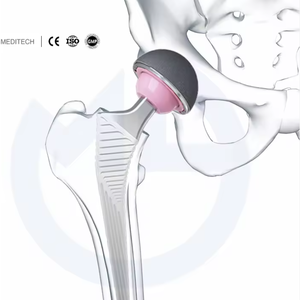
- Cementless & Cemented Femoral Stems: Plasma-sprayed Titanium and Hydroxyapatite (HA) dual coating promoting rapid osseointegration and long-term biological secondary fixation.
- Acetabular Cup Systems: Porous titanium shells paired with Highly Cross-linked Polyethylene (HXLPE) or Biolox Delta ceramic liners for minimal volumetric wear rates.
- Total Knee Arthroplasty (TKA): Anatomic Cobalt-Chromium femoral components combined with modular tibial inserts ensuring superior kinematic alignment and reduced patellar shearing.
4. Sports Medicine & Minimally Invasive Endoscopy (UBE)
Advanced soft tissue repair consumables and instrumentation for arthroscopy and spine endoscopy:
- PEEK & Titanium Suture Anchors: Pre-loaded with Ultra-High Molecular Weight Polyethylene (UHMWPE) braided sutures for rotator cuff, labrum, and ACL/PCL reconstruction.
- Unilateral Biportal Endoscopy (UBE) Sets: Complete minimally invasive spinal decompression instruments, high-definition 4K endoscopic optics, and radiofrequency plasma ablation probes.
- Arthroscopy Shaver Blades & Burrs: Precision-ground stainless steel cutters offering clean resection with zero metal debris shedding.
Future Procurement & Technological Trends in Orthopedic Implants (2025–2030)
The global orthopedic implant market is undergoing a rapid transition toward patient-specific solutions, enhanced biological integration, and digitised surgical workflows. Hospital procurement boards and B2B buyers must align with manufacturers who invest in next-generation manufacturing tech:
A. 3D Printing & Trabecular Titanium Scaffolds
Direct Metal Laser Sintering (DMLS) allows the creation of biomimetic porous titanium structures with pore sizes ranging from 300 to 600 microns. This closely mimics human cancellous bone structure, significantly reducing stiffness mismatch (stress shielding) and enhancing bone vascularization.
B. Bioactive Coatings & Antimicrobial Surfaces
Implant-associated infections (IAIs) remain a costly clinical challenge. Future implant standards integrate silver-ion doping, nano-hydroxyapatite (nHA), and atomic layer deposition (ALD) antimicrobial barrier layers that prevent bacterial adhesion while promoting osteoblast differentiation.
C. Shift to Gamma-Sterilized Single-Pack Packaging
Healthcare facility sterilization departments are increasingly shifting away from hospital autoclave tray processing. Ready-to-use, Co-60 gamma-irradiated sterile-packaged implants cut operating theatre setup times, lower hospital cross-contamination risks, and provide 100% barcode traceability.
D. Robotic-Compatible & MIS Navigation Tooling
With surgical robotics becoming standard in hip, knee, and spine surgeries, implants and instrument trays are now engineered with optical tracking arrays, tight dimensional tolerances (<10 microns), and robotic arm interface couplings.
Strategic OEM/ODM Manufacturing & Global Supply Chain
How we help medical device brand owners and distributors reduce Total Cost of Ownership (TCO) while guaranteeing regulatory compliance.
DFM & Engineering Review
3D CAD optimization, finite element analysis (FEA), and material selection tailored for regulatory approval.
Precision CNC Machining
5-axis Swiss-type automatic turning and 5-axis milling centers achieving sub-micron tolerances.
Surface Finish & Anodizing
Type II/III titanium anodization, electropolishing, laser marking, and micro-blasting surface treatments.
ISO Class 7 Sterile Pack
Cleanroom washing, double blister sealing, Co-60 sterilization, and regulatory STED file support.
Frequently Asked Questions (FAQ) for Procurement & Quality Audits
Clear, definitive technical answers for healthcare supply chain executives, regulatory managers, and surgical distributors.
What international quality management certifications govern your orthopedic implant manufacturing facilities?
What is the standard lead time for custom OEM/ODM orthopedic implant contract manufacturing?
How do you ensure sterility assurance and cleanroom packaging integrity for sterile-packaged implants?
Can you provide technical dossier documentation to support our regional medical device registration (FDA 510k, CE MDR, SFDA)?
What custom branding and private label packaging options are available for distributors?
What dynamic mechanical testing protocols are performed on trauma plates and spinal pedicle screws?
Partner with a Certified Orthopedic Implant Manufacturer
Elevate your medical supply chain with CE & ISO 13485 certified titanium implants, PEEK fusion systems, and surgical power instruments. Speak directly with our senior biomedical engineering team today.