Precision Implants & Surgical Instrument Systems
Certified orthopedic trauma, spine, arthroscopy, and interventional solutions manufactured in accordance with strict ISO 13485 and CE quality frameworks.
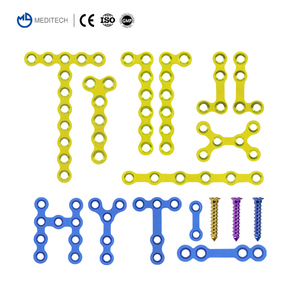
CZMEDITECH Orthopedic Stainless Steel Mesh Plate System Locking Maxillofacial Mini Arc Bridge Instrument Set 2.4 Surgical Bone
Send an Inquiry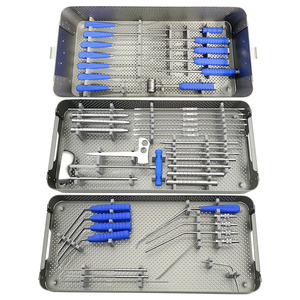
Spinal Surgery Unilateral Biportal Endoscopic Surgery Instruments Set UBE Instrument Set Orthopedic Instrument
Send an Inquiry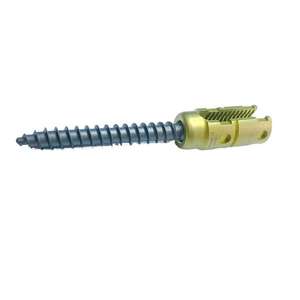
Geasure Titanium Alloy Spine 6.0 Reduction Polyaxial Pedicle Screw Orthopedic Implant Set Interventional Materials Product
Send an Inquiry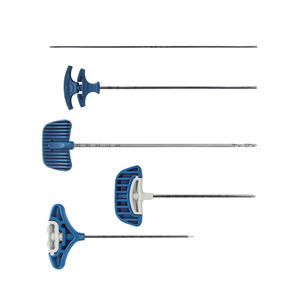
AISLING INTERNATIONAL High Quality Manual Stainless Steel Thoracic Kyphoplasty Kit System Set Vertebroplasty Tool Set Reusable
Send an Inquiry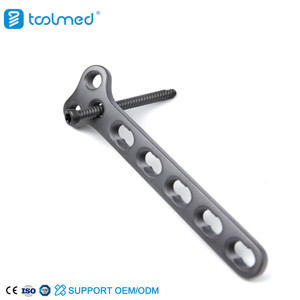
Good Quality Factory Directly Supply Titanium Veterinary Orthopedic Implant Plate T Type Locking Plate
Send an Inquiry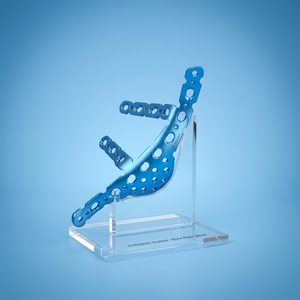
Factory Direct Sale Pelvis Reconstruction Locking Plate Ortopedicos Placas Pelvic Plate Implants
Send an Inquiry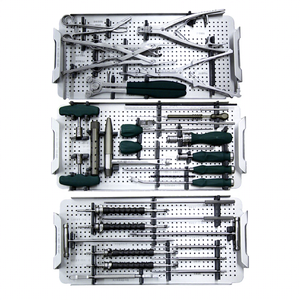
Orthopedic Surgery Titanium Alloy COXII Pedicle Screw -rod 6.0 System Low Profile CE Certified Implant Interventional Materials
Send an Inquiry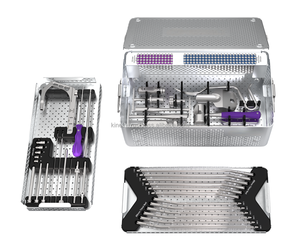
Aluminium Interlocking Nail Tibia Femur Instrument Set Distal Jig Target Arm Intramedullary Tibia Femur Nail Orthopedic Surgery
Send an InquiryBiomechanics & Clinical Evolution of Femoral Neck Fixation Systems
An in-depth analysis of structural biomechanics, Pauwels shear vectors, rotational torque stability, and the transition from multiple cannulated screws (MCS) to advanced angular-stable Femoral Neck Systems (FNS).
1. The Anatomical Challenge of Femoral Neck Fractures
Femoral neck fractures represent one of the most critical trauma pathologies in orthopedic surgery. The intracapsular region of the proximal femur suffers from complex mechanical loading and vulnerable vascular anatomy. Blood supply to the femoral head—primarily mediated by the deep branch of the medial femoral circumflex artery (MFCA)—is easily disrupted during trauma. Achieving anatomical reduction, stable dynamic compression, and rotational control is vital to mitigate the clinical risks of non-union, avascular necrosis (AVN), and femoral neck shortening.
According to the Pauwels Classification, fracture line angles are categorized into Type I (<30°), Type II (30°–50°), and Type III (>50°). In Pauwels Type III fractures, dominant shear forces act across the fracture plane. Conventional construct methods often fail to withstand these vertical shearing stresses, precipitating early varus collapse, screw back-out, and loss of fixation.
Dynamic Controlled Compaction
Modern Femoral Neck Systems utilize a lateral dynamic sliding mechanism. This enables linear collapse along the femoral neck axis under partial body weight-bearing, inducing primary bone healing while preventing mechanical cutting-out through the femoral head cartilage.
Rotational & Angular Stability
Integrating a central bolt with a divergent or convergent anti-rotation screw creates a locked structural unit. This dual-element design provides superior resistance to rotational torque forces compared to isolated parallel screw constructs.
Soft Tissue & Vascular Preservation
Constructed with a low-profile lateral locking plate, the system requires a minimal skin incision. Reduced periosteal stripping protects periarticular soft tissues and minimizes iatrogenic compromise of remaining capsular vessels.
Biomechanical fatigue testing confirms that the angular-stable Femoral Neck System (FNS) exhibits significantly higher overall mechanical stiffness (over 1200 N/mm) and dynamic fatigue resistance compared to traditional 3-cannulated screw inverted triangle configurations. For younger active patients or high-shear Pauwels III fractures, FNS reduces surgical revision rates by up to 45%.
Mechanical & Clinical Comparison of Proximal Femoral Fixation Methods
A comparative analysis of internal fixation modalities used in intracapsular femoral neck fractures:
| Implant Fixation Modality | Structural Mechanism | Rotational Stability | Shear Stress Resistance | Incision & Tissue Dissection | Femoral Neck Shortening Rate | Primary Clinical Indication |
|---|---|---|---|---|---|---|
| Femoral Neck System (FNS) | Locking Plate + Dynamic Bolt + Anti-Rotation Screw | Very High (Locked Unit) | Excellent (Angular Stable) | Minimal Invasive (< 5 cm) | Low (< 5%) | Pauwels I, II, III; Active Elderly & Young Trauma |
| Multiple Cannulated Screws (MCS) | 3 Parallel Inverted Triangle Screws | Moderate (Friction Dependent) | Poor in High Angles | Percutaneous / Small | High (15% - 30%) | Non-displaced Pauwels I Fractures |
| Dynamic Hip Screw (DHS) | Large Lag Screw + Lateral Barrel Plate | Moderate to Low | High | Large Open (> 10 cm) | Moderate | Intertrochanteric Fractures |
| Hemi / Total Arthroplasty (HA/THA) | Joint Replacement Components | N/A (Joint Replacement) | N/A | Extensive Surgical Exposure | Zero (Excised Head) | Displaced Garden III/IV in Low-Demand Elderly |
Global Procurement Trends for Hip Trauma Implants
Analysis of regulatory shifts, material supply chains, hospital cost-containment programs, and sterilization trends shaping international orthopedic B2B purchasing.
1. Transition Toward Pre-Packaged Sterile Single-Use Kits
Hospital procurement departments worldwide are rapidly shifting from bulk non-sterile implant trays toward gamma-irradiated, sterile-packaged single-use implants. Sterile packaging guaranteed to Sterility Assurance Level (SAL 10-6) eliminates hospital autoclave processing expenses, minimizes surgical site infection (SSI) liability, and provides full barcode lot traceability straight into the operating room theatre.
2. Stringent EU MDR & International Regulatory Audits
With the complete transition to the European Union Medical Device Regulation (EU MDR 2017/745), medical device distributors are consolidating their vendor bases around manufacturers with complete Technical Documentation Files (STED format), accredited ISO 13485 cleanroom validation, clinical evaluation reports (CER), and transparent ISO 10993 biocompatibility testing data.
3. Growth of Value-Based Healthcare (VBHC) Sourcing
Global health systems are demanding high-performance trauma implants at competitive factory-direct prices. By sourcing directly from verified ISO 13485 contract manufacturers, distributors can secure robust gross profit margins while providing hospitals with premium-grade Ti-6Al-4V titanium implants that reduce overall hospital stay durations and revision rates.
4. Custom OEM/ODM Private Label Collaboration
Leading regional orthopedic brands increasingly rely on qualified contract original equipment manufacturers (OEMs) for drawing-based custom machining, surface anodization color-coding, laser engraving, and custom instrument container assembly. OEM partnerships accelerate time-to-market without requiring capital expenditure on multi-axis CNC machine centers.
Development Trends in Next-Generation Femoral Neck Implants
How material science, digital surgical targeting, and bio-adaptive surface modifications are advancing proximal femoral trauma surgery.
Advanced Surface Anodization & Bio-Coatings
Next-generation titanium implants utilize Type II electrochemical anodization and micro-arc oxidation (MAO). These surface modifications enhance anti-galling properties during screw insertion and accelerate osseointegration at the plate-bone interface.
Radiolucent Carbon-PEEK Target Jigs
Precision surgical instrument sets are incorporating carbon fiber-reinforced PEEK targeting arms. Highly radiolucent under C-arm fluoroscopy, these jigs allow unobstructed intraoperative X-ray visualization of guide pin placement.
3D Printed Porous Trabecular Structures
Additive manufacturing (Direct Metal Laser Sintering - DMLS) enables the creation of biomimetic porous titanium surfaces on implant shafts, matching human cancellous bone modulus and improving long-term biological fixation.
Why Partner with Orthi Medical / Canwell Medical
Full-spectrum manufacturing capabilities, certified quality assurance, and dedicated support for global orthopedic importers.
ISO 13485 & ISO 9001 Certified Quality Infrastructure
Our automated manufacturing facilities operate under stringent quality management systems audited in accordance with ISO 13485:2016. Every batch undergoes 100% critical dimension inspection, optical comparator verification, and mechanical pullout testing.
Medical-Grade Raw Titanium Specification Compliance
We source exclusively certified raw materials matching international standards: Ti-6Al-4V / TC4 (ASTM F1472) with tensile strength ≥ 930 MPa, and pure titanium TA2 / TA3 (ASTM F67). Full mill test certificates (MTC) and chemical composition analyses accompany every order.
Co-60 Gamma Sterilization & Cleanroom Packaging
Implant products can be supplied in ready-to-use sterile double-blister Tyvek packaging processed via Co-60 gamma-ray irradiation, validated according to ISO 11137 standards to maintain SAL 10-6 sterility over a 5-year shelf life.
Clinical Education, Technique Guides & Cadaver Training
We support our global distributor network with comprehensive surgical technique guides, step-by-step video tutorials, academic conference representation, and hands-on cadaveric training workshops to facilitate rapid clinical adoption by local surgeons.
Frequently Asked Questions (B2B Procurement FAQ)
Essential answers regarding regulatory dossiers, MOQ, material certifications, private labeling, and supply chain logistics for medical importers.
1. What specific regulatory certifications do your Femoral Neck Systems and trauma implants carry?
Our manufacturing facilities operate under strict ISO 13485:2016 and ISO 9001:2015 Quality Management System standards. Our core product lines, including dynamic femoral neck fixation systems, locking bone plates, cannulated compression screws, intramedullary nails, and spinal pedicle screws, carry CE Marking. We provide complete technical documentation dossiers organized in standard STED format to facilitate quick registration with local national health authorities (such as US FDA, Saudi SFDA, Brazilian ANVISA, and Eurasian EAC).
2. How does a Femoral Neck System (FNS) compare to traditional 3-screw cannulated constructs in clinical efficacy?
Clinical and biomechanical studies demonstrate that an angular-stable Femoral Neck System provides significantly higher construct stiffness and torsional resistance than three isolated cannulated screws. FNS incorporates dynamic axial compaction alongside an anti-rotation screw within a single locked lateral plate unit. This mechanism significantly reduces the incidence of femoral neck shortening, varus collapse, screw back-out, and secondary revision surgery—especially in unstable Pauwels Type II and Type III shear fractures.
3. What titanium alloy grades are used, and can you provide mill test reports?
All load-bearing orthopedic implants are precision-machined from certified Ti-6Al-4V ELI (TC4) titanium alloy conforming strictly to ASTM F1472 standards, exhibiting ultimate tensile strength ≥ 930 MPa and excellent fatigue limits. Non-load-bearing components or specific mesh plates utilize pure titanium (TA2/TA3) per ASTM F67. Every shipment is supplied with complete Raw Material Mill Test Certificates (MTC), chemical spectrum analyses, and mechanical test reports for full batch traceability.
4. Do you support contract OEM manufacturing, custom branding, and private labeling?
Yes. We offer complete contract Original Equipment Manufacturing (OEM) and Original Design Manufacturing (ODM) services for medical brand owners. Our capabilities include 2D/3D CAD drawing review, rapid prototyping, 5-axis CNC high-precision machining, custom laser marking (brand logos, lot numbers, catalog numbers), surface anodization in distinct visual colors, and custom sterilization tray design.
5. What packaging options are available for export, and what is the Sterility Assurance Level (SAL)?
We provide two main packaging supply options:
1) Sterile Package: Individually double-sealed Tyvek blister packs sterilized via Co-60 gamma-ray irradiation, achieving a validated Sterility Assurance Level of SAL 10-6 with a 5-year shelf life.
2) Non-Sterile Package: Cleanroom-washed implants packed in protective clean protective bags, ready for local distributor sterilization or hospital tray integration.
6. What is the standard Minimum Order Quantity (MOQ) and production lead time for international orders?
For standard catalog products (trauma plates, screws, intramedullary nails), our default MOQ is low to assist regional distributors with initial market entry. Standard lead time for catalog inventory is 15 to 30 days post-order confirmation. For custom OEM/ODM projects requiring specialized CNC tooling and cleanroom packaging, lead time typically ranges from 45 to 60 days depending on drawing complexity and validation scope.
7. How do you ensure quality control and dimensional consistency across mass production batches?
Quality control is built directly into our automated CNC production flow. We utilize high-precision Swiss-type multi-axis turning centers, 5-axis vertical machining centers, coordinate measuring machines (CMM), optical profile projectors, and surface roughness testers. Critical implant dimensions undergo 100% in-process inspection, followed by final quality control audit sampling prior to cleanroom packaging.
8. What technical support and surgeon training materials do you offer to global distributors?
We partner closely with our distributors to drive market adoption. We provide high-resolution digital product catalogs, detailed Step-by-Step Surgical Technique Guides (PDF), animated surgical procedure videos, patient education materials, and sample surgical instrument sets for clinical demonstrations. Additionally, we coordinate academic web seminars and hands-on cadaveric workshops led by experienced orthopedic specialists.
Partner with a Certified Orthopedic Implant Manufacturer
Contact our international engineering and commercial team today to request factory-direct pricing, sample evaluations, CE/ISO technical dossiers, or custom OEM manufacturing quotes.
Send an Inquiry