0%

Choosing an orthopedic implant factory in China demands more than comparing prices or viewing polished product photos. It requires evidence, technical judgment, and patient-focused thinking. Sir John Charnley, a pioneer of modern hip replacement, said, “The operation is a success only if the patient is satisfied.” His principle still matters when evaluating manufacturers, because an implant must perform reliably inside a human body, not merely pass a sales presentation.

A credible orthopedic implant factory should provide clear records for material sourcing, machining, cleaning, packaging, and final inspection. Look for documented quality systems, appropriate ISO 13485 certification, and traceability from raw titanium or cobalt-chrome stock to each finished batch. Ask how the factory controls CNC accuracy, surface treatment, sterilization compatibility, and packaging integrity. Request audit access, test reports, technical drawings, and examples of corrective actions. Specific details reveal more than confident promises. Can they show calibration records beside the inspection equipment? Can engineers explain fatigue testing without avoiding difficult questions?

Manufacturing capacity also needs careful verification. A large workshop is not automatically a reliable partner. Experienced engineers, validated processes, and stable supplier control matter more. Some factories may present certificates that require closer checking. That uncomfortable possibility should not be ignored. Independent testing and regulatory review can expose gaps before they become costly problems. The strongest supplier is transparent about limitations, communicates quickly, and supports design changes with controlled documentation. This guide explains how to compare Chinese manufacturers realistically, while recognizing that no factory deserves trust without consistent, verifiable evidence.
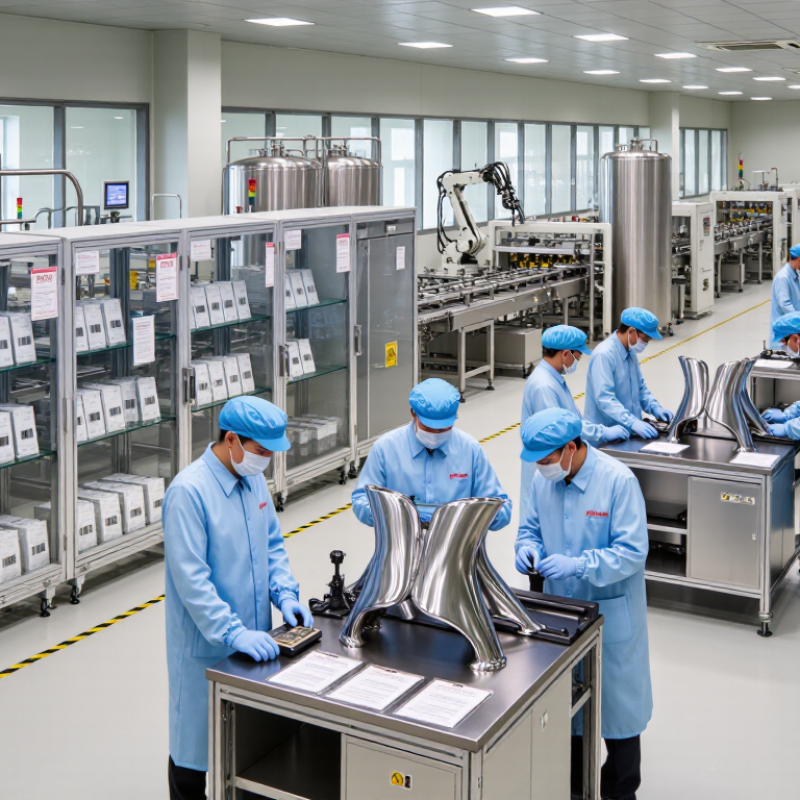
How to Find a Top Orthopedic Implant Factory in China?

What Defines a Reliable Orthopedic Implant Factory in China?

How to Find a Top Orthopedic Implant Factory in China?

A reliable orthopedic implant factory in China should demonstrate proven manufacturing experience, not just attractive product photos. Visit the facility when possible, or request a live video inspection. Observe clean production areas, controlled storage, and clearly labeled materials. Experienced engineers should explain design choices, machining tolerances, surface treatment, and sterilization procedures in simple language.

Quality depends on documented systems. Ask for material certificates, inspection records, device history files, and traceability from raw material to finished implant. The factory should maintain calibrated testing equipment and conduct dimensional, mechanical, and corrosion evaluations. Independent laboratory reports can add confidence. However, paperwork alone is not enough. A document may look complete while practical communication remains weak. Reliable suppliers answer technical questions directly and acknowledge limitations instead of promising perfection.

Tips: Check whether the factory supports small trial orders, sample verification, and consistent communication. Review how it handles complaints, corrective actions, and design changes. Ask for references from comparable medical projects, while protecting confidential information. A dependable factory welcomes reasonable audits and provides clear timelines. It should also understand applicable medical device requirements in your target market. Do not choose only by price; cheaper production can hide unstable materials, rushed inspections, or poor after-sales support. Yet high pricing does not automatically prove quality. Compare evidence carefully.

Which Orthopedic Implant Certifications and Standards Should You Verify?

How to Find a Top Orthopedic Implant Factory in China?

Choosing a Chinese orthopedic implant factory requires more than checking a certificate on a wall. Verify ISO 13485:2016, but inspect its exact scope, issuing body, factory address, and expiry date. The ISO Survey of Certifications 2023 reported more than 31,000 valid ISO 13485 certificates worldwide. That figure shows adoption, not automatic product quality. A certificate alone can mislead. Ask for recent audit findings, corrective-action records, and batch traceability samples. The manufacturer should also demonstrate compliance with ISO 14971 for risk management and ISO 10993 for biological evaluation. For metallic implants, review applicable ISO 5832 and ASTM material standards. Test reports should identify the alloy, method, laboratory, and production batch.

Sterile products require stronger evidence. Check ISO 11135 or ISO 11137 validation, plus ISO 11607 packaging validation. If products enter China, confirm applicable NMPA registration and testing requirements. For export markets, verify the relevant pathway under the EU MDR or United States regulations. FDA recall data continue to show that manufacturing and process-control weaknesses can affect medical devices, even when paperwork appears complete. Do not accept copied reports. Request raw test data, change-control logs, sterilization records, and environmental monitoring results. A useful audit follows one implant from incoming material to final release. I would also compare certificate scope with the actual machining room. Factories sometimes present a group certificate that excludes the critical process. That detail is easy to miss, and costly to ignore.

How to Assess Factory Capabilities, Materials, and Product Quality?

How to Find a Top Orthopedic Implant Factory in China?

Assessing an orthopedic implant factory requires more than a clean showroom and confident sales presentation. Request evidence of production capacity, including machining equipment, inspection tools, trained engineers, and controlled assembly areas. Ask how the factory manages different materials, such as titanium alloys, stainless steel, and medical-grade polymers. Material certificates should match the purchased batch, not just a sample file.

Product quality depends on repeatable processes. Review incoming-material inspection, dimensional checks, surface treatment records, and sterilization controls. A reliable factory should explain its traceability system clearly. Each implant should connect to documented batches, operators, equipment, and inspection results. Examine testing methods for fatigue strength, corrosion resistance, packaging integrity, and cleanliness. Independent laboratory reports can add useful confidence.

Factory visits reveal practical details. Watch whether workers check instruments carefully or rush through routine steps. Ask to see nonconforming-product records and corrective actions. A factory hiding every problem may be less trustworthy than one discussing weaknesses openly. I would also compare actual lead times with quoted promises. They may differ. Production capability can look impressive until urgent changes expose weak planning. Technical files, quality certifications, and regulatory documents should be current and verifiable. Speak with the quality manager, not only the sales team. Their answers often show whether quality is genuinely managed or merely advertised.

How to Compare Customization, Pricing, Minimum Orders, and Lead Times?

How to Find a Top Orthopedic Implant Factory in China?

Comparing orthopedic implant factories requires more than checking a polished website. Ask how each supplier handles customization, from implant geometry to surface finish and packaging. Request engineering drawings, material certificates, inspection plans, and sample approval records. A capable factory should explain tolerances clearly. Vague answers deserve caution.

Pricing should be separated into tooling, prototypes, unit costs, testing, and shipping. A low quotation may exclude critical inspection fees. Compare identical specifications, materials, and quantities. Minimum order requirements also need careful review. Some factories accept small pilot orders, while others require several hundred pieces. This affects inventory risk and cash flow. Small orders help testing, but their unit prices can be higher.

Lead time should include design review, tooling, production, inspection, and export preparation. Ask for a dated production schedule, not a single promise. Confirm capacity during peak seasons. Quality systems, traceability, and trained inspectors matter as much as speed. Factory audits and independent verification can reveal gaps between documents and actual practice. It is easy to overvalue certificates. Real process evidence is stronger. One practical mistake is comparing suppliers only by price. Another is ignoring communication speed during design changes. A reliable partner should report delays early and preserve revision records. However, no factory is perfect, and every assessment should leave room for technical questions, corrective actions, and rechecking.

How to Find a Top Orthopedic Implant Factory in China? - How to Compare Customization, Pricing, Minimum Orders, and Lead Times?

Comparison Dimension Typical Market Reference Prototype-Focused Factory Standard-Production Factory What to Verify Before Ordering
Product Scope Trauma plates and screws, spinal implants, joint components, external fixation parts, and patient-specific instruments. Best suited to low-volume, patient-specific, or design-validation projects. Best suited to repeat orders of approved catalog products. Confirm experience with the exact implant class, anatomical application, and intended market.
Common Materials Titanium alloys such as Ti-6Al-4V, commercially pure titanium, cobalt-chromium alloys, and implant-grade stainless steel. Can usually source material certificates for small batches, subject to supplier availability. Usually maintains approved material suppliers and repeatable batch purchasing. Request mill certificates, heat or lot numbers, material standards, and traceability records.
Customization Capability CAD-based dimensional changes, hole-pattern changes, surface texturing, engraving, and patient-specific geometry are common customization requests. Typically flexible for one-off or small-batch CAD revisions; engineering review is often included in the quotation process. Usually more efficient for approved designs; engineering changes may require formal validation and tooling review. Ask for a sample drawing review, design-for-manufacturing feedback, revision-control procedure, and change-history record.
Typical Prototype MOQ Approximately 1–10 pieces, depending on machining complexity, finishing, inspection, and sterilization requirements. Usually more willing to accept 1–5 pieces for feasibility or design verification. May accept prototypes, but setup charges can make very small orders comparatively expensive. Confirm whether MOQ applies per design, per size, per material, or per production batch.
Typical Production MOQ Approximately 10–50 pieces for standard machined components; larger quantities may apply to cast, forged, or coated products. Often negotiable for recurring low-volume programs. More likely to offer lower unit prices at 50–500+ pieces, depending on the product family. Request a written MOQ schedule and separate pricing for prototype, pilot, and mass-production quantities.
Indicative Unit Pricing Simple standard titanium plates may be priced in the tens of US dollars; complex custom or assembled implants can reach several hundred US dollars or more. Prototype prices are generally higher per unit because programming, setup, inspection, and engineering costs are spread over fewer pieces. Lower unit prices are more achievable after design approval and repeat-volume production. Compare equivalent specifications, material, finish, packaging, inspection, tooling, freight, and regulatory-document costs.
Engineering and Tooling Fees CAD/CAM programming, fixtures, molds, forging dies, and validation work may be charged separately. Generally lower tooling exposure for CNC-machined prototypes, but engineering hours may be billed separately. May provide better amortization at higher volumes, although molds or dies can require significant upfront payment. Confirm ownership of tooling, maintenance responsibility, refund conditions, and whether fees are included in the unit price.
Prototype Lead Time Approximately 2–6 weeks after drawing approval and material confirmation for many CNC-machined parts. Often more responsive for design iterations, especially when no new tooling is required. May prioritize scheduled production runs over very small prototype jobs. Request a milestone schedule covering drawing review, material purchase, machining, finishing, inspection, and dispatch.
Production Lead Time Approximately 4–10 weeks for standard products; 8–16 weeks is common when new tooling, coating, special testing, or validation is required. Suitable for flexible low-volume production, but capacity may be limited during peak periods. Usually stronger for repeat orders with established routings and reserved capacity. Obtain a binding lead-time commitment and identify which activities are controlled by external subcontractors.
Machining and Surface Finish CNC milling, turning, tumbling, polishing, passivation, anodizing, grit blasting, and titanium surface treatments are widely available. Can typically accommodate special contours and small design changes without major production disruption. Generally offers better repeatability for validated, high-volume finishing processes. Review surface-roughness limits, visual standards, dimensional tolerances, and process validation records.
Quality Management System A medical-device manufacturer should operate under an applicable quality system, commonly ISO 13485 for medical devices. May provide more direct engineering communication, but certification scope must be checked carefully. Often has more mature production documentation and batch-control procedures. Verify certificate validity, issuing body, site address, product scope, and whether critical processes are included.
Inspection and Testing Common controls include first-article inspection, dimensional inspection, material verification, surface inspection, and batch release records. Can be flexible for custom inspection plans, but additional testing may extend the schedule. Usually has established sampling plans and repeatable inspection workflows for approved products. Request sample inspection reports, calibration certificates, acceptance criteria, and nonconformance procedures.
Traceability Implant production should support traceability from raw-material lot through processing, inspection, packaging, and shipment. Confirm that small prototype orders receive the same lot-control treatment as production orders. Usually better suited to serial-number, lot-number, and batch-record control at scale. Ask for a redacted device history record or batch record showing end-to-end traceability.
Packaging and Sterilization Non-sterile protective packaging is commonly quoted separately; sterilization and sterile-barrier validation require additional controls. Can coordinate outsourced sterilization for small quantities, but the service provider and validation status must be confirmed. Usually more efficient for validated packaging and sterilization programs with regular volumes. Clarify sterile or non-sterile status, packaging specification, shelf-life evidence, sterilization method, and responsibility for release.
Regulatory Documentation Documentation may include drawings, risk-management inputs, material certificates, inspection records, declarations, and technical files, depending on the market. Often able to support design documentation, but the customer may remain responsible for final regulatory submissions. More likely to have established documentation for cleared or registered catalog products. Confirm which documents are included, current, product-specific, and acceptable to the destination-market authority.
Best-Fit Supplier Profile The best factory balances medical-device quality controls, technical communication, traceability, capacity, and transparent commercial terms. Recommended when design flexibility, rapid sampling, and low MOQ are more important than the lowest unit price. Recommended when the design is frozen and predictable, repeat-volume supply is the priority. Use the same RFQ package, drawings, quality requirements, delivery terms, and acceptance criteria for every candidate.

Note: The pricing, MOQ, and lead-time figures are indicative industry benchmarks rather than quotations. Actual terms depend on implant type, material, geometry, quantity, surface treatment, inspection level, packaging, sterilization, and destination-market requirements.

How to Audit Communication, Compliance, and Long-Term Supplier Support?

Finding a capable orthopedic implant factory in China starts with communication, not polished brochures. Ask who owns your project, how engineers record changes, and who answers urgent questions. Request a sample communication log with names, dates, decisions, and open actions. A reliable team explains technical limits plainly. Vague promises deserve a pause. Ask, “What happens if the coating fails inspection?” Their answer reveals process maturity better than a sales presentation.

During an on-site or remote audit, verify the quality system against relevant medical-device requirements, including ISO 13485 where applicable. Review supplier qualification, material certificates, inspection records, calibration logs, nonconformance reports, and traceability from raw material to finished implant. Do not accept screenshots alone. Match records to production areas, equipment labels, and controlled procedures. Check whether clean zones, packaging controls, and environmental monitoring fit the product risk. An experienced auditor also interviews operators, not only managers.

Long-term support should be written into the working relationship. Confirm response times, change-notification rules, complaint handling, spare-part planning, training, and document retention. Ask how the factory managed a late shipment or failed batch. Real examples matter. I would request a small pilot order before scaling, while admitting that one successful lot proves little. Communication can weaken after contracts are signed. Schedule quarterly reviews, track corrective actions, and keep an alternate source under evaluation. That may feel cautious, but orthopedic products leave little room for casual assumptions.

FAQS

What should I observe during a factory visit?

Look for clean production areas, controlled storage, and clearly labeled materials. Check whether workers handle instruments carefully. Rushed steps are concerning. Ask to inspect machining and assembly areas, not only the showroom.

Which quality documents should a reliable factory provide?

Request material certificates, inspection records, device history files, and traceability records. Documents should connect raw materials with finished implants. Ask for recent audit findings and corrective-action records. Paperwork alone is insufficient.

Which certifications and standards should I verify?

Verify ISO 13485:2016 and its exact certification scope. Check the issuing body, factory address, and expiry date. Review risk management under ISO 14971 and biological evaluation under ISO 10993. For metallic implants, examine relevant ISO 5832 and ASTM material standards.

How can I confirm that certificates cover the actual production process?

Compare the certificate scope with the real machining room. A group certificate may exclude critical processes. Follow one implant from incoming material to final release. This detail is easy to miss.

How should I evaluate implant materials?

Ask whether material certificates match each purchased batch. Review controls for titanium alloys, stainless steel, and medical-grade polymers. The certificate should identify the alloy, batch, and testing method. A sample file proves little.

What product tests should the factory perform?

Review dimensional, mechanical, corrosion, fatigue, cleanliness, and packaging-integrity tests. Test reports should identify the laboratory and production batch. Independent laboratory reports can provide additional confidence. Raw data matters more.

How can I assess communication and technical competence?

Speak with engineers and the quality manager, not only sales staff. Ask them to explain tolerances, surface treatment, and sterilization procedures plainly. Reliable teams acknowledge limitations. Perfect promises deserve caution.

How should I compare factory prices and delivery promises?

Do not select only the lowest price. Low prices may hide unstable materials, rushed inspections, or weak support. High prices do not guarantee quality either. Compare evidence, lead times, trial orders, and complaint handling. Promises may differ.

Conclusion

Finding a reliable orthopedic implant factory in China requires more than comparing product catalogs or prices. Buyers should evaluate the manufacturer’s quality management system, production experience, engineering expertise, and ability to consistently produce safe, precise, and traceable implants. It is also important to verify relevant certifications, testing procedures, material specifications, sterilization controls, and compliance with the regulations of the target market. A factory with modern equipment, skilled personnel, documented quality controls, and strong inspection capabilities is better positioned to support long-term cooperation.

Before placing an order, compare customization options, minimum order quantities, pricing transparency, production capacity, and lead times. Request clear samples, technical documentation, and quality records where appropriate. Communication should be timely, accurate, and supported by a professional team that can manage design changes, documentation, audits, and after-sales issues. A thorough factory assessment helps buyers choose an orthopedic implant factory that offers dependable quality, efficient service, regulatory support, and sustainable supplier cooperation.

Clara

Clara

Clara is a professional marketing specialist with a deep understanding of the company’s products, services, and customer needs. She regularly contributes expert articles to the company website, turning detailed product knowledge into clear, practical guidance for readers. Her work explores how the......